
BANNED BEFORE THE INTERVIEW — What Employers Get Wrong About Ban the Box
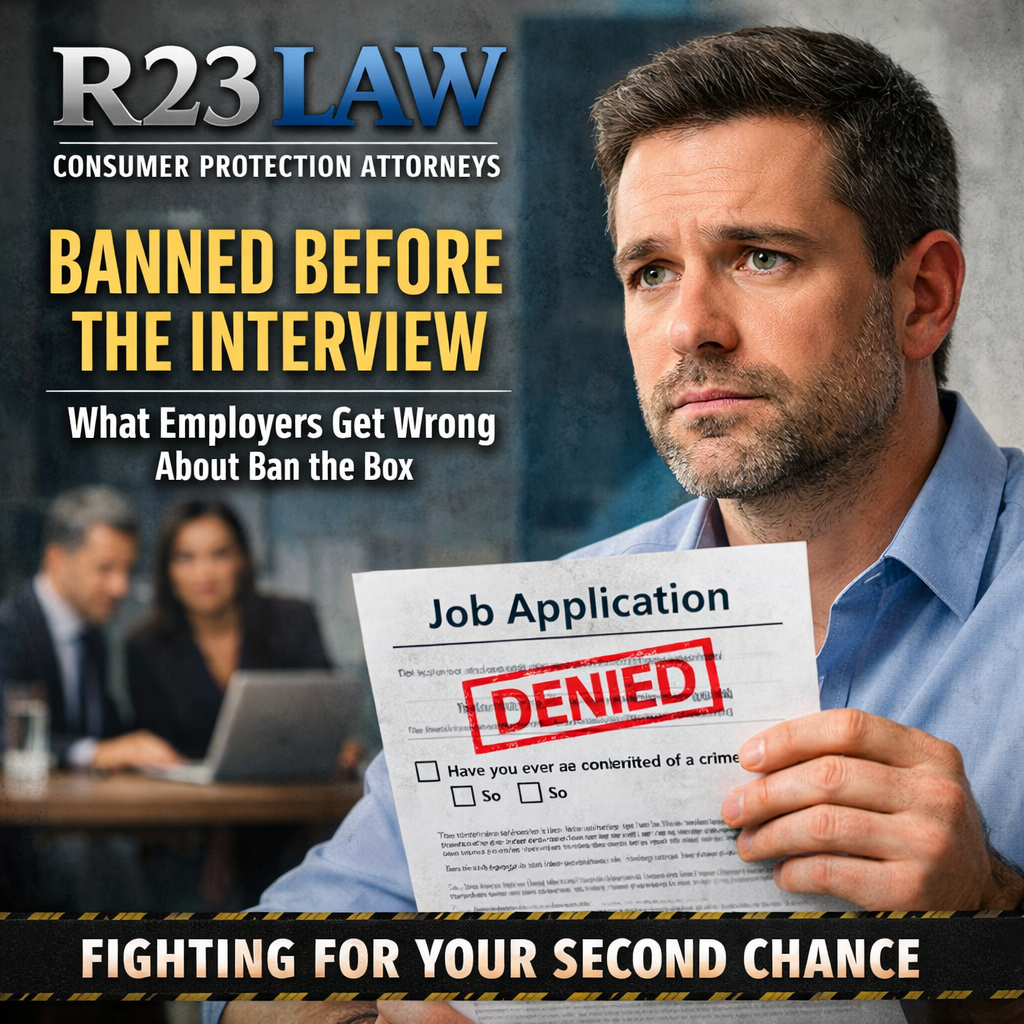
Criminal History Questions Don’t Belong on Job Applications—And the Law Agrees
For millions of Americans with past convictions, a job application should be a second chance—not a dead end. That’s the idea behind “Ban the Box” laws, which restrict when and how employers can ask about criminal records during the hiring process.
Unfortunately, some employers still violate these protections—asking unlawful questions too early or using background checks to screen out applicants unfairly. These practices don’t just harm job seekers—they may violate state or local employment laws.
If you’ve been denied a job because of how your record was handled, R23 Law’s California Consumer Protection Attorneys can help you understand your rights and take action.
What Are Ban the Box Laws?
Ban the Box laws get their name from the checkbox on job applications asking: “Have you ever been convicted of a crime?” These laws delay that question until later in the hiring process—after the employer has considered the applicant’s qualifications.
The goal is to give individuals with criminal records a fair shot by preventing premature disqualification based solely on their past.
In California, Ban the Box laws are part of the California Fair Chance Act, which prohibits most employers from inquiring about criminal history on job applications or during initial interviews.
Common Ways Employers Violate Ban the Box Protections
Even with clear laws in place, violations still happen. Some of the most frequent include:
Including criminal history questions on job applications
Bringing up criminal records during early interviews
Using background checks before making a conditional job offer
These actions can discourage qualified candidates from applying—or lead to unfair rejections that can have lasting financial and emotional consequences.
Your Rights Under California’s Fair Chance Act
Under the California Fair Chance Act, employers must:
✔ Delay criminal history inquiries until after a conditional offer is made
✔ Provide a written explanation if they withdraw a job offer due to a background check
✔ Allow the applicant time to respond and provide context or rehabilitation evidence
✔ Refrain from blanket bans based on any past conviction
If an employer violates these rules, it may be grounds for legal action.
What to Do If You’ve Been Disqualified Based on Criminal History
If you suspect you’ve been denied a job unlawfully based on your criminal record, here’s what you can do:
Document Everything — Save job ads, emails, application forms, and interview notes.
Request a Copy of Any Background Report used in the decision.
Contact an Employment Law Attorney with experience in Ban the Box violations.
Do Not Assume You're Alone — These violations are more common than you think.
R23 Law’s Consumer Protection Attorneys can help you determine if your rights were violated—and if so, guide you through next steps.
How R23 Law Helps Victims of Ban the Box Violations
R23 Law is committed to ensuring that second chances aren’t stolen by unlawful hiring practices. We offer:
Legal investigations into hiring discrimination
Letters of demand and negotiations with employers
Lawsuits to recover lost wages or pursue justice
Guidance through the California Fair Chance Act complaint process
Ban the Box is the Law. But Sometimes, You Still Need a Lawyer.
The promise of fair hiring is only real when it’s enforced. If your past is being used against you before you’ve had a chance to prove your present, R23 Law is ready to fight for your future.
📞 Toll-Free: 310-598-1588
📧 Email: info@R23Law.com
🔗 Contact Us
R23 Law Consumer Protection Attorneys
— Defending Your Right to a Fair Shot at Employment
You are more than your past. And the law agrees. Let R23 Law help make sure employers do too.
