
BEHIND THE CURTAIN — The RealPage Web That’s Denying Californians Housing
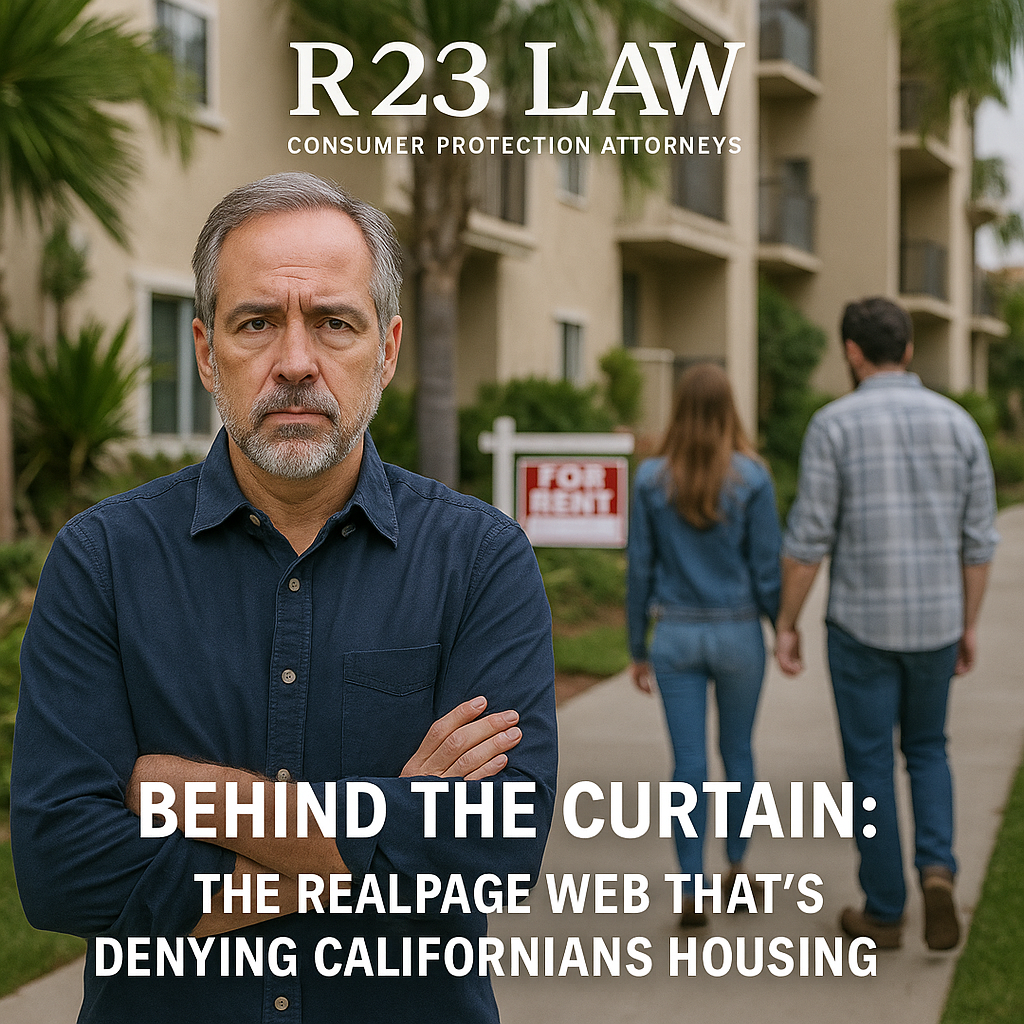
Most renters think their background checks come from companies like On-Site or LeasingDesk
But in reality? It’s all RealPage.
What you don’t know about tenant screening can cost you a home—and RealPage is counting on that.
At R23 Law, we’ve seen the damage firsthand: families denied housing because of false “risk” scores, outdated eviction data, or identity mismatches—often without ever knowing that RealPage was behind it all.
The Truth About RealPage and Its Hidden Brands
RealPage, one of the largest tenant screening companies in the U.S., powers millions of rental decisions every year. But it often operates under the radar through a network of lesser-known brands:
On-Site (RealPage brand): rental applications, screening, landlord tools
LeasingDesk (RealPage brand): tenant screening and “risk scoring”
ResidentScore & Risk Models: proprietary algorithms used to flag applicants as “high-risk”
Even if your report doesn’t say “RealPage,” if it came from one of these sources, it likely was.
And if that report is inaccurate, RealPage may be legally responsible under federal law.
When Algorithms Get It Wrong, Renters Pay the Price
RealPage’s risk scores and tenant data are often based on flawed, outdated, or mismatched information. The consequences for renters can be devastating:
Rental denials and lost housing opportunities
Irreversible application fees
Damage to your reputation or credit
Being labeled “high-risk” without cause
These decisions can affect families for years. And they’re happening silently—based on automated data that’s rarely challenged.
Common Errors in RealPage Tenant Screening Reports
R23 Law’s California Consumer Protection Attorneys have handled numerous cases involving:
Criminal record mix-ups or mismatched identity
Expunged convictions still appearing
Duplicate evictions or inaccurate court judgments
Old debt or credit info that should’ve been deleted
Social Security or name mismatches that mislabel tenants
Under the Fair Credit Reporting Act (FCRA), RealPage—and all of its brands—are required to ensure “maximum possible accuracy.” When they fail, consumers have the right to dispute and sue for damages.
Who’s Legally on the Hook? Spoiler: Still RealPage
Even if your denial letter says On-Site or LeasingDesk, RealPage is still responsible. They own and operate these platforms, meaning they can’t deflect liability by hiding behind brand names.
If a RealPage system caused the error, your rights under the FCRA cover all of it.
What California Renters Should Do If They’re Denied Housing
If you’ve been rejected because of a background check that traces back to RealPage (or its brands), take action immediately:
Get a copy of the background check report tied to your denial.
Review it line-by-line for errors.
File a formal dispute with RealPage (or the branded company).
Contact R23 Law’s California Consumer Protection Attorneys if the error isn’t fixed quickly.
We’ll evaluate your case, help preserve evidence, and hold these companies accountable under the law.
R23 Law Fights Back Against Background Check Abuse
At R23 Law, we don’t just handle background check errors—we build legal strategies to hold companies like RealPage accountable. Our team has successfully pursued claims against tenant screening giants whose inaccuracies have cost Californians jobs, homes, and peace of mind.
With deep experience in FCRA violations and California’s consumer protection laws, R23 Law’s attorneys are equipped to fight algorithmic discrimination and data negligence at the root.
📞 Free Case Review
If your housing application was denied due to a RealPage, On-Site, or LeasingDesk report, don’t let the error go unchallenged. Speak with one of R23 Law’s California Consumer Protection Attorneys today.
