
BREAKING THE DEFAULT — Strategies to Overturn a Judgment in California
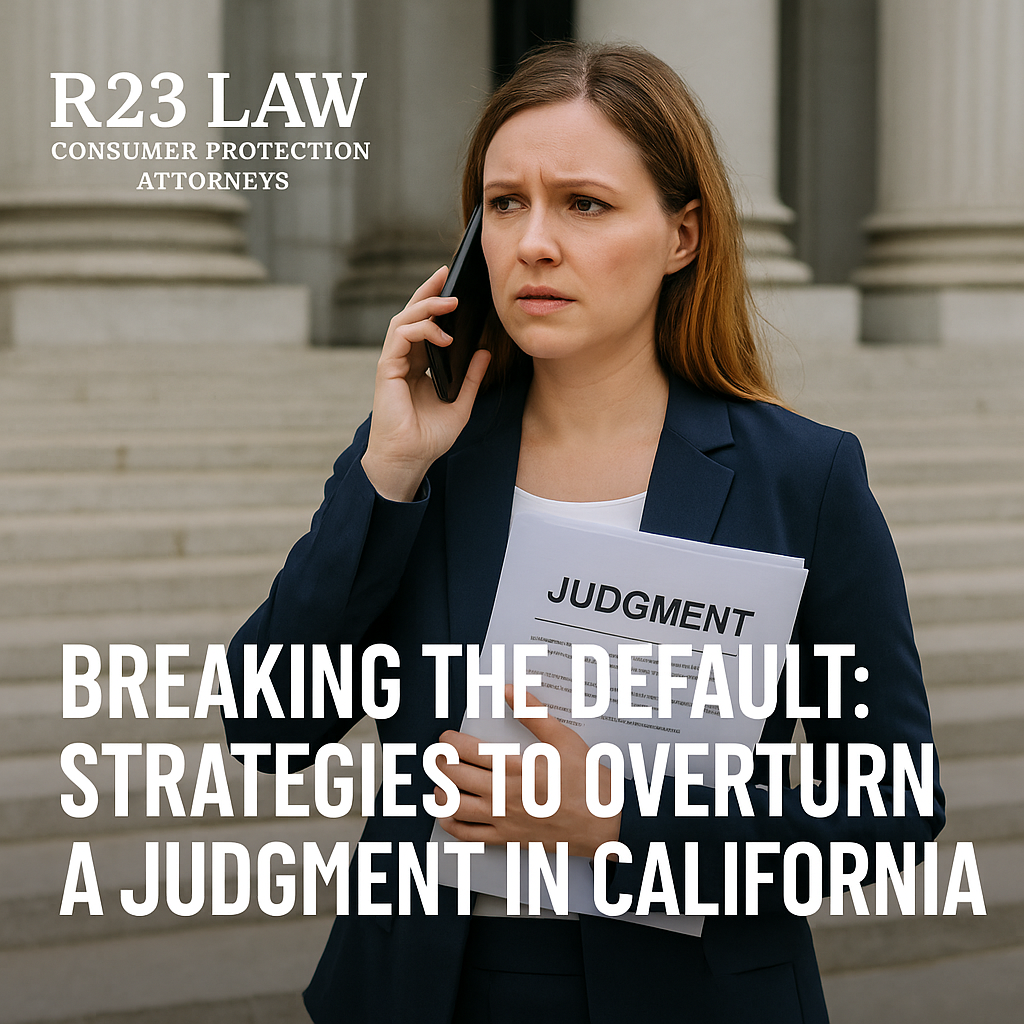
A default judgment can feel like a legal sucker punch
you didn’t respond to a lawsuit in time, and now the court has ruled against you without hearing your side. In California, default judgments are serious, but they aren’t always permanent. With the right legal approach, you may be able to reopen your case and defend yourself in court.
R23 Law’s California Consumer Protection Attorneys guide clients through vacating default judgments, protecting their rights, and challenging improper or unfair debt collection actions.
What It Means to Vacate a Judgment
When a court “vacates” a judgment, it sets aside its earlier ruling. This doesn’t mean you’ve automatically won your case—it means you now have the opportunity to present your defense.
A default judgment happens when:
You fail to respond to a lawsuit within the required timeframe
The court grants the plaintiff’s requested relief without your input
Vacating that judgment reopens the matter, allowing you to contest the claims in front of a judge.
Common Grounds for Vacating a Judgment
Under California law, you may be able to vacate a judgment if you can show valid reasons for not responding, such as:
Improper service – You were never legally notified of the lawsuit
Illness or absence – You were unable to respond because you were incapacitated or out of town
Procedural errors – The lawsuit was filed incorrectly or without proper jurisdiction
How the Process Works
To challenge a default judgment, you must file a Petition to Vacate Default Judgment and Declaration with the court.
Key timelines:
If served – You have 30 days from receiving the judgment paperwork to file your petition
If never served – You have 180 days from discovering the judgment to act
Once your petition is filed:
The court schedules a hearing date
You present your defense and evidence for why the default should be set aside
If the judge rules in your favor, the case is reopened and you can proceed with your defense
Why Legal Representation Matters
Vacating a default judgment involves strict deadlines and procedural rules. Mistakes can cost you the chance to challenge the ruling. R23 Law’s California Consumer Protection Attorneys:
Evaluate whether you have valid grounds for vacating the judgment
Prepare and file all required court documents on time
Present compelling arguments to the judge at your hearing
Protect you from aggressive or unlawful debt collection during the process
Turning the Tables on Debt Collectors
If your default judgment arose from a debt collection lawsuit, you may have additional defenses under California and federal law. Debt collectors must follow strict rules under the Fair Debt Collection Practices Act (FDCPA) and California’s Rosenthal Fair Debt Collection Practices Act. If they violated these laws, you could not only overturn the judgment but also pursue damages.
Don’t let a default judgment stand uncontested. Contact R23 Law’s California Consumer Protection Attorneys today for a free consultation and start reclaiming your right to a fair hearing.
