
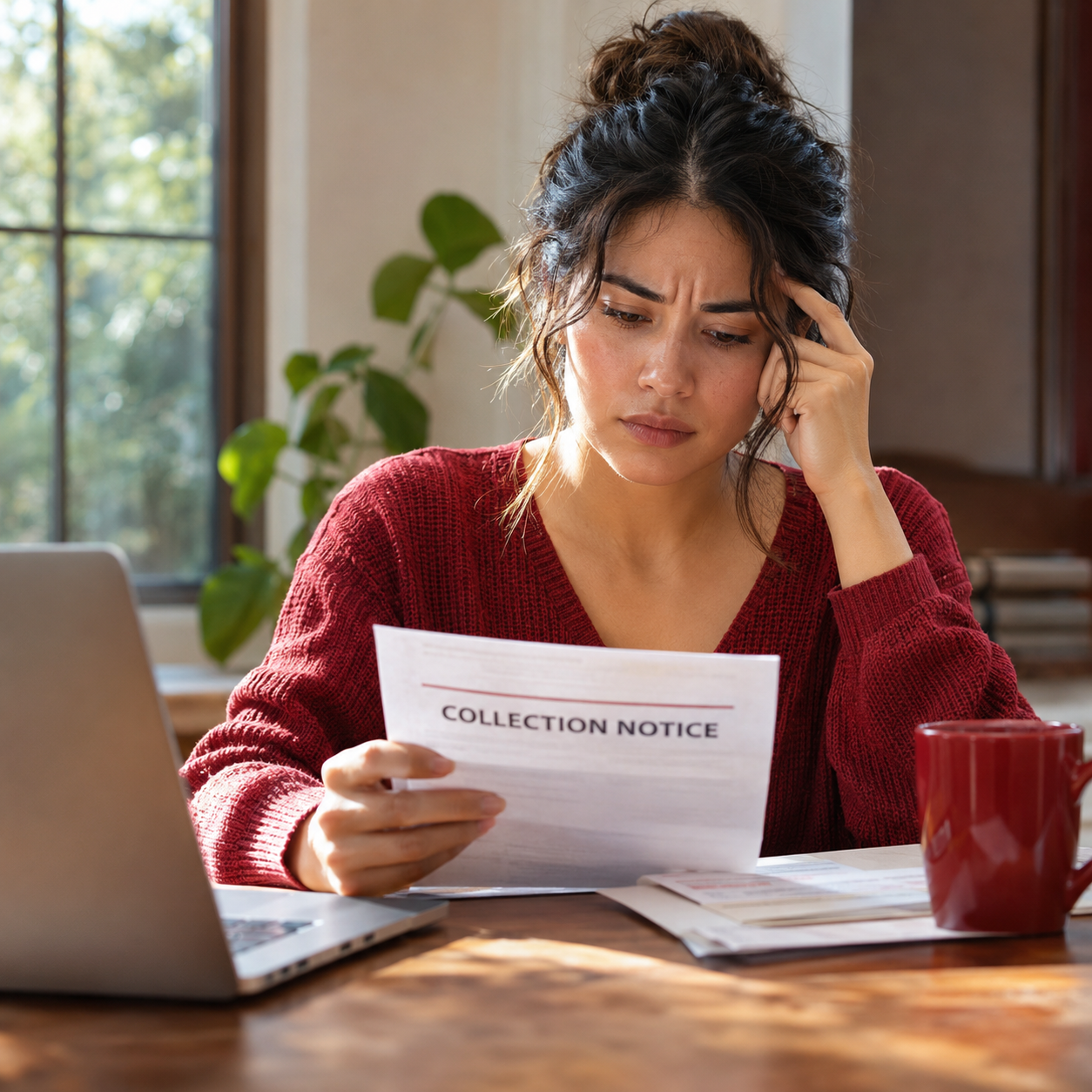
California consumers generally are not responsible for debts created through identity theft without their authorization
The Fair Debt Collection Practices Act (FDCPA), Fair Credit Reporting Act (FCRA), and California's Rosenthal Fair Debt Collection Practices Act provide protections against unlawful collection activity and inaccurate credit reporting. Consumers can dispute fraudulent debts and request applicable legal protections.
Key Takeaways
California consumers generally do not owe debts fraudulently opened in their names without authorization.
Under the FDCPA, a timely written dispute generally requires a covered debt collector to stop collecting the disputed debt until it provides the required verification.
The FCRA allows qualifying identity theft victims to request that fraudulent information be blocked from their credit reports.
Federal law restricts the sale, transfer, or placement for collection of certain identity theft debts after the required notification.
Consumers should document identity theft, preserve collection records, and investigate potential violations of federal and California law.
What Is California Fraudulent Debt Collection After Identity Theft?
California fraudulent debt collection occurs when someone attempts to collect a debt created through identity theft without the consumer's authorization. It may involve collection calls, payment demands, or fraudulent accounts appearing on credit reports.
Identity thieves may use stolen personal information to open credit cards, obtain loans, or make purchases. When these accounts become delinquent, meaning payments are overdue, creditors may send them to collection agencies or sell them to companies that purchase debts.
For some consumers, a collection notice is the first sign of identity theft. Others may have already reported the fraud, closed compromised accounts, and disputed unauthorized charges.
Common problems include:
Repeated collection calls about debts never authorized
Unfamiliar collection accounts appearing on credit reports
Payment demands continuing after identity theft disputes
Fraudulent debts being transferred between collection agencies
Damaged credit scores and denied financing opportunities
A debt collector may have records containing your name, address, or Social Security number. Those records alone do not prove that you authorized the account.
R23 Law is a consumer protection law firm in Los Angeles that represents California consumers in fraudulent debt collection and identity theft matters.
R23 Law's California Consumer Protection Attorneys evaluate disputes involving fraudulent accounts, unlawful collection practices, and inaccurate credit reporting.
Can Debt Collectors Make Me Pay for Fraudulent Debt in California?
Generally, a consumer is not responsible for a debt created entirely through identity theft without authorization. However, collection agencies may continue pursuing an account while its legitimacy remains disputed.
The federal Fair Debt Collection Practices Act (FDCPA), 15 U.S.C. § 1692 et seq., regulates abusive, deceptive, and unfair practices by covered debt collectors.
Under 15 U.S.C. § 1692e, covered collectors cannot use false, deceptive, or misleading representations when collecting debts. Depending on the facts, falsely claiming that someone owes a fraudulent obligation may violate this provision.
California also provides protection under the Rosenthal Fair Debt Collection Practices Act, Cal. Civ. Code § 1788 et seq.
California Civil Code § 1788.17 incorporates specified federal debt collection protections into state law, subject to statutory exceptions. The Rosenthal Act may cover collection activity beyond the scope of the federal FDCPA.
These laws do not mean every collection attempt involving an identity theft allegation is automatically unlawful. Liability depends on the collector's conduct, the information available, and the applicable legal requirements.
How Do I Stop California Fraudulent Debt Collection?
Start by disputing the unauthorized obligation in writing, documenting the identity theft, and preserving all collection communications. Different legal protections apply depending on whom you notify and what documentation you provide.
Step 1. Dispute the Fraudulent Debt in Writing
Send the debt collector a written notice identifying the disputed account and explaining that it resulted from identity theft.
State that you did not open, authorize, or benefit from the fraudulent account, if those statements are accurate.
Request verification of the debt and identify any information showing that the obligation does not belong to you.
Keep copies of the letter, supporting documents, and proof of delivery. Certified mail with return receipt requested may help document when the collector received your dispute.
Step 2. Report the Identity Theft
File an identity theft report with the Federal Trade Commission (FTC).
The FTC provides an official reporting and recovery process through IdentityTheft.gov.
An FTC Identity Theft Report can support disputes involving fraudulent accounts. Depending on the circumstances, a police report may also be appropriate.
Preserve copies of reports, account statements, collection notices, and correspondence with creditors.
Step 3. Dispute Fraudulent Credit Accounts
Obtain your credit reports from Equifax, Experian, and TransUnion through AnnualCreditReport.com.
Review each report for unfamiliar accounts, inaccurate balances, collection entries, and other information related to the identity theft.
Dispute fraudulent information with every credit reporting agency that reports it.
A credit reporting agency, also called a credit bureau, is a company that collects consumer credit information and provides credit reports.
The Fair Credit Reporting Act (FCRA), 15 U.S.C. § 1681 et seq., regulates credit reporting and provides procedures for investigating disputed information.
Step 4. Request an Identity Theft Block
Under FCRA § 605B, 15 U.S.C. § 1681c-2, qualifying consumers may request that information resulting from identity theft be blocked from their credit reports.
A block prevents qualifying information from continuing to appear in credit reports covered by the statutory requirement.
The request generally requires proof of identity, an identity theft report, identification of the fraudulent information, and a statement that the information does not relate to a transaction by the consumer.
Once the credit reporting agency receives the required materials, it generally must block qualifying information within four business days, subject to statutory exceptions.
Step 5. Document Continued Collection Attempts
If another collector contacts you about the same fraudulent obligation, preserve the new notice and identify the company involved.
Retain earlier disputes, fraud reports, and responses. These records may help establish what information was provided to each company and when.
If collection activity persists despite documented disputes, request a free case review from R23 Law to evaluate whether your consumer protection rights may have been violated.
How Long Does a Debt Collector Have to Respond to My Dispute?
Under the FDCPA, consumers generally have 30 days after receiving the required debt validation notice to submit a written dispute that triggers the statutory collection pause. The law does not establish a universal deadline requiring collectors to complete verification within a specified number of days.
Debt validation is the process by which a collector provides information required by law to substantiate a disputed obligation.
Under FDCPA § 809, 15 U.S.C. § 1692g, when a consumer submits a qualifying written dispute within the statutory period, the covered collector generally must stop collection of the disputed debt until it obtains and mails the required verification.
A collector may choose not to continue collecting rather than provide verification.
Missing the 30-day period does not mean you admitted responsibility for fraudulent debt.
Section 1692g(c) expressly states that failure to dispute within the validation period cannot be treated by a court as an admission of liability.
Consumers should still document the fraud and investigate other available rights even after the initial validation period has passed.
Can Fraudulent Debt Be Sold to Another Collection Agency?
Federal law restricts certain transfers of debts resulting from identity theft after the required statutory notification. It does not prohibit every transfer merely because a consumer has alleged that an account is fraudulent.
Under FCRA § 615(f), 15 U.S.C. § 1681m(f), a person who has received the specified notification under § 1681c-2 generally cannot sell, transfer for consideration, or place the identified debt for collection, subject to statutory exceptions.
This matters because fraudulent accounts may pass between collection agencies, leading to renewed payment demands.
Section 1681m(g) also imposes certain duties on debt collectors acting for third-party creditors when notified that debt information may be fraudulent or the result of identity theft.
A collector covered by that provision must notify the third party. Upon the consumer's request, the collector must also provide information to which the consumer would otherwise be entitled when disputing the debt.
Keeping records of previous identity theft notifications can help determine whether these protections apply.
What Is the Difference Between Disputing a Debt and Blocking a Credit Report?
Disputing a debt challenges the obligation being collected, while requesting an identity theft block addresses information appearing on a credit report. These procedures serve different purposes and may need to be used together.
Consumer ProtectionWhat It AddressesGoverning LawDebt validation disputeA collector's demand for paymentFDCPA § 809, 15 U.S.C. § 1692gCredit reporting disputeInaccurate information on a credit reportFCRA § 611, 15 U.S.C. § 1681iIdentity theft blockQualifying fraudulent credit informationFCRA § 605B, 15 U.S.C. § 1681c-2Restrictions on debt transfersCertain notified identity theft debtsFCRA § 615(f), 15 U.S.C. § 1681m(f)
A credit reporting block does not necessarily resolve every dispute with a creditor or debt collector.
Likewise, notifying a collector that a debt is fraudulent does not automatically remove inaccurate information from all credit reports.
Consumers confronting both collection activity and credit reporting errors should consider each process separately.
What Legal Remedies Are Available for Fraudulent Debt Collection in California?
Consumers may have legal remedies when a debt collector, creditor, or credit reporting agency violates an applicable consumer protection statute. The available claims and damages depend on the conduct involved and the requirements of each law.
The FDCPA, FCRA, and California Rosenthal Act establish different legal obligations.
Depending on the violation, remedies may include actual damages, statutory damages where authorized, and reasonable attorney's fees and litigation costs.
Actual damages refer to harm caused by a legal violation. Statutory damages are amounts authorized by law when the applicable requirements are satisfied.
Identity theft itself does not automatically establish liability against every company connected to an account.
R23 Law's California Consumer Protection Attorneys evaluate potential violations involving fraudulent accounts, repeated collection demands, and identity theft-related credit reporting errors.
Learn more about R23 Law's consumer finance law practice, meet our legal team, or read about R23 Law.
Understanding which protections apply is important before deciding how to respond to repeated collection demands.
Frequently Asked Questions
Does a Collection Notice Prove That I Owe a Fraudulent Debt?
No. A collection notice or account record containing your personal information does not, by itself, prove that you authorized the debt. Identity thieves may use stolen identifying information to create accounts. California consumers can dispute obligations they did not authorize and request available protections under the FDCPA, FCRA, and California Rosenthal Act.
Should I Pay a Fraudulent Debt to Stop Collection Calls?
Generally, you should investigate and dispute a debt created through identity theft rather than assume payment is necessary. Paying an account does not necessarily correct inaccurate credit reporting or establish that the underlying fraud has been resolved. If collection calls continue, document the communications and consider obtaining legal advice before deciding how to respond.
Can Identity Theft Collection Accounts Affect My Credit Score?
Yes. Fraudulent accounts may appear on credit reports and negatively affect a consumer's credit history or financing opportunities. Under the FCRA, consumers can dispute inaccurate information and request statutory identity theft blocks when eligible. Correcting the credit report may require providing an identity theft report and other documentation specified by law.
What Documents Should I Keep When Disputing Identity Theft Debt?
Keep collection letters, account statements, FTC Identity Theft Reports, applicable police reports, dispute letters, and responses from collectors or credit reporting agencies. Preserve proof of delivery and records of collection calls when available. These documents can help establish the disputed account's history, the notifications provided, and whether a company complied with applicable consumer protection requirements.
Can I Sue a Debt Collector for Pursuing an Identity Theft Debt?
Possibly. If a covered collector violates the FDCPA or California Rosenthal Act, the consumer may have legal remedies. Depending on the facts and statute, remedies may include actual damages, statutory damages, and reasonable attorney's fees and costs. A successful claim requires proving an applicable legal violation, not merely showing that identity theft occurred.
Talk to R23 Law's California Consumer Protection Attorneys
California fraudulent debt collection can persist after an identity theft report, but consumers have rights under federal and state law. R23 Law's California Consumer Protection Attorneys review potential debt collection and credit reporting violations and evaluate available legal remedies. If fraudulent debts continue to affect you, contact R23 Law to request a free case review.
Contact R23 Law Today
Phone: (310) 598-1588
Email: info@R23Law.com
Website: www.R23Law.com
Free case review: www.R23Law.com/contact
R23 Law, 633 W 5th St, Los Angeles, CA 90071
© 2026 R23 Law. All rights reserved.
Reviewed by Peng Shao, State Bar of California No. 319624. Last updated [11/04/2026].
Attorney Advertising. This article is general information, not legal advice, and reading it does not create an attorney-client relationship. Laws change and every case depends on its facts. Prior results do not guarantee a similar outcome.
