
CHECKING BOUNDARIES — FCRA Rules For Background Reports
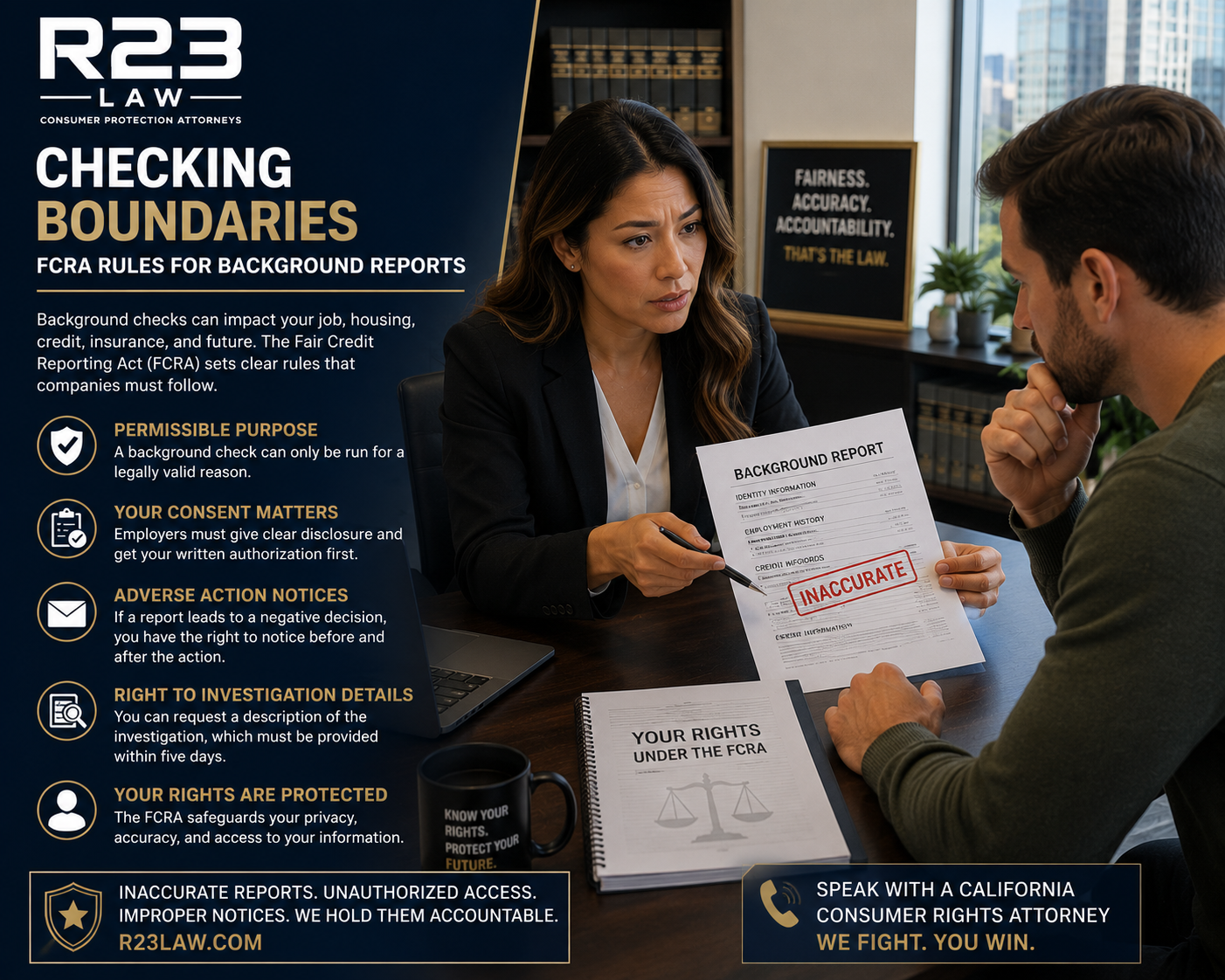
Background checks for employment, housing, credit, and insurance must follow the FCRA
R23 Law's California Consumer Protection Attorneys pursue claims involving unauthorized background checks, inaccurate reports, adverse action violations, and consumer reporting errors.
Background Checks Must Follow The Law
Background checks are common, but they are not a free pass for companies to access consumer information without limits.
Employers, landlords, lenders, insurers, and other businesses may use background reports to make important decisions. These reports may include identity information, work history, criminal records, credit data, housing history, and other sensitive consumer information.
Because background checks can affect employment, housing, credit, insurance, and financial stability, federal law sets rules for when they may be used and how consumers must be treated.
R23 Law's California Consumer Protection Attorneys represent consumers harmed by unauthorized background checks, inaccurate reports, improper adverse action, and Fair Credit Reporting Act violations throughout California.
Background Checks In Employment And Housing
Background checks are often used during job applications and rental applications.
Employers may use background reports to evaluate identity, work history, criminal records, credit information, professional qualifications, or other data relevant to a hiring decision.
Landlords may use tenant screening reports to review identity, rental history, credit information, and other background data before approving a rental application.
Although background checks may be routine, consumers still have legal rights. A company must follow the Fair Credit Reporting Act, commonly known as the FCRA, when using covered consumer reports.
Permissible Purpose And Consumer Privacy
One of the most important FCRA protections is the requirement of a permissible purpose.
A permissible purpose means the person or company requesting the background check must have a legally valid reason to access the consumer’s information.
Common permissible purposes may include:
Employment screening
Rental housing decisions
Credit decisions
Insurance underwriting
Certain business transactions authorized by law
This requirement protects consumers from unauthorized access to private, sensitive information. A company should not pull a background report simply because it is curious, careless, or trying to gather information without a lawful basis.
Employer Consent Before Background Checks
Employers generally must obtain consumer consent before running an employment background check.
This means an applicant or employee should receive proper disclosure and authorization documents before the report is obtained. The disclosure should not be buried in unrelated paperwork or hidden in confusing language.
When an employer skips consent requirements, uses unclear forms, or obtains a report without proper authorization, the consumer may have a claim under the FCRA.
Adverse Action Notices After Background Check Decisions
If an employer, landlord, lender, or other covered user relies on a background report to make a negative decision, the consumer may be entitled to notice.
In employment situations, employers generally must provide required notices before and after taking adverse action based on a consumer report.
Adverse action may include:
Denying employment
Withdrawing a job offer
Terminating employment
Denying housing
Denying credit
Offering less favorable terms
Rejecting insurance or underwriting terms
Consumers should know what information was used against them and should have an opportunity to review the report for inaccuracies.
The Right To Request Details About The Investigation
Consumers may also have the right to request a description of the investigation.
The attached source notes that consumers can request a description of the investigation, which must be provided within five days of the request.
This matters because background reports often contain sensitive information from multiple sources. Consumers should be able to understand what was reviewed and whether the report contains inaccurate, incomplete, or unauthorized information.
Background Check Errors Can Cause Serious Harm
A background check error can affect major life opportunities.
Common background check errors include:
Wrong criminal records
Inaccurate work history
Incorrect credit information
Mixed files involving another person’s information
Outdated records
Sealed or expunged records still appearing
Wrong addresses or identity information
Incorrect housing or eviction data
Duplicate negative records
Even one inaccurate entry can lead to job denial, housing rejection, credit problems, insurance issues, reputational harm, and emotional distress.
Unauthorized Background Checks Are A Serious Consumer Issue
A background check may violate consumer rights even when the report itself is accurate.
If a company lacks permissible purpose, fails to obtain required consent, or accesses sensitive information without legal authorization, the consumer may have a claim.
Unauthorized access can expose private data to employers, landlords, businesses, or individuals who had no right to review it.
R23 Law's California Consumer Protection Attorneys pursue claims involving unlawful access to consumer reports and misuse of background check information.
FCRA Protections For California Consumers
The FCRA protects consumers by requiring background check companies and report users to follow rules designed to promote accuracy, fairness, and privacy.
Under the FCRA, consumers may have the right to:
Know when a background report is used
Give consent before certain employment reports
Have reports accessed only for permissible purposes
Receive notice when a report causes adverse action
Review reports used against them
Dispute inaccurate or incomplete information
Require a reasonable investigation
Have inaccurate information corrected or deleted
Pursue damages when legal rights are violated
California consumers may also have additional protections under state consumer reporting laws depending on the facts.
Compensation For Background Check Violation Victims
Consumers harmed by FCRA background check violations may be entitled to pursue compensation depending on the facts of the case.
Potential recovery may include:
Lost wages
Lost employment opportunities
Lost housing opportunities
Credit-related damages
Insurance-related losses
Out-of-pocket expenses
Emotional distress
Reputational harm
Statutory damages
Punitive damages for willful violations
Attorney’s fees and litigation costs
The strength of a claim may depend on the report, the company involved, the notices provided, the consent process, the consumer’s damages, and whether the violation was negligent or willful.
R23 Law's Expert Legal Services For Background Check Injury Victims Throughout California
R23 Law's California Consumer Protection Attorneys represent consumers injured by unlawful background check practices throughout California.
Our legal team handles claims involving:
FCRA background check violations
Unauthorized background checks
Lack of permissible purpose
Employment background check consent violations
Tenant screening violations
Adverse action notice failures
Inaccurate background reports
Mixed file background reports
Credit information errors
Criminal record reporting errors
Failure to investigate disputes
California consumer reporting law violations
R23 Law pursues accountability when employers, landlords, lenders, insurers, background check companies, and consumer reporting agencies violate consumer rights.
Learn more about the firm through About Us, review the attorneys on Our Team, or begin the case review process through Contact Us.
Accurate And Lawful Screening Matters For California Consumers
Background checks can influence where consumers work, where they live, whether they receive credit, and what opportunities remain available.
Consumers should preserve all documents connected to the background check, including consent forms, disclosures, reports, adverse action notices, denial letters, dispute letters, employer communications, landlord communications, credit records, and proof of financial or emotional harm.
R23 Law's California Consumer Protection Attorneys are committed to protecting consumers from unauthorized reporting, inaccurate screening, and unlawful background check practices.
Contact R23 Law Today
If a background check was run without proper authorization, used against you without required notice, or contained inaccurate information that cost you employment, housing, credit, insurance, or reputation, R23 Law's California Consumer Protection Attorneys can review your potential claims and pursue accountability under federal and California law.
Toll-Free — 310-598-1588
