
CREDIT CHECKMATE — Report Errors That Cost Consumers
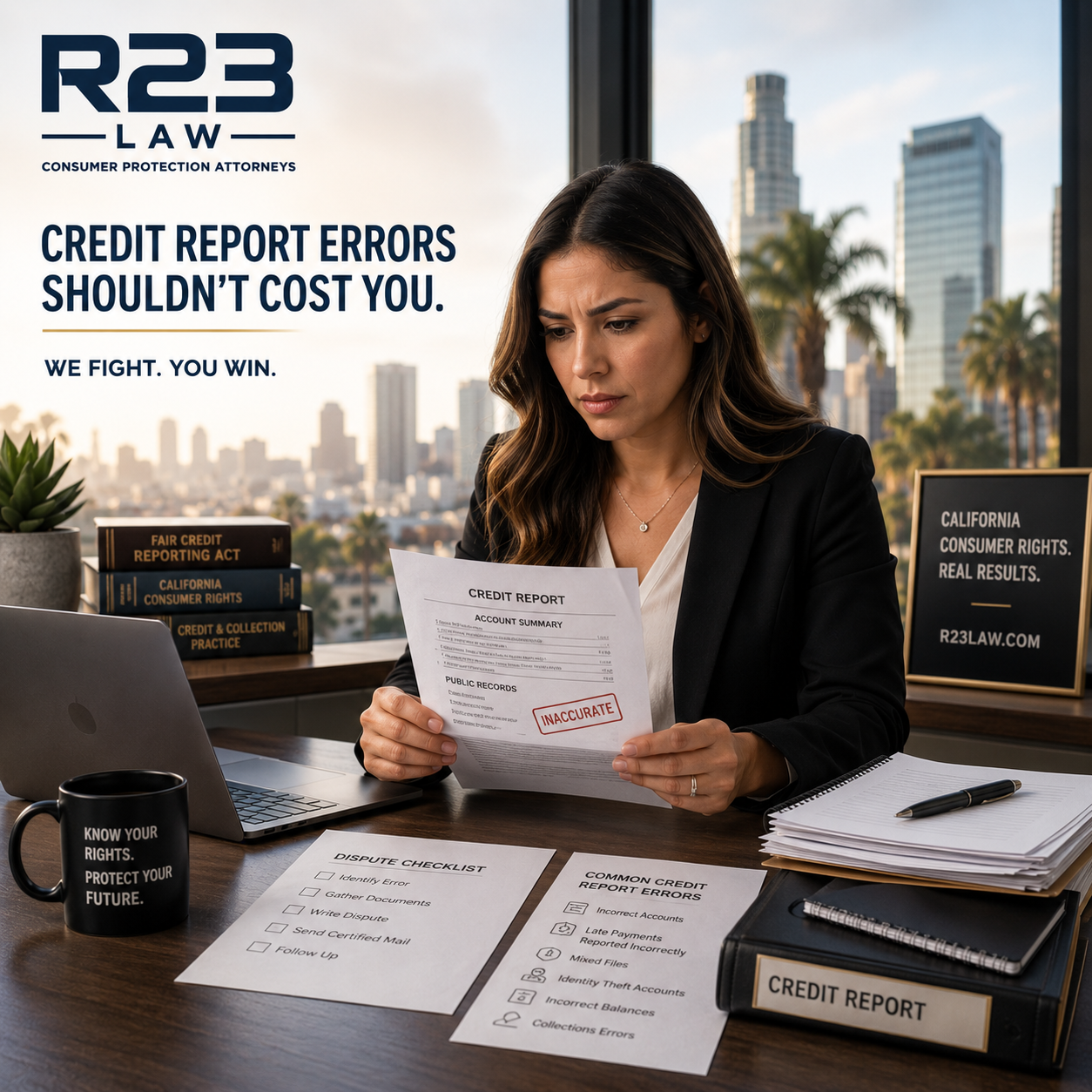
Credit report mistakes can cost Californians loans, housing, insurance, employment opportunities, and financial peace of mind
R23 Law's California Consumer Protection Attorneys pursue claims involving inaccurate credit reports, mixed files, identity theft accounts, and FCRA violations.
Credit Report Mistakes Can Damage Your Financial Future
Your credit report follows you through major financial decisions. Lenders review it before approving loans. Landlords may review it before approving housing. Insurance companies may consider credit-related data when pricing coverage. Employers may review certain reports in limited hiring contexts.
When a credit report contains inaccurate information, the consequences can be immediate and expensive.
A consumer may be denied a mortgage, rejected for housing, charged higher interest, blocked from insurance, or forced to explain debts and accounts that do not belong to them. Credit report errors are not minor paperwork issues. They can create real financial injury.
R23 Law's California Consumer Protection Attorneys represent consumers harmed by inaccurate credit reports, mixed files, identity theft accounts, and unlawful credit reporting practices throughout California.
Why Credit Report Errors Happen
Credit reports are built from large volumes of data supplied by banks, lenders, debt collectors, credit card companies, public records sources, and other furnishers.
That system creates room for mistakes.
Credit report errors may happen because of:
Human data-entry mistakes
Outdated account information
Miscommunication between furnishers and credit bureaus
Mixed files involving another consumer’s information
Identity theft and fraudulent accounts
Duplicate reporting
Failure to update corrected information
Incorrect account status reporting
Once an error appears, it may continue spreading until the consumer takes action and the reporting companies properly correct it.
Common Credit Report Mistakes In California
Credit report errors often fall into two major categories — personal information errors and account-related errors.
Personal Information Errors
Personal information errors may seem small, but they can lead to major reporting problems.
Common personal information errors include:
Incorrect address information
Outdated address history
Misspelled names
Merged name variations
Wrong date of birth
Incorrect Social Security number
Information belonging to another person
Mixed credit files
A mixed credit file can be especially damaging because another person’s accounts, debts, addresses, or collections may appear on your report.
Account-Related Credit Errors
Account errors can directly affect credit scores and lending decisions.
Common account-related errors include:
Closed accounts reported as open
On-time payments reported as late
Current accounts marked delinquent
Fraudulent accounts caused by identity theft
Duplicate debt listings
Incorrect account balances
Old debts reported as current
Previously disputed errors that remain on the report
Collections that do not belong to the consumer
Even one inaccurate account can affect a consumer’s ability to obtain credit, housing, insurance, or favorable financial terms.
The Real-World Impact Of Credit Reporting Errors
Credit report mistakes can affect far more than a credit score.
Consumers may face:
Denied loans
Denied mortgages
Higher interest rates
Rejected housing applications
Insurance problems
Utility account issues
Employment background complications
Debt collection activity
Emotional distress
Financial uncertainty
Many consumers only discover a credit report error after harm has already occurred. A denied application may be the first warning that something is wrong.
Consumer Rights Under The Fair Credit Reporting Act
The Fair Credit Reporting Act, known as the FCRA, gives consumers important rights when credit reports contain inaccurate or incomplete information.
Under the FCRA, consumers may have the right to:
Dispute inaccurate information
Require credit bureaus to investigate disputes
Require furnishers to review disputed information
Have inaccurate information corrected or deleted
Receive investigation results
Pursue damages when reporting companies violate the law
A consumer must dispute inaccurate information with the credit reporting agency, not only with the furnisher. That means disputes may need to be sent to Equifax, Experian, TransUnion, or another consumer reporting agency depending on where the error appears.
Strong Credit Report Disputes Matter
A credit report dispute should be clear, detailed, and supported by documentation.
A strong dispute should include:
The consumer’s full name and contact information
The specific account or item being disputed
A clear explanation of why the information is wrong
A request for correction or removal
Copies of supporting documents
Proof of identity when needed
Supporting documents may include account statements, payment confirmations, identity theft reports, police reports, creditor letters, court records, account closure documents, or other records showing that the information is inaccurate.
Consumers should avoid sending original documents. Copies should be kept with the dispute file.
Certified Mail And Credit Dispute Records
Written disputes sent by certified mail create a paper trail.
Certified mail can show:
The date the dispute was sent
The date the credit bureau received it
The documents included
Whether the bureau responded on time
That record may become important if the credit bureau fails to investigate properly, refuses to correct the error, or continues reporting inaccurate information.
Consumers should also track deadlines, save all bureau responses, and preserve copies of every dispute letter.
Identity Theft And Fraudulent Credit Accounts
Identity theft is a common source of credit report errors.
Fraudulent accounts may include:
Credit cards opened without permission
Loans taken out by an identity thief
Unauthorized bank accounts
Utility accounts opened fraudulently
Collections tied to identity theft
Hard inquiries caused by fraudulent applications
Identity theft-related credit errors can be especially difficult because creditors and collectors may continue treating the victim as responsible for accounts they never opened.
R23 Law's California Consumer Protection Attorneys pursue claims involving identity theft credit report errors, failed credit bureau investigations, and unlawful furnishing of fraudulent accounts.
Preventing Future Credit Report Damage
Not every credit report error can be prevented, but consumers can reduce long-term harm by reviewing their reports regularly.
Important credit protection steps include:
Review credit reports from all reporting agencies
Monitor accounts for unfamiliar activity
Respond quickly to denial notices
Keep financial records organized
Address identity theft signs immediately
Save all dispute letters and responses
Preserve proof of payments and account closures
Early detection can stop a reporting error before it causes multiple denials.
Compensation For Credit Report Error Victims
Consumers harmed by credit report mistakes may be entitled to pursue compensation depending on the facts of the case.
Potential recovery may include:
Denied credit damages
Higher interest costs
Lost housing opportunities
Lost employment opportunities
Insurance-related losses
Out-of-pocket expenses
Credit damage
Emotional distress
Reputational harm
Statutory damages
Punitive damages for willful violations
Attorney’s fees and litigation costs
The strength of a claim may depend on the dispute history, the harm suffered, the company involved, and whether the credit bureau or furnisher failed to conduct a reasonable investigation.
R23 Law's Expert Legal Services For Credit Report Injury Victims Throughout California
R23 Law's California Consumer Protection Attorneys represent consumers injured by inaccurate credit reports throughout California.
Our legal team handles claims involving:
Credit report mistakes
Mixed credit files
Identity theft accounts
False late payments
Incorrect collections
Duplicate debt reporting
Closed accounts reported as open
Current accounts reported as delinquent
Credit bureau dispute failures
Furnisher investigation failures
FCRA violations
California consumer reporting law violations
R23 Law pursues accountability when credit bureaus, banks, lenders, debt collectors, furnishers, and reporting agencies violate consumer rights.
Learn more about the firm through About Us, review the attorneys on Our Team, or begin the case review process through Contact Us.
Accurate Credit Reporting Matters For California Consumers
A credit report should reflect the truth. When it does not, consumers can lose financial access, housing opportunities, and peace of mind.
Consumers should preserve all documents connected to the error, including credit reports, dispute letters, certified mail receipts, bureau responses, creditor communications, denial letters, loan records, housing records, and documents showing financial or emotional harm.
R23 Law's California Consumer Protection Attorneys are committed to protecting consumers from inaccurate credit reporting and unlawful investigation practices.
Contact R23 Law Today
If a credit report mistake caused a loan denial, housing rejection, higher interest rate, insurance problem, employment issue, or financial injury, R23 Law's California Consumer Protection Attorneys can review your potential claims and pursue accountability under federal and California law.
Toll-Free — 310-598-1588
