
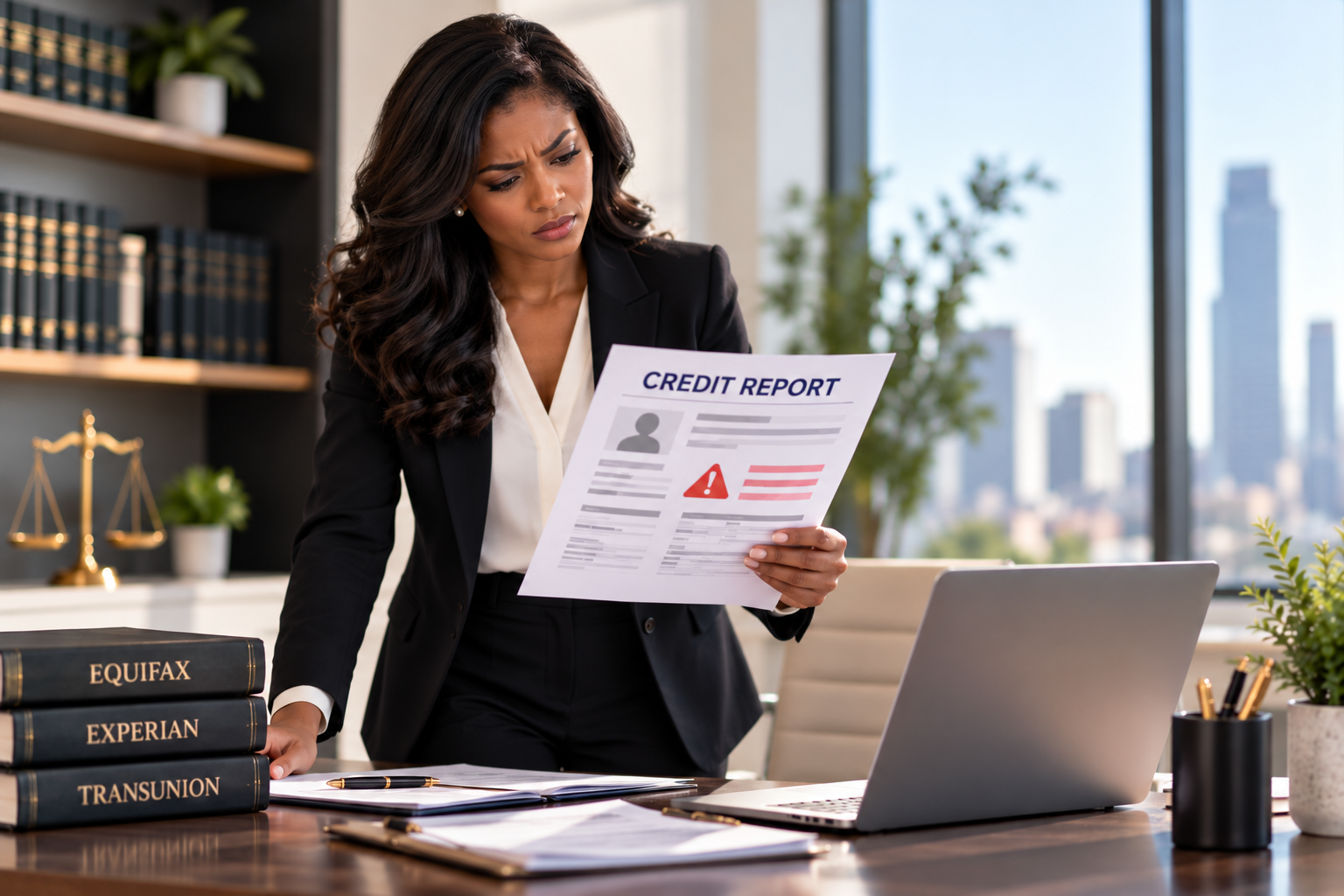
Credit reporting errors can be more than a financial inconvenience
When inaccurate information remains on your credit report despite repeated disputes, the consequences can affect your credit score, loan approvals, interest rates, and financial opportunities.
For California consumers, dealing with credit bureaus that refuse to correct mistakes can be especially frustrating. Fortunately, federal and California consumer protection laws provide legal remedies when credit reporting agencies fail to meet their legal obligations.
At R23 Law, our experienced California Consumer Protection Attorneys represent consumers facing inaccurate credit reports, improper dispute investigations, and potential violations of the Fair Credit Reporting Act (FCRA) and California Consumer Credit Reporting Agencies Act (CCRAA).
Understanding when a credit bureau may be held legally accountable is an important step toward protecting your financial future.
CREDIT BUREAUS AREN'T ABOVE THE LAW — Your Right To Sue In California
California consumers may have grounds to file lawsuits against credit reporting agencies, including Equifax, Experian, and TransUnion, when those agencies violate applicable consumer protection laws.
The Fair Credit Reporting Act (FCRA) requires credit reporting agencies to follow reasonable procedures designed to assure the maximum possible accuracy of consumer credit information.
The FCRA also requires agencies to conduct reasonable reinvestigations of qualifying disputes, generally within 30 days, subject to certain statutory exceptions and extensions.
California residents may receive additional protections under the California Consumer Credit Reporting Agencies Act (CCRAA), which regulates credit reporting practices under state law.
Depending on the circumstances, violations of these laws may provide grounds for legal action and monetary compensation.
However, an inaccurate credit report alone does not automatically establish a successful lawsuit. Consumers generally must demonstrate that a credit bureau violated an applicable legal obligation.
ERRORS LEFT UNCORRECTED — Grounds For A Credit Bureau Lawsuit
Certain credit reporting practices may give rise to legal claims when agencies fail to comply with federal or California law.
Failure To Correct Inaccurate Information
Credit bureaus may face potential liability when they fail to satisfy their legal obligations after receiving qualifying disputes.
Common inaccuracies include:
Paid debts incorrectly reported as unpaid
Fraudulent accounts resulting from identity theft
Incorrect late payment information
Duplicate collection accounts
Financial information belonging to another consumer
Whether these errors support a lawsuit depends on the reporting agency's conduct and the applicable legal requirements.
Unreasonable Credit Dispute Investigations
Under the FCRA, credit reporting agencies generally must conduct reasonable reinvestigations of disputed information.
A potential violation may arise when a bureau fails to adequately evaluate relevant information or does not comply with statutory investigation requirements.
For example, an agency may continue reporting an inaccurate account despite receiving documentation that clearly identifies the discrepancy.
Repeated Reporting Of Inaccurate Information
Some consumers discover that errors remain on their credit reports even after multiple disputes.
Repeated inaccurate reporting may indicate problems with a bureau's investigation procedures or compliance with consumer protection requirements.
Although multiple disputes are not necessarily required for every FCRA claim, preserving evidence of unresolved errors can strengthen a consumer's ability to document potential violations.
BUILD YOUR CASE — Documenting Credit Reporting Violations
Documentation is essential when pursuing a potential credit reporting lawsuit.
Consumers should preserve evidence showing the inaccurate information, their efforts to dispute it, and any resulting financial harm.
Important records may include:
Credit Reports — Copies showing inaccurate information before and after disputes.
Dispute Letters — Written communications identifying the errors and requesting corrections.
Proof Of Delivery — Certified mail receipts or other records confirming submission of disputes.
Supporting Financial Documents — Payment receipts, account statements, or creditor correspondence establishing the correct information.
Investigation Results — Responses from credit reporting agencies explaining their findings.
Evidence Of Financial Harm — Loan denial notices, increased borrowing costs, or other documented losses.
For claims involving unreasonable reinvestigations, properly notifying the credit bureau of the disputed information is generally important because it triggers the agency's investigation obligations.
Consumers can obtain their credit reports through AnnualCreditReport.com.
Maintaining a clear paper trail can be valuable when evaluating whether a credit reporting agency complied with its legal responsibilities.
FINANCIAL HARM, LEGAL REMEDIES — Damages Available In Credit Bureau Lawsuits
When credit bureaus violate applicable consumer protection laws, affected consumers may be entitled to pursue compensation.
The type and amount of damages depend on the circumstances and the legal requirements of the claim.
Actual Damages
Consumers may recover qualifying financial losses caused by negligent or willful FCRA violations.
Examples include:
Financial losses resulting from denied credit applications
Additional interest expenses caused by unfavorable financing terms
Lost housing or employment opportunities linked to inaccurate reporting
Qualifying expenses incurred while addressing the reporting error
Actual damages may also include qualifying emotional distress when supported by sufficient evidence.
Statutory And Punitive Damages
Under the FCRA, certain willful violations may support statutory damages ranging from $100 to $1,000 in applicable individual claims.
Punitive damages may also be available for qualifying willful violations.
These remedies are intended to address unlawful conduct and, where applicable, discourage future violations.
Attorney's Fees And Litigation Costs
An important consumer protection feature of the FCRA is its provision for recovering reasonable attorney's fees and litigation costs in successful actions under applicable statutory requirements.
This fee-shifting protection can make pursuing legitimate consumer protection claims more accessible.
R23 Law's California Consumer Protection Attorneys evaluate potential damages and available legal remedies based on the circumstances of each case.
HOLDING CREDIT BUREAUS ACCOUNTABLE — R23 Law's California Consumer Protection Attorneys
Credit reporting agencies handle significant amounts of consumer financial information, but they are still required to comply with federal and California law.
At R23 Law, our California Consumer Protection Attorneys advocate for consumers affected by inaccurate credit reports, unresolved disputes, mixed credit files, and identity theft-related reporting errors.
Our attorneys evaluate potential FCRA and CCRAA violations, investigate alleged failures to comply with credit reporting requirements, and pursue available legal remedies when appropriate.
Our experienced legal team is committed to protecting consumer rights and pursuing accountability for unlawful credit reporting practices.
Learn more about R23 Law and our consumer finance law practice.
YOUR CREDIT DESERVES ACCURACY — Protect Your Financial Future
Credit reporting errors can create lasting financial consequences, particularly when agencies fail to properly investigate or correct inaccurate information.
Although not every mistake supports a lawsuit, consumers may have legal remedies when credit bureaus violate their obligations under the FCRA or California consumer protection laws.
R23 Law's California Consumer Protection Attorneys are dedicated to protecting consumers throughout California from unlawful credit reporting practices and pursuing accountability when their rights have been violated.
Contact R23 Law Today
If Equifax, Experian, TransUnion, or another credit reporting agency continues reporting inaccurate information or has failed to properly investigate your dispute, you may have grounds to pursue legal action.
Contact R23 Law's California Consumer Protection Attorneys to discuss your credit reporting concerns and explore available remedies under the FCRA and CCRAA.
Our legal team is committed to protecting California consumers and pursuing justice when unlawful credit reporting practices cause harm.
Toll-Free: 310-598-1588
SoCal: (310) 598-1588
Email: info@R23Law.com
Website: www.R23Law.com
Office: US Bank Tower, 633 W. 5th Street, 26th Floor, Los Angeles, CA
© 2025 R23 Law. All rights reserved. Trusted consumer credit lawyers in Los Angeles.
