
DIRTY DATA, CLEAN RECORD — When Background Check Errors Cost Californians Jobs, Housing, and Peace of Mind
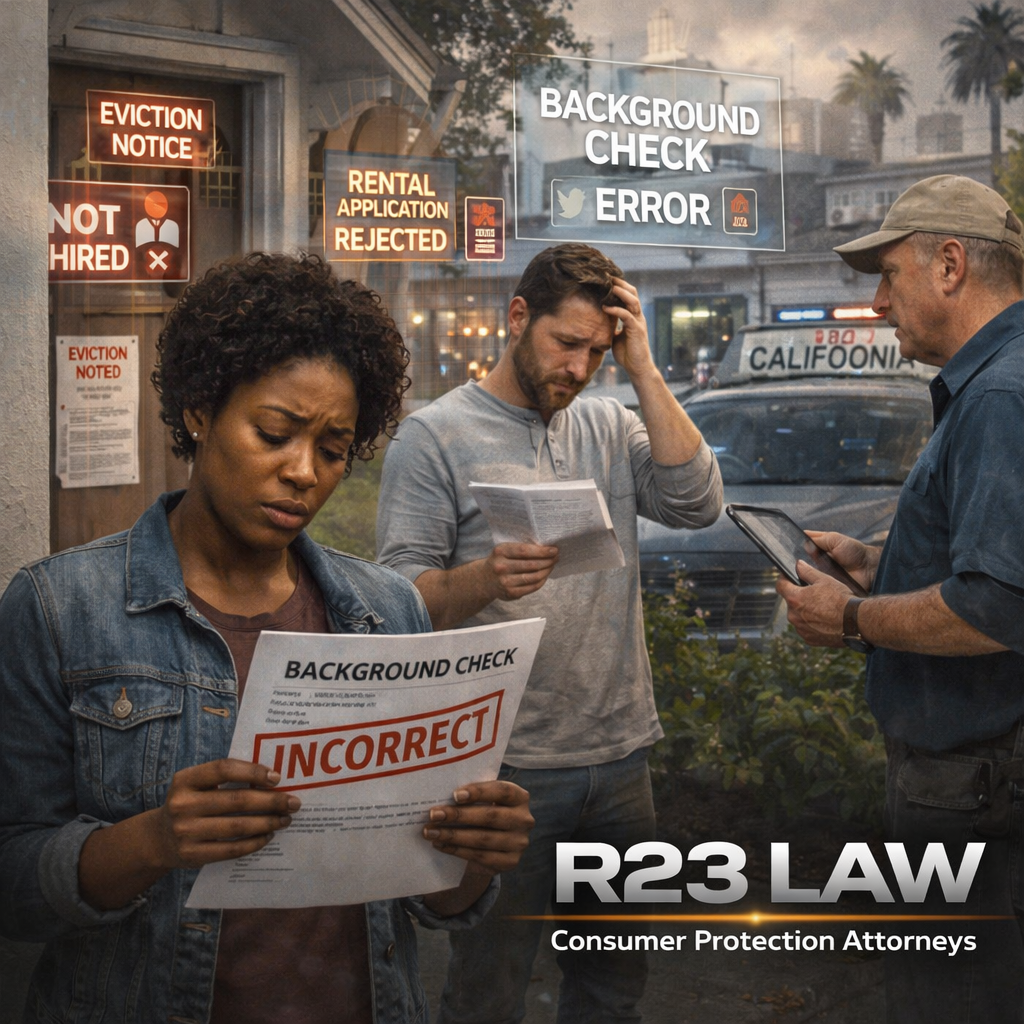
Background checks are sold as objective snapshots
In reality, they are only as reliable as the data inside them. When that data is wrong, a background check can suddenly become a barrier to employment, housing, promotions, licensing, or financial stability. Employment reports may include criminal history, credit information, public records, driving history, and employment history, which means a single inaccurate line can ripple far beyond one application.
For California consumers, that matters because background check errors are not just clerical annoyances. They can trigger real-world damage: a withdrawn job offer, a rejected rental application, reputational harm, or lost income. That is exactly why this issue belongs in the same broader consumer-rights conversation as credit reporting disputes, identity theft, and other data-accuracy failures that R23 Law’s California Consumer Protection Attorneys regularly confront.
California Background Check Errors Can Derail More Than an Application
The most common background check problems are often painfully ordinary. A report may contain someone else’s record because of a mixed file. It may list inaccurate identifying information, outdated public-record data, or criminal matters that should not be surfacing the way they do. The attached source article also correctly centers a practical truth: these errors often show up at the worst possible moment—right when someone is applying for a job or housing and has the least room for delay.
That is what makes inaccurate background screening so disruptive. The problem is not merely that a report is wrong. The problem is that the wrong report may be treated as fact by an employer, landlord, or screening user who never sees the real story behind it. Once bad data starts making decisions for other people, the consequences become immediate and expensive.
The FCRA Sets the Ground Rules for Background Check Accuracy
When an employer uses a third-party background screening company, the Fair Credit Reporting Act sets important rules. The employer generally must get the applicant’s written permission before obtaining the report. If the employer is considering adverse action based on the report, it must provide the applicant with a copy of the report and a summary of rights before making the decision, and it must send an adverse action notice after the decision is made.
The FCRA also requires consumer reporting agencies to use reasonable procedures and gives consumers the right to dispute inaccurate information. In most cases, a reinvestigation must be completed within 30 days, with a limited extension available in certain circumstances. When a report is inaccurate, incomplete, or unverifiable, that is not just a bad customer-service experience. It can become the foundation of an FCRA claim.
California Adds Extra Background Check Protections
California does not stop at the federal floor. Under the Investigative Consumer Reporting Agencies Act, a person seeking an investigative consumer report for employment purposes generally must provide a clear standalone disclosure, identify the report’s purpose, identify the reporting agency, and obtain written authorization. California law also gives the consumer a path to request a copy of the report.
California employment law adds another important layer where criminal history is involved. The Fair Chance Act generally prohibits employers with five or more employees from asking about conviction history before a conditional job offer. State guidance also says employers generally may not consider arrests not followed by conviction or convictions that have been sealed, dismissed, expunged, or otherwise eradicated, and they must follow a structured process before rescinding an offer based on criminal history.
That distinction matters. A background check case is not always about whether a company pulled a report. It is often about what they pulled, when they used it, whether they gave the legally required notices, and whether they relied on information California law says should not have been used that way in the first place.
What to Do After an Inaccurate Background Check
The first move is to get the report itself. You need to see exactly what the screening company and decision-maker saw. Then preserve every related document: disclosure forms, authorization forms, adverse action notices, portal screenshots, emails, and any record showing the opportunity that was affected. Paper trails matter in consumer reporting cases because timeline failures and notice failures are often part of the story.
Next, dispute the inaccurate, incomplete, or unverifiable information with the reporting company and provide documents that support the correction. If the issue involves criminal history, that may include court records, dismissal orders, expungement-related documentation, or proof that the record belongs to someone else. A background screening company that fails to correct a bad report after a proper dispute may be creating a much bigger legal problem for itself.
Why Background Check Errors Belong in Consumer Protection Litigation
Background check cases fit naturally into modern consumer protection work because they are really cases about data misuse, false reporting, and economic harm. One wrong report can block income, housing, career advancement, and financial recovery. That is the same core problem seen in credit reporting and identity-related consumer cases: a company uses bad information, then the consumer absorbs the fallout.
That is why this topic aligns cleanly with the way R23 Law talks about consumer rights. R23 Law’s public-facing materials emphasize credit disputes, fraudulent reporting, identity theft, financial fraud, and other consumer-finance harms caused by inaccurate or unfair information practices. A background check error that costs a Californian a job or housing opportunity belongs in that same enforcement-minded framework. R23 Law's California Consumer Protection Attorneys focus on holding companies accountable when bad data is treated as truth and real damage follows.
The Bottom Line
A background check should not become a fiction file. When inaccurate information costs a California consumer a job, apartment, or professional opportunity, federal and state law may provide real remedies. For consumers dealing with mixed files, improper criminal-history reporting, notice failures, or dispute failures, the issue is bigger than embarrassment or inconvenience. It is a consumer protection problem with legal consequences. R23 Law's California Consumer Protection Attorneys frame these cases the right way: as fights over accuracy, fairness, and accountability when powerful institutions make decisions based on the wrong record.
