
DOUBLE TROUBLE — When a Twin’s Credit History Wrecks Yours
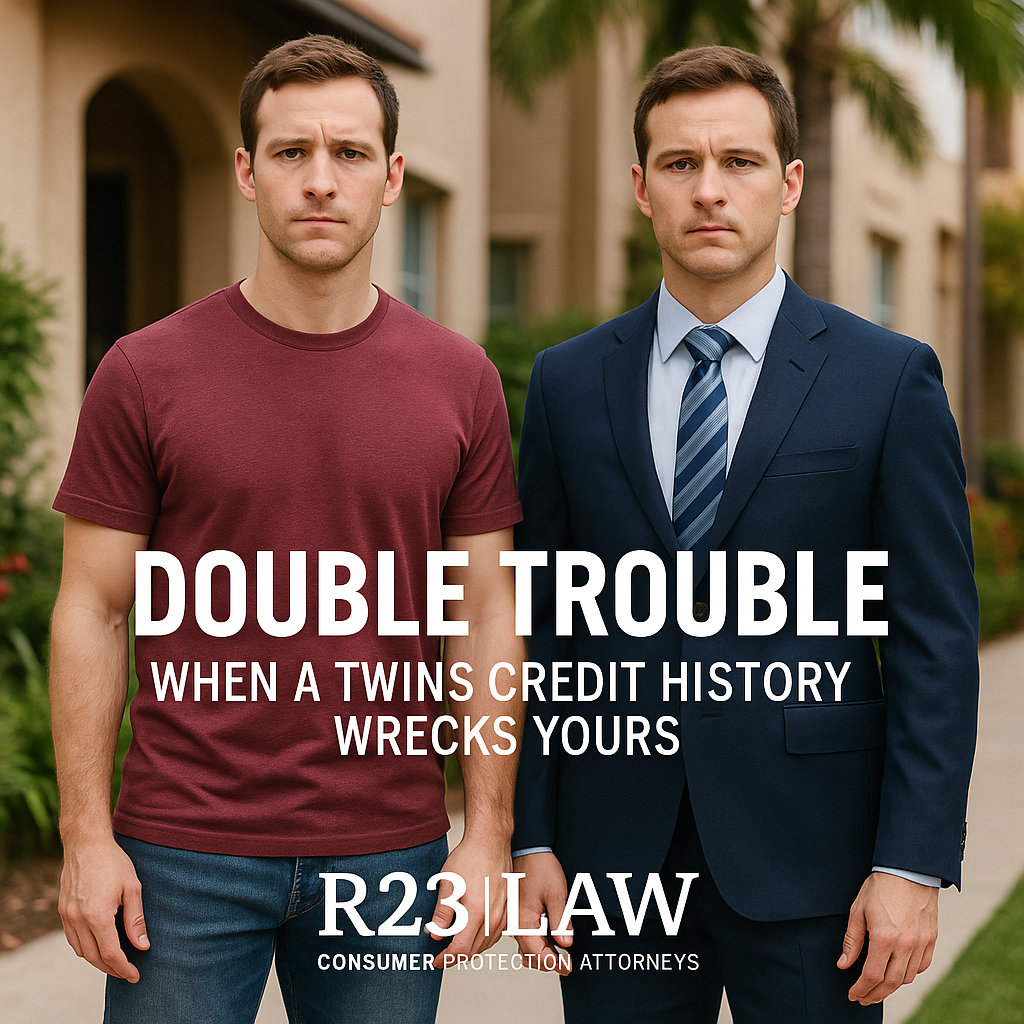
Mistaken identity between twins can lead to serious credit report errors
If your sibling’s debts, records, or criminal history show up as yours, R23 Law’s California Consumer Protection Attorneys can help you fight back and clear your name.
When Sharing a Birthday Leads to Sharing a Credit Nightmare
Twins have a lot in common—names, birthdays, even address histories. But what they shouldn’t share is a credit report.
Yet across California, people are discovering that their twin’s financial and criminal records are being mistakenly reported as their own—thanks to background check and credit reporting companies that cut corners.
At R23 Law, our California Consumer Protection Attorneys regularly represent clients in twin identity mix-up cases, helping them restore their records and hold credit reporting agencies accountable under the Fair Credit Reporting Act (FCRA).
Why Twin Mix-Ups Happen
Background check companies and credit bureaus often rely on partial data matches. That’s a big problem when it comes to twins who share:
First and last names
Birthdates
Address histories
Even positive data—like a mortgage or loan paid on time—can create problems if it doesn’t belong to you. But when your twin’s criminal record, eviction, debt, or job history ends up in your file, it can cost you a loan, a job, or a home.
Know Your Rights Under the FCRA
You have the right to dispute and correct errors on your credit report or background check. And if the mix-up caused you financial or emotional harm, you may be eligible to sue for damages.
Under the FCRA, you’re protected when:
Credit bureaus fail to verify identity
Reporting companies include information that isn’t yours
Landlords or employers view unauthorized or false records
Agencies ignore or delay correcting known errors
What To Do If You’ve Been Affected by a Twin Mix-Up
Step 1: Request Your Reports
Get your credit reports from Equifax, Experian, and TransUnion. Also request any background checks that were used for employment, housing, or credit decisions.
Step 2: Review for Inaccurate Items
Look for entries that don’t belong to you—especially:
Loans
Credit cards
Evictions
Criminal charges
Job history
Step 3: Dispute the Error in Writing
Send a written dispute to the credit bureau or background check company, including:
Proof of your identity
Statements confirming which accounts or records aren’t yours
Any evidence the data belongs to your twin
Under the FCRA, companies have 30 days to investigate and correct the issue.
Step 4: Contact the Source (Furnisher)
If a bank, landlord, or employer provided the wrong info, contact them directly. They are required to correct the record with the credit bureau.
Step 5: Keep Monitoring Your Reports
After correction, continue checking for repeat mix-ups. A credit monitoring service may help.
Step 6: Contact R23 Law’s California Consumer Protection Attorneys
If the mix-up continues, or has already caused job loss, housing denial, or distress, you may be able to file a lawsuit under the FCRA.
How R23 Law Can Help You Correct the Record
At R23 Law, we understand how devastating credit reporting errors can be—especially in cases involving twin identity confusion. We’ve helped clients across California:
Prove that the data isn’t theirs
Handle communication with credit bureaus and background check companies
Pursue legal action to recover financial damages
Fix their reports permanently
We take these cases on a contingency basis—you pay nothing unless we recover for you.
📞 Request your free case review today and let us help you take back control of your credit and reputation.
