
FALSE DEBT, REAL DAMAGE – Consumer Rights After Wrongful Collections And Credit Report Errors
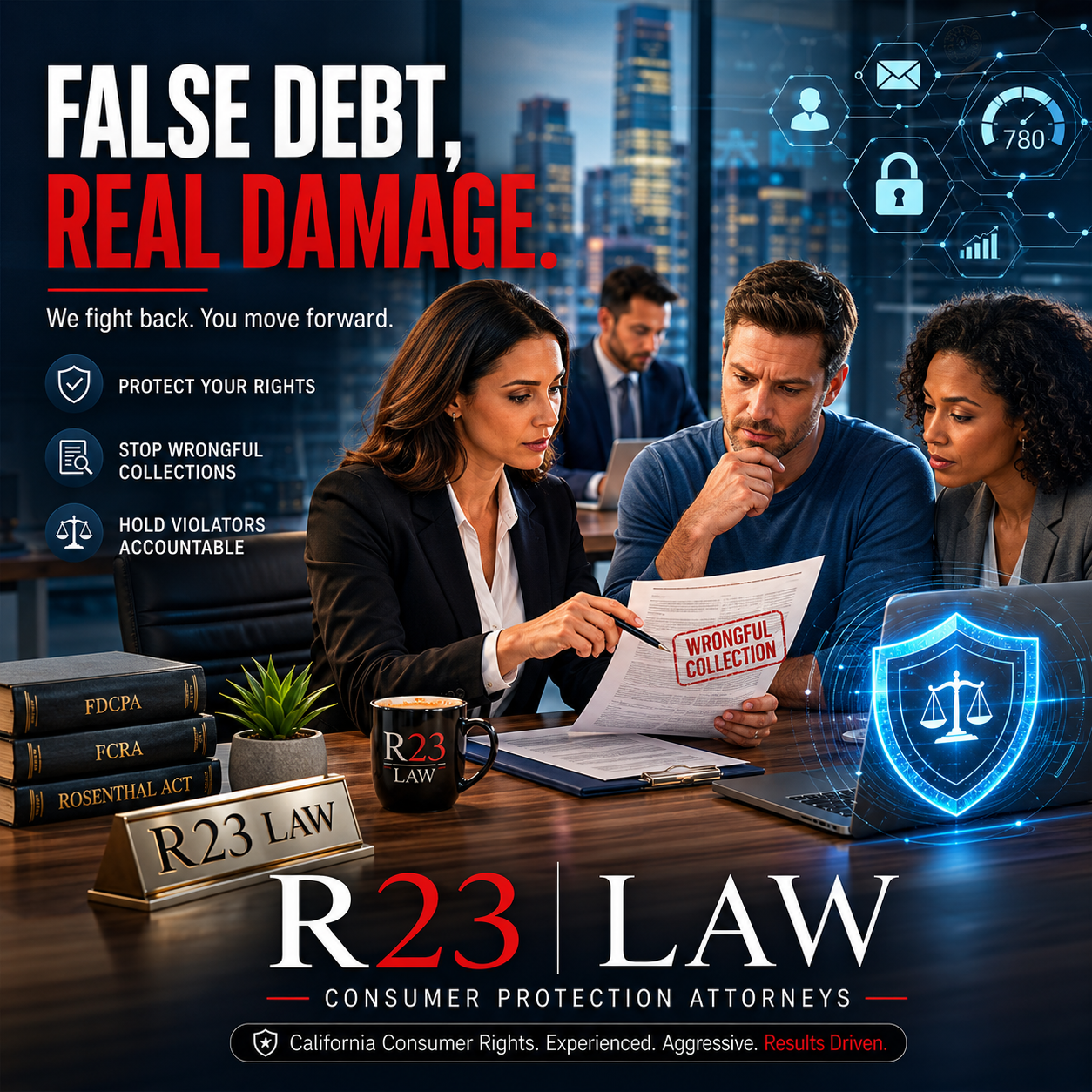
False debt collection can damage credit, trigger harassment, and create financial injury
R23 Law's California Consumer Protection Attorneys represent California consumers facing wrongful collections, credit report errors, and FDCPA violations.
False Debt, Real Damage
False debt collection can turn a consumer’s financial life upside down. A collector may demand payment on a debt that was already paid, belongs to someone else, resulted from identity theft, was discharged, was reported with the wrong balance, or should never have been sent to collections at all.
The attached source material explains that consumers may have legal claims when creditors, credit reporting agencies, or debt collectors falsely report or pursue collection activity, especially when that conduct damages credit, creates harassment, or violates federal consumer protection laws.
R23 Law's California Consumer Protection Attorneys represent consumers throughout California when false debts cause credit report damage, collection pressure, denied applications, and financial injury. Learn more at AboutUs, meet Our Team, or begin a confidential review through ContactUs.
Wrongful Collections Can Damage More Than Credit
A false collection account can affect mortgages, auto loans, apartment applications, credit cards, insurance pricing, and employment screening. Even when the consumer does not owe the debt, the reporting may still create serious consequences until the record is corrected.
The attached material emphasizes that creditworthiness can determine access to mortgages, auto loans, apartments, credit, and interest rates. It also explains that collection activity can begin with a single call that violates consumer rights.
R23 Law's Expert Legal Services for Debt Collection Injury Victims Throughout California
R23 Law's California Consumer Protection Attorneys evaluate false debt collection cases involving inaccurate credit reporting, paid debts sent to collections, identity theft accounts, collector harassment, improper validation, collection of debts not owed, and continued reporting after disputes.
These cases may involve creditors, debt buyers, collection agencies, furnishers, Equifax, Experian, TransUnion, and other consumer reporting agencies.
FDCPA Rights Against Abusive and False Collection Conduct
The Fair Debt Collection Practices Act protects consumers from abusive, deceptive, and unfair debt collection practices. The FDCPA includes provisions addressing harassment or abuse, false or misleading representations, unfair practices, validation of debts, and civil liability.
Under the FDCPA, a debt collector generally must provide validation information about the debt, including the amount of the debt and the name of the creditor, and consumers have dispute rights tied to that validation process.
False Debts Belong in Writing
When a debt appears wrong, consumers should build a written record. The attached material recommends requesting a debt validation letter, documenting every communication, preserving payment records, and collecting emails, letters, screenshots, text records, call logs, and financial documents showing payment or discrepancy.
A written dispute can identify the debt, explain why it is wrong, request validation, and preserve proof that the collector or creditor received notice.
FCRA Claims After a False Collection Hits a Credit Report
False debt collection often becomes a credit reporting case. If a collection account appears on a credit report and the consumer disputes it, the Fair Credit Reporting Act requires consumer reporting agencies to conduct a reasonable reinvestigation of disputed information, generally within 30 days.
R23 Law's California Consumer Protection Attorneys evaluate whether credit bureaus and furnishers conducted reasonable investigations, reviewed supporting documents, corrected inaccurate information, and stopped reporting debts that could not be verified.
FDCPA Damages for Collection Violations
The FDCPA allows consumers to seek actual damages, additional statutory damages in individual cases up to $1,000, and attorney’s fees and costs in successful actions against debt collectors that violate the statute.
Actual damages may include financial loss, credit harm, emotional distress, time spent addressing unlawful collection activity, and other documented consequences depending on the facts.
California Rosenthal Act Protections
California consumers may also have rights under the Rosenthal Fair Debt Collection Practices Act. California Civil Code section 1788 states that the title may be cited as the Rosenthal Fair Debt Collection Practices Act.
The Rosenthal Act can matter when collection conduct affects California consumers, especially where a collector uses unfair, deceptive, or abusive practices while pursuing a consumer debt.
Common False Debt Collection Scenarios
False collection cases may involve a debt that was already paid, a balance that was inflated, an account caused by identity theft, a debt assigned to the wrong person, a medical bill reported incorrectly, a collection account duplicated on a credit report, a debt sold with bad data, or a collector refusing to stop after receiving proof.
R23 Law's California Consumer Protection Attorneys pursue the record behind the account — who created it, who reported it, who verified it, who collected on it, and who ignored the consumer’s dispute.
Records That Strengthen a False Debt Case
Consumers should preserve credit reports, collection letters, validation notices, dispute letters, certified mail receipts, payment confirmations, account statements, settlement letters, identity theft reports, police reports, emails, screenshots, call logs, voicemail records, denial notices, and creditor responses.
The strongest cases often show a clear timeline of the false debt, the dispute, the evidence submitted, and the company’s failure to correct or stop the unlawful conduct.
R23 Law's California Consumer Protection Attorneys for Collection and Credit Damage
False debt collection is not just a billing problem. It can become a credit reporting problem, a lending problem, a housing problem, and a financial stability problem.
R23 Law's California Consumer Protection Attorneys represent consumers under laws that may include the FDCPA, FCRA, Rosenthal Fair Debt Collection Practices Act, California Consumer Credit Reporting Agencies Act, California Identity Theft Act, Truth in Lending Act, and other consumer protection statutes where applicable.
The Debt May Be False — The Injury Is Real
A consumer should not be forced to pay a debt they do not owe just to stop calls, protect credit, or secure housing. When collectors, creditors, or credit bureaus keep the wrong debt alive, the paper trail can become the case.
R23 Law follows that record and pursues accountability for California consumers facing false debt collection and credit damage.
Contact R23 Law Today
When false debt collection creates damaged credit, collection pressure, denied applications, or financial injury, R23 Law's California Consumer Protection Attorneys can evaluate the records and pursue accountability under consumer protection law.
SoCal — (310) 598-1588
