
FALSE START — Background Check Errors That Cost Futures
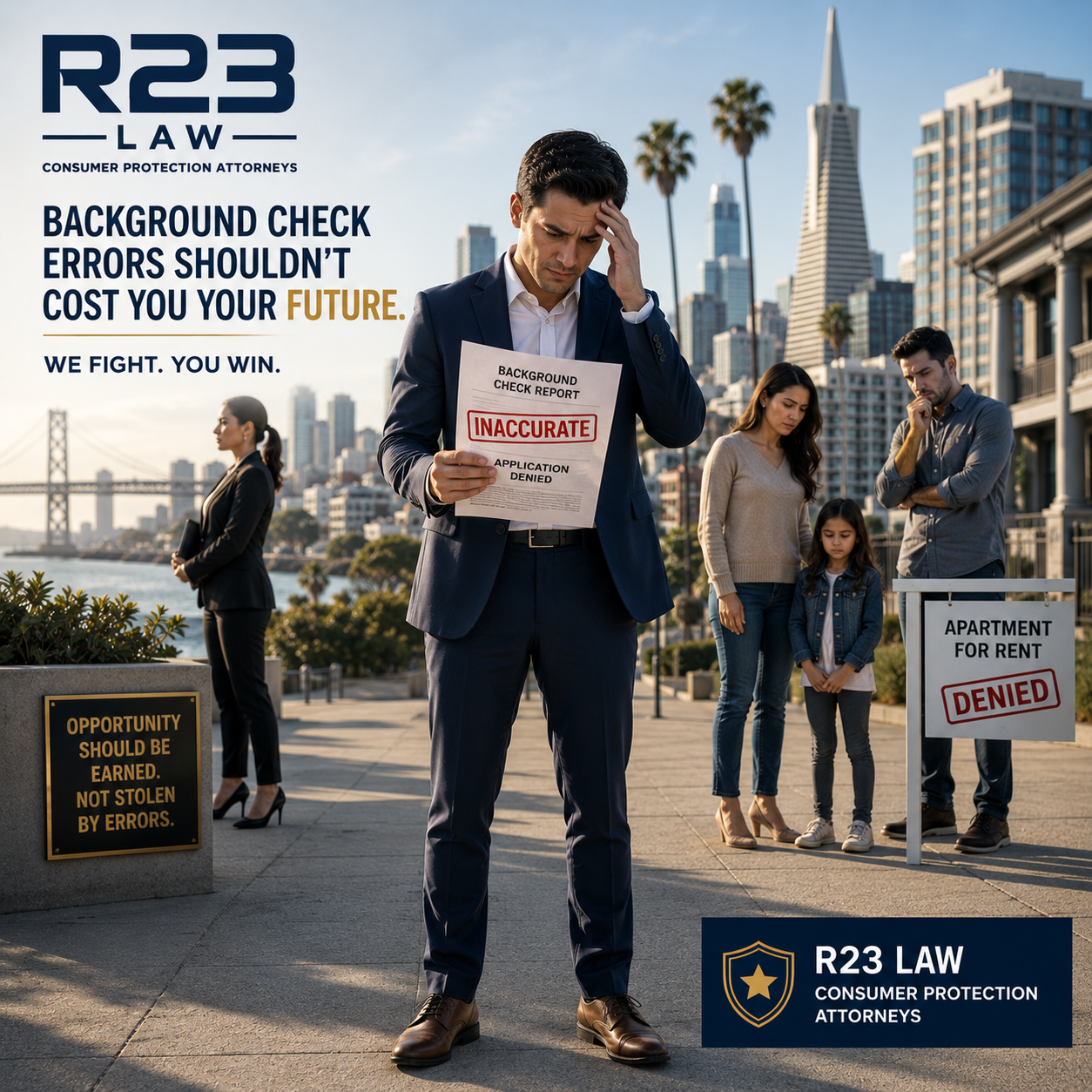
Background check errors can cost Californians jobs, housing, income, and reputation
R23 Law's California Consumer Protection Attorneys pursue claims involving inaccurate reports, mixed files, outdated records, and FCRA violations.
Background Checks Carry Real Power
Background checks can shape major life decisions. Employers use them to evaluate job applicants. Landlords use them to screen tenants. Lenders, schools, licensing bodies, and other organizations may also rely on consumer reports before granting access to opportunities.
A background check may include criminal history, employment history, education records, credit-related information, identity details, public records, and other sensitive data.
When the report is accurate, it may support a lawful decision. When the report is wrong, it can create serious harm. A consumer may lose a job, miss a housing opportunity, suffer reputational damage, or face financial distress because of information that should never have appeared.
R23 Law's California Consumer Protection Attorneys represent consumers injured by inaccurate background checks, unlawful screening practices, and consumer reporting violations throughout California.
Background Checks And Reference Checks Are Different
A background check is a deeper review of a consumer’s history. It may involve criminal records, employment verification, educational background, credit information, public records, and other data gathered by a third-party reporting company.
A reference check is narrower. It usually involves contacting people who previously worked with the applicant to discuss qualifications, work habits, and character.
That distinction matters because background checks often involve consumer reporting laws. When a third-party background check company prepares a report used for employment, housing, credit, insurance, or other eligibility decisions, legal protections may apply.
Background Check Errors Can Cause Serious Harm
Background check companies are supposed to report accurate, complete, and up-to-date information. But reports are not foolproof.
Errors can lead to:
Denied employment
Withdrawn job offers
Denied housing
Lost income
Damaged reputation
Emotional distress
Missed licensing or education opportunities
Financial instability
Legal complications
A consumer should not lose an opportunity because a background check company reported incorrect, outdated, or misleading information.
Common Background Check Errors
Incorrect Criminal Records
Criminal record errors are among the most damaging background check mistakes.
These errors may include:
Charges that were dismissed
Records that were expunged
Records that were sealed
Wrong offense classifications
Misdemeanors reported as felonies
Missing case dispositions
Outdated arrests
Criminal records belonging to another person
One false criminal entry can make a qualified applicant appear unsafe, dishonest, or ineligible.
Mixed File Background Reports
A mixed file occurs when a background check includes another person’s information.
This can happen when two people share similar names, birthdates, addresses, or other identifying details. Mixed files may cause a consumer to be linked to another person’s criminal history, eviction record, credit account, or employment information.
Mixed file errors are especially dangerous because the consumer may have no idea where the false information came from.
Employment And Education Mistakes
Background check reports may incorrectly list employment history, job titles, dates of employment, education credentials, degrees, certifications, or professional licenses.
These errors can make a truthful applicant appear dishonest or unqualified.
Credit And Public Record Errors
Some background checks include credit-related data or public records.
Errors may include:
Incorrect accounts
Fraudulent accounts caused by identity theft
Duplicate debts
Wrong balances
Outdated judgments
Incorrect court records
Records missing final outcomes
When these mistakes appear in a report, they can affect employment, housing, insurance, credit, and professional reputation.
Consumer Rights Under The FCRA
The Fair Credit Reporting Act, known as the FCRA, is one of the most important federal laws protecting consumers from inaccurate background checks.
Under the FCRA, background check companies and consumer reporting agencies must follow procedures designed to promote accuracy, fairness, and privacy.
Consumers may have the right to:
Receive notice when a background check is used against them
Obtain a copy of the report
Dispute inaccurate or incomplete information
Require a reasonable investigation
Have inaccurate information corrected or deleted
Pursue damages when legal rights are violated
Employers using background reports must also follow specific rules, including proper disclosure, authorization, and adverse action procedures.
Other Laws That May Apply
Depending on the facts, additional laws may protect consumers during the background check process.
These may include:
Equal Employment Opportunity Commission guidance involving fair hiring practices
Family Educational Rights and Privacy Act protections involving education records
Health Insurance Portability and Accountability Act protections involving medical privacy
Fair and Accurate Credit Transactions Act protections involving consumer data and identity theft
California consumer reporting laws that may provide additional protections
R23 Law's California Consumer Protection Attorneys evaluate the full legal picture when a background check error causes real harm.
Steps After Discovering A Background Check Error
Obtain The Report
The first step is to request a copy of the background check from the company, employer, landlord, or organization that used it.
Consumers should review every section carefully, including names, addresses, dates of birth, criminal records, employment history, education information, credit information, and public records.
Identify Each Error
Every inaccurate or outdated item should be marked clearly. Small identity errors may signal a larger mixed-file issue.
Consumers should identify:
Information that does not belong to them
Outdated information
Incorrect criminal records
Missing case outcomes
Wrong employment or education data
Credit information that is inaccurate
Records that were sealed, expunged, or dismissed
Gather Supporting Documents
Supporting documents may include:
Court records
Expungement orders
Sealing orders
Dismissal paperwork
Identification documents
Employment records
Education records
Credit reports
Police reports
Identity theft reports
Letters from creditors, courts, schools, or employers
Strong documentation can make the dispute more difficult for the reporting company to ignore.
Send A Written Dispute
Consumers should submit a written dispute to the background check company and request correction or deletion of inaccurate information.
A written dispute should include:
Full name and contact information
Report identification number, if available
Clear description of each error
Explanation of why the information is wrong
Copies of supporting documents
Request for correction or removal
Certified mail or another trackable delivery method can create proof that the dispute was received.
Timing Matters After A Background Check Error
Background check errors should be addressed quickly.
A delayed dispute can allow the same false information to spread to employers, landlords, lenders, insurers, or other decision-makers. It may also make it harder to preserve evidence of the harm caused.
Consumers should save all related documents, including background reports, denial letters, adverse action notices, emails, text messages, dispute letters, certified mail receipts, and records showing lost income or emotional distress.
Compensation For Background Check Error Victims
When a background check company reports inaccurate information and fails to correct it, legal claims may be available.
Potential recovery may include:
Lost wages
Lost job opportunities
Lost housing opportunities
Application fees
Out-of-pocket expenses
Emotional distress
Reputational harm
Statutory damages
Punitive damages for willful violations
Attorney’s fees and litigation costs
The available damages depend on the facts, the harm suffered, the company involved, and whether the violation was negligent or willful.
R23 Law's Expert Legal Services For Background Check Injury Victims Throughout California
R23 Law's California Consumer Protection Attorneys represent consumers injured by background check errors throughout California.
Our legal team handles claims involving:
Inaccurate background check reports
Employment background check errors
Housing background check errors
Mixed file background reports
Criminal record reporting mistakes
Expunged or sealed records appearing on reports
Credit information errors in background checks
Public record errors
Failure to investigate disputes
FCRA violations
California consumer reporting law violations
R23 Law pursues accountability when background check companies, employers, landlords, data vendors, and consumer reporting agencies violate consumer rights.
Learn more about the firm through About Us, review the attorneys on Our Team, or begin the case review process through Contact Us.
Accurate Background Reports Matter For California Consumers
A background check should not become a barrier built on bad data.
When a report is wrong, consumers deserve accurate corrections, fair procedures, and accountability from the companies that caused the harm. R23 Law's California Consumer Protection Attorneys are committed to protecting consumers from inaccurate reports and unlawful background screening practices.
Contact R23 Law Today
If a background check error cost you employment, housing, income, reputation, or financial stability, R23 Law's California Consumer Protection Attorneys can review your potential claims and pursue accountability under federal and California law.
Toll-Free — 310-598-1588
