
FIRED BY A BACKGROUND CHECK — Why Employers Get Sued, and What You Can Do About It
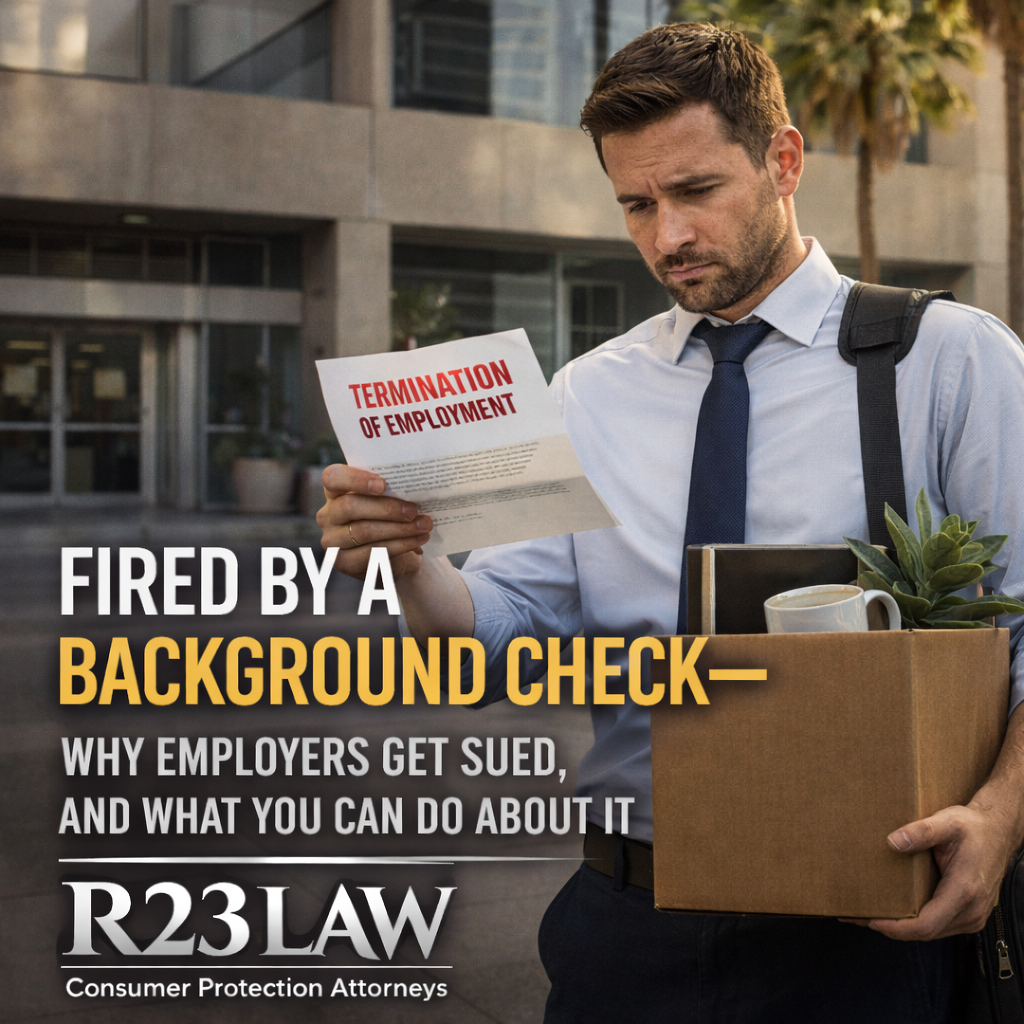
It’s a story we hear too often
A job offer gets pulled, a promotion disappears, or someone is suddenly fired—based on inaccurate or mishandled background check results.
At R23 Law, our California Consumer Protection Attorneys work with individuals who have lost employment opportunities due to violations of the Fair Credit Reporting Act (FCRA). These aren’t just clerical errors—they’re legal failures that can cost workers their income, reputation, and stability.
Let’s break down the most common issues that lead to lawsuits against employers and what you can do if it happens to you.
Background Checks & Adverse Employment Action: The Legal Landscape
Under the FCRA, employers using background check data (known as consumer reports) must follow strict legal requirements when they take any “adverse action” against you, such as:
Denying employment
Revoking a job offer
Firing or demoting you
Withdrawing promotion offers
Before they act, they’re required by law to give you:
A copy of the background report
A written notice of intent to take adverse action (called a Pre-Adverse Action Notice or PAAN)
A copy of “A Summary of Your Rights Under the Fair Credit Reporting Act”
Skipping these steps opens the door to liability—and potential legal recovery for you.
Top 3 Reasons Employers Get Sued Under the FCRA
1. Failure to Provide a PAAN (Pre-Adverse Action Notice)
Employers often argue they didn’t need to send this notice because the decision wasn’t final yet. But courts have held that if the employer communicates that a job offer is revoked—or fails to send the required documents in time—that’s a violation.
This technicality has become one of the most contested issues in FCRA litigation.
2. Lack of Standing: “No Real Harm” Argument
Some employers argue that even if they broke the rules, the job applicant wasn’t really harmed—because the outcome “might have been the same anyway.” Courts vary, but many recognize emotional distress, loss of opportunity, and even reputational harm as valid injuries under the law, especially after the TransUnion v. Ramirez ruling.
3. Claiming the Violation Wasn’t Willful
FCRA lawsuits can result in statutory damages of $100 to $1,000 per violation, plus actual damages, attorney’s fees, and punitive damages if the violation was “willful.”
Employers will often argue it was just an oversight—but courts have found that if a company ignored known compliance failures or failed to train staff, that may constitute willful misconduct.
Why These Cases Are So Hard-Fought
Employers and their legal teams know how high the stakes are. That’s why these lawsuits often face:
Early motions to dismiss
Claims of technical defenses
Attempts to deny the plaintiff suffered real harm
But with the right legal strategy—and documentation showing real consequences—many employees win compensation and force companies to change their practices.
What to Do If a Background Check Cost You a Job
If you’ve been denied employment, fired, or demoted due to a background check:
Request a copy of the background report used.
Look for errors—wrong names, outdated records, criminal offenses that don’t belong to you.
Ask if you were sent a PAAN before the decision was made.
Document how the job loss affected you—financially and emotionally.
Then, contact R23 Law’s California Consumer Protection Attorneys. We will evaluate whether your rights were violated and determine if you have a claim under the FCRA.
R23 Law Holds Employers and Screening Companies Accountable
At R23 Law Consumer Protection Attorneys, we understand the high pressure of the California job market. We’ve represented clients in employment background check disputes involving:
Criminal record mismatches
Inaccurate credit histories
License verification errors
Failure to follow FCRA protocol
If your job was pulled over a background check, get in touch today. R23 Law offers free case evaluations—and you may be entitled to compensation.
