
FORCED INTO DEBT – Coerced Debt, Financial Abuse, And California Consumer Protection Claims
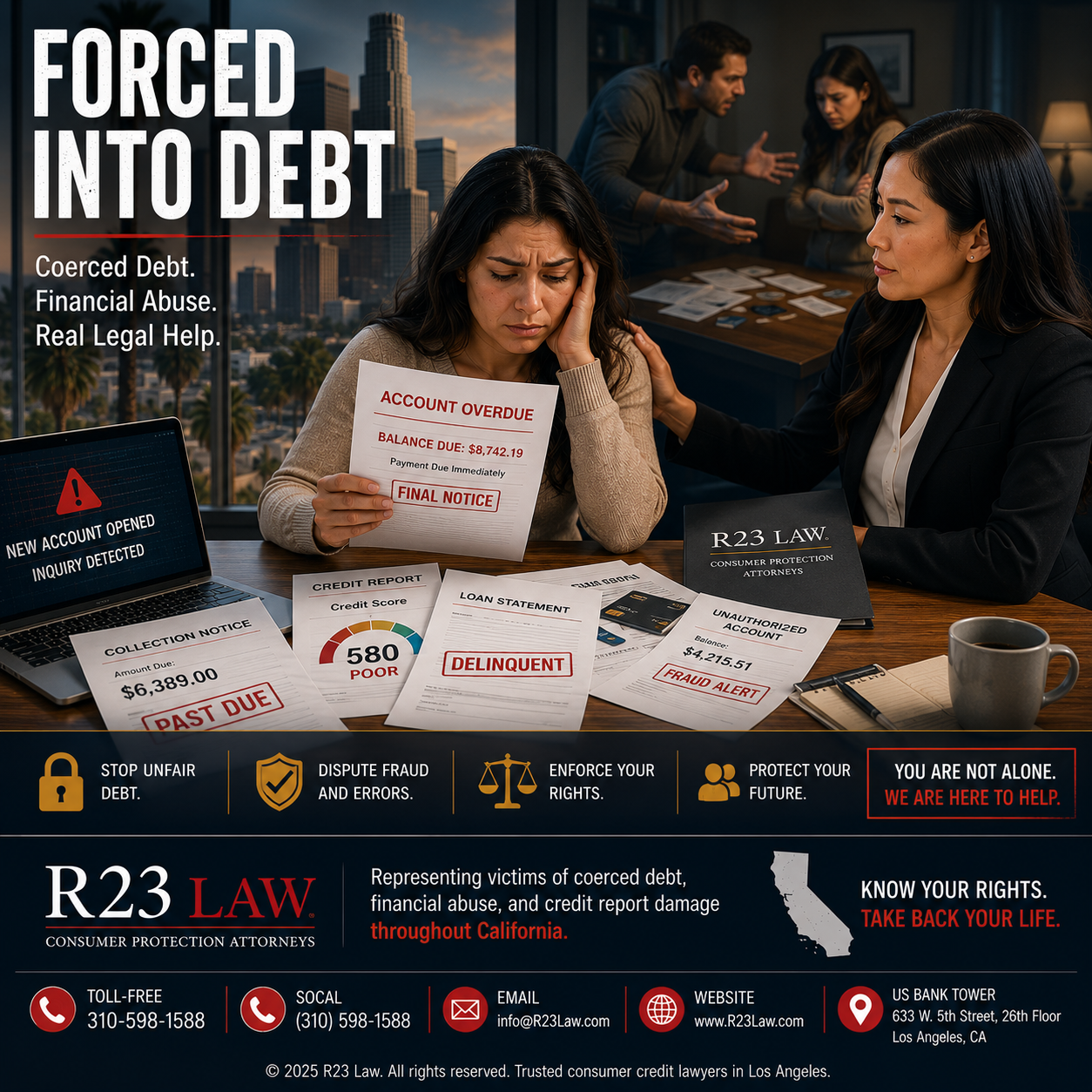
Coerced debt can damage credit, trigger collections, and trap survivors of financial abuse
R23 Law's California Consumer Protection Attorneys represent coerced debt victims throughout California.
Coerced debt is financial abuse with lasting consequences. It can leave victims facing credit card balances, loans, bank withdrawals, collection calls, damaged credit reports, and denied applications for debt they never freely agreed to take on.
This kind of abuse often happens in close relationships. A spouse, partner, parent, caregiver, or trusted family member may use threats, pressure, manipulation, or unauthorized access to create debt in another person’s name. Many victims do not discover the damage until after the relationship ends, after a credit denial, or after a collector begins demanding payment.
R23 Law's California Consumer Protection Attorneys represent consumers throughout California facing coerced debt, identity theft, credit report errors, unauthorized transfers, and unlawful debt collection. Learn more through About R23 Law, meet the attorneys on Our Team, or begin a confidential case review through Contact R23 Law.
Coerced Debt — Financial Abuse Hidden In Plain Sight
Coerced debt occurs when someone causes another person to become responsible for debt through force, fraud, intimidation, manipulation, or unauthorized use of personal information.
It can happen in romantic relationships, marriages, family relationships, elder care situations, and caregiver arrangements. Victims may be pressured into signing financial documents, opening accounts, sharing cards, turning over passwords, or allowing another person to control their financial life.
Common examples include:
Using a victim’s credit or debit card without consent
Opening loans, credit cards, or accounts in the victim’s name
Forcing a victim to apply for credit through threats or manipulation
Refinancing debt without the victim’s knowledge or meaningful consent
Running up balances on shared or individual accounts
Using a child’s, elder’s, or disabled person’s identity to create debt
Taking financial control to keep a victim dependent or trapped
Coerced debt is not simply poor money management. It is often part of a broader pattern of economic abuse and control.
Credit Damage After Coerced Debt
The financial injury can surface long after the abuse begins. A coerced or fraudulent account may appear on a credit report as a delinquency, charge-off, collection account, hard inquiry, unpaid balance, or lawsuit.
That damage can affect:
Housing applications
Employment opportunities
Auto loans
Credit card approvals
Mortgage applications
Insurance pricing
Banking access
Financial independence after abuse
Collectors and creditors may treat the victim as responsible for the balance, even when the debt was created through coercion, fraud, or abuse. That is why strong documentation and experienced legal review matter.
Consumer Protection Laws May Apply
Victims of coerced debt may have rights under federal and California consumer protection laws.
The Fair Credit Reporting Act protects consumers from inaccurate credit reporting and gives victims the right to dispute fraudulent, incorrect, or unverifiable information on credit reports.
The Electronic Fund Transfer Act may apply when unauthorized electronic transfers are made from a bank account, debit card, or other covered account.
The Fair Credit Billing Act may apply to certain unauthorized or disputed credit card charges.
California identity theft and consumer protection laws may also provide remedies when personal information is misused or when companies refuse to correct records after receiving notice of fraud or abuse.
R23 Law's California Consumer Protection Attorneys evaluate coerced debt matters involving fraudulent accounts, unauthorized transfers, inaccurate credit reporting, identity theft, and debt collection misconduct.
Disputing Coerced Debt With Creditors And Credit Reporting Agencies
When coerced debt appears on a credit report, victims should act quickly to dispute the account with both the credit reporting agencies and the company reporting the debt.
A strong dispute should explain that the debt was not voluntarily authorized or was created through coercion, financial abuse, fraud, or unauthorized use. Supporting records can strengthen the dispute and create a clear paper trail.
Important records may include:
Credit reports from Equifax, Experian, and TransUnion
Account statements
Debt collection letters
Police reports
FTC identity theft reports
Protective orders or domestic violence documentation
Text messages, emails, or written threats
Bank records
Court filings
Proof of separation or changed residence
Certified mail receipts for dispute letters
A company that receives a dispute cannot ignore evidence and continue reporting inaccurate information without risk. Credit reporting agencies, creditors, furnishers, banks, and collectors may face liability when they fail to conduct a reasonable investigation.
R23 Law's Expert Legal Services For Financial Injury Victims Throughout California
R23 Law represents financial injury victims throughout California whose lives have been disrupted by coerced debt, identity theft, fraudulent accounts, unlawful collections, and credit reporting violations.
R23 Law's California Consumer Protection Attorneys may review credit reports, analyze disputed accounts, evaluate creditor and collector conduct, identify responsible companies, pursue corrections, and seek compensation when consumer protection laws are violated.
These cases require careful legal strategy. Coerced debt often involves trauma, privacy concerns, family dynamics, safety issues, and complicated evidence. R23 Law approaches these matters with focused legal experience and respect for the victim’s circumstances.
Debt Collectors Must Follow The Law
Debt collectors do not get a free pass just because a coerced debt appears in a victim’s name. They must follow federal and California debt collection laws.
Collectors may not use harassment, deception, abusive calls, false threats, misleading statements, or unfair pressure tactics. If a collector continues pursuing a coerced debt after receiving a proper dispute or fraud notice, additional legal claims may exist.
Victims should preserve collection letters, voicemails, call logs, emails, lawsuits, payment demands, and every written communication connected to the account.
Reclaiming Financial Control After Coerced Debt
Coerced debt can make victims feel trapped by accounts they did not freely create. But credit reports, bank records, collector files, and creditor records can be challenged when the debt is tied to fraud, abuse, coercion, or unauthorized conduct.
Consumers deserve accurate reporting, fair investigations, and accountability from companies that refuse to correct known errors.
Visit Our Team, learn more at About R23 Law, or connect through Contact R23 Law.
Contact R23 Law Today
If coerced debt has damaged your credit, triggered collection calls, or created financial harm after abuse, R23 Law's California Consumer Protection Attorneys can review your rights and discuss potential legal claims.
Toll-Free: 310-598-1588 SoCal: (310) 598-1588 Email: info@R23Law.com Website: www.R23Law.com Office: US Bank Tower, 633 W. 5th Street, 26th Floor, Los Angeles, CA
© 2025 R23 Law. All rights reserved. Trusted consumer credit lawyers in Los Angeles.
