
IDENTITY EXPOSED — Signs Someone Is Using Your Identity
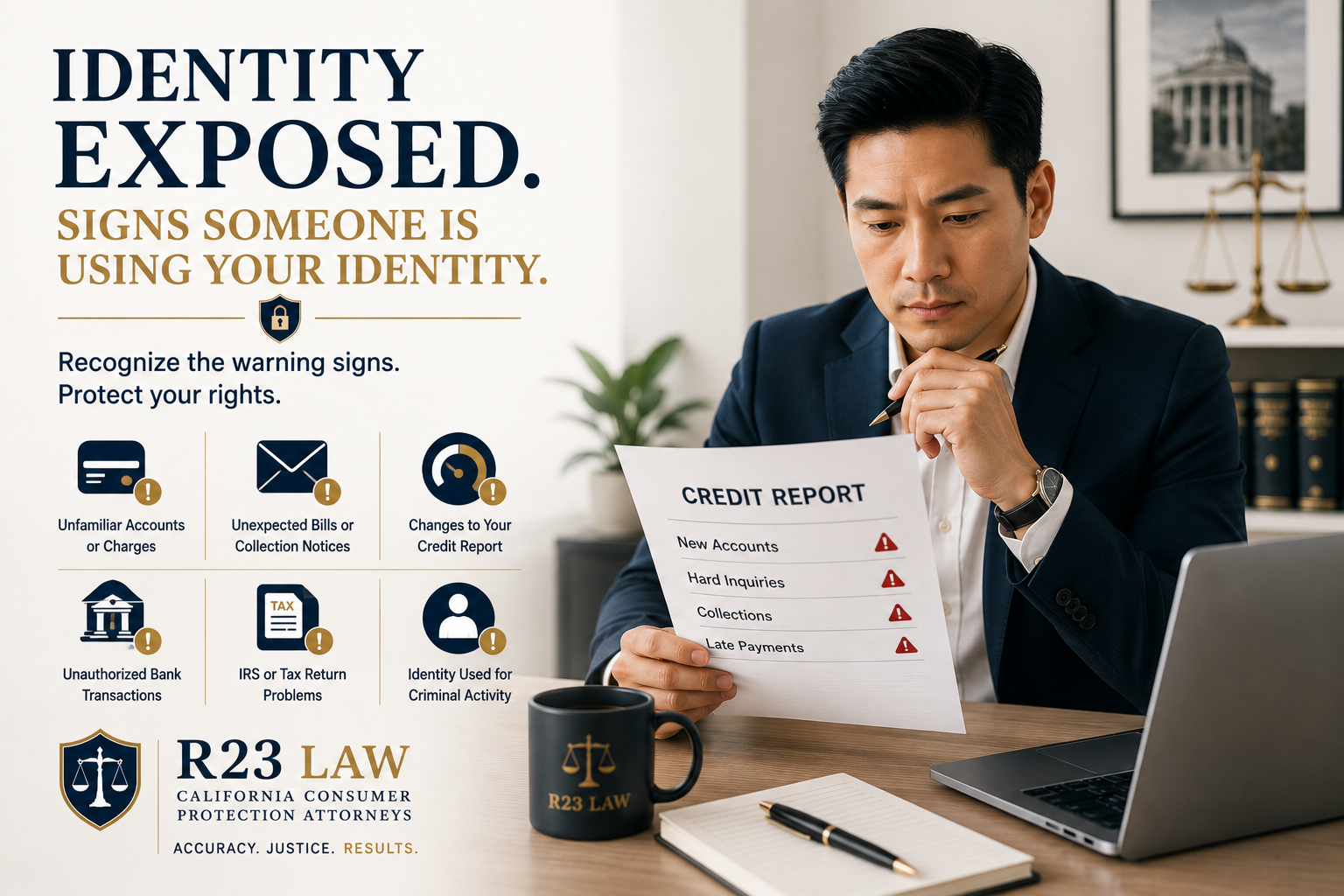
Identity theft does not always announce itself with one dramatic transaction
In many cases, the first clues are scattered across credit reports, bank statements, mail, account alerts, or unfamiliar financial accounts.
A fraudster may use stolen personal information to obtain credit, access financial accounts, claim benefits, receive medical services, file tax documents, or even assume another person's identity during an encounter with law enforcement. By the time the victim recognizes the pattern, the fraudulent activity may already have damaged their credit or created obligations in their name.
R23 Law's California Consumer Protection Attorneys represent identity theft victims dealing with fraudulent accounts, unauthorized transactions, inaccurate credit reporting, debt collection, and other financial consequences of stolen personal information.
Recognizing the warning signs early can make a significant difference.
Identity Theft Can Take Several Forms
Identity theft is not limited to stolen credit cards.
The personal information criminals target can include names, addresses, Social Security numbers, banking information, insurance information, account credentials, and other identifying data.
Common forms of identity theft include the following.
Financial Identity Theft
Financial identity theft occurs when someone uses another person's information to obtain money, credit, products, services, or other financial benefits.
A fraudster may:
Open credit cards
Apply for loans
Access existing financial accounts
Make unauthorized purchases
Withdraw money
Apply for financing
Establish new accounts using stolen information
Financial identity theft may first become visible through a credit report, bank statement, collection notice, or unexpected credit denial.
Social Security Identity Theft
A stolen Social Security number can be used for financial fraud and other forms of impersonation.
The source material identifies potential misuse involving government benefits, disability claims, insurance matters, and other transactions conducted using someone else's Social Security information.
Because a Social Security number can be used across many different systems, its compromise can create problems far beyond a single account.
Medical Identity Theft
Medical identity theft occurs when another person uses a victim's health insurance or identifying information to obtain medical services.
The victim may later discover unfamiliar claims, bills, treatment records, or insurance activity.
Medical identity theft can create both financial and recordkeeping problems, particularly when information belonging to another person becomes associated with the victim.
Synthetic Identity Theft
Synthetic identity fraud involves combining genuine and fabricated information to create a new identity.
A fraudster may combine a real Social Security number with a different name, address, or other information, then use the resulting identity to establish credit or conduct transactions.
Because the fraud does not always appear under the victim's complete identity, synthetic identity theft can be particularly difficult to detect.
Child Identity Theft
Children may become attractive targets because they generally are not reviewing credit reports, applying for loans, or actively monitoring their financial identities.
A stolen child's information may potentially be used to obtain housing, employment, loans, credit, or other benefits.
In some cases, this activity may remain undiscovered for years.
Tax Identity Theft
Tax identity theft can occur when someone uses another person's identifying information to file a fraudulent state or federal tax return.
The victim may discover the fraud only after attempting to file a legitimate return or receiving unexpected tax correspondence.
Criminal Identity Theft
Criminal identity theft occurs when another person presents a victim's identity during an arrest, citation, investigation, or other interaction with law enforcement.
This can create serious consequences if criminal records, warrants, court notices, or other information become incorrectly associated with the victim.
Credit Reports Can Reveal Identity Theft
One of the most important places to search for signs of identity theft is your credit report.
The attached source recommends reviewing reports from Equifax, Experian, and TransUnion and examining them carefully for accounts or inquiries that do not belong to you.
Consumers should look for unfamiliar:
Credit cards
Loans
Collection accounts
Addresses
Account balances
Payment histories
Creditors
Hard credit inquiries
A hard inquiry can be particularly revealing because it may indicate that someone submitted an application for credit using your information.
If you never applied with the company listed in the inquiry, the entry deserves immediate attention.
Consumers can obtain their credit reports through AnnualCreditReport.com and preserve downloaded copies for their records.
Unfamiliar Hard Inquiries Can Be an Early Warning
A fraudulent account may not be the first sign of identity theft.
Before a fraudster successfully opens an account, a lender may pull the victim's credit report in response to a fraudulent application.
That activity may appear as a hard inquiry.
An unfamiliar inquiry can therefore indicate that someone attempted to obtain credit using your identity, even if the application was unsuccessful.
Consumers who discover suspicious inquiries should preserve copies of the credit report showing the entry and investigate the company associated with the inquiry.
Bank and Credit Card Statements Can Reveal Unauthorized Activity
Financial statements should also be reviewed regularly.
Identity thieves may use compromised debit cards, credit cards, banking credentials, or account information to make unauthorized transactions.
Do not assume that only large transactions matter.
Fraudsters may initially make small purchases to determine whether an account is active or whether the legitimate account holder is monitoring activity. A small unexplained charge may therefore be the first indication of a larger problem.
Review statements for:
Purchases you did not make
ATM withdrawals you do not recognize
Electronic transfers you did not authorize
Unexpected recurring charges
Changes to account information
Transfers to unfamiliar recipients
The source emphasizes prompt reporting of unauthorized transactions because timing can affect the rights and remedies available to the account holder.
Unexpected Mail Can Signal Fraudulent Accounts
Sometimes identity theft arrives through the mailbox.
Unexpected correspondence may include:
Credit card statements
Loan documents
Collection letters
Account approval notices
Financial institution correspondence
Insurance documents
Medical bills
Government benefit notices
Tax correspondence
A bill from a creditor you have never used should not be dismissed as junk mail.
It may indicate that someone opened an account using your identity.
Similarly, correspondence about unemployment benefits, insurance claims, medical treatment, or other services you never requested can indicate that your personal information has been misused.
Missing Mail Can Also Be a Warning Sign
Receiving unusual mail is suspicious.
So is suddenly receiving less mail than expected.
Identity thieves may attempt to intercept financial documents, replacement cards, account statements, or other sensitive information. In some circumstances, a fraudster may also attempt to redirect a victim's mail.
Pay attention when expected documents fail to arrive, particularly:
Credit cards
Bank statements
Tax documents
Insurance records
Government correspondence
Replacement identification documents
Unexpected changes involving delivery addresses or electronic account preferences should also be investigated.
Missing Identification Documents Increase the Risk
A missing wallet, phone, computer, passport, driver's license, Social Security card, or bank card can provide a fraudster with information needed to commit identity theft.
The source identifies several items that deserve particular attention when lost or stolen, including:
Phones
Computers
Wallets
Passports
Driver's licenses
Social Security information
Birth certificates
Credit and debit cards
Insurance documents
Consumers should avoid carrying sensitive documents unnecessarily.
A Social Security card, for example, contains information that can be especially valuable to an identity thief.
Unexpected Account Alerts Deserve Attention
Digital warning signs matter too.
Consumers may receive:
Password reset emails they did not request
One-time passcodes they did not initiate
Login notifications from unfamiliar locations
New device alerts
Suspicious text messages
Unexpected telephone calls
Notifications that account information changed
An unsolicited authentication code can indicate that another person is attempting to access an account.
Do not provide verification codes to someone who contacts you unexpectedly.
A Credit Denial Can Reveal Fraud That Was Already There
Some consumers first discover identity theft when applying for legitimate credit.
A person with an otherwise expected credit profile may unexpectedly be denied a loan, offered unfavorable terms, or told that their credit history contains negative information they do not recognize.
That is a strong reason to obtain and review the underlying credit report.
Fraudulent accounts, high balances, collection entries, late payments, or unauthorized inquiries can significantly affect a consumer's creditworthiness.
Preserve Evidence as Soon as Identity Theft Appears
Identity theft cases can become complicated because the fraudulent activity may involve several companies.
Preserving evidence from the beginning can create a clearer record of what happened.
Keep copies of:
Credit reports
Bank statements
Credit card statements
Fraudulent account documents
Collection letters
Emails
Text messages
Account alerts
Screenshots
Credit denial notices
Dispute letters
Delivery confirmations
Responses from creditors or credit reporting agencies
Consumers should also document dates, telephone calls, reference numbers, and the names of company representatives involved in the dispute.
Fraudulent Debts Should Be Disputed
Identity theft can leave victims facing debts they never created.
A fraudster may open a credit card, loan, financing account, or other obligation in someone else's name and then abandon the account.
Eventually, the victim may receive collection notices or discover the account on a credit report.
The source emphasizes disputing fraudulent obligations and creating written documentation establishing that identity theft occurred.
Written disputes can become particularly important when a creditor or debt collector continues pursuing an account after receiving notice that it resulted from identity theft.
California Identity Theft Laws Can Provide Legal Remedies
California law provides remedies for consumers who are pursued for obligations created through identity theft.
The attached source explains that California identity theft protections can allow a victim to establish that an obligation was fraudulently created and seek relief from responsibility for that debt.
Depending on the circumstances and statutory requirements, identity theft victims may also have claims involving damages when companies continue collection activity after receiving appropriate notice of the fraud.
The source identifies potential actual damages and statutory damages of up to $30,000 in qualifying circumstances involving continued collection after notice.
The availability of damages depends on the specific facts and legal requirements involved. The existence of identity theft alone does not mean every remedy automatically applies.
Credit Reporting Damage Can Continue After the Fraud Is Discovered
Stopping the fraud is only part of the problem.
Fraudulent accounts may continue appearing on credit reports even after the consumer identifies the identity theft.
That can affect:
Credit scores
Mortgage applications
Vehicle financing
Personal loans
Credit cards
Housing applications
Interest rates
Other financial opportunities
When identity theft-related information continues to be reported inaccurately, additional consumer protection laws may become relevant.
Consumers should therefore continue reviewing their credit reports after fraudulent accounts have been disputed.
R23 Law's California Consumer Protection Attorneys Represent Identity Theft Victims Throughout California
Identity theft rarely creates only one problem.
A single stolen identity can produce fraudulent accounts, unauthorized transactions, credit reporting errors, debt collection, loan denials, and disputes with multiple financial institutions.
R23 Law's California Consumer Protection Attorneys evaluate the complete chain of events surrounding identity theft and its financial consequences.
A legal review may include:
Fraudulent credit accounts
Unauthorized bank transactions
Hard inquiries resulting from fraudulent applications
Inaccurate credit reporting
Debt collection involving identity theft accounts
Continued collection after notice of fraud
Financial losses
Damage to creditworthiness
Available remedies under California consumer protection laws
Learn more about R23 Law's attorneys through Our Team and the firm's consumer protection practice through About Us.
Detecting Identity Theft Early Can Limit the Damage
Identity theft becomes increasingly difficult to untangle when fraudulent activity continues unnoticed.
Regularly reviewing credit reports, financial accounts, mail, identification documents, and digital account alerts can make suspicious activity easier to identify.
When something appears unfamiliar, preserve the evidence and investigate it.
A strange inquiry, unexplained transaction, missing statement, or unfamiliar collection account may be more than an administrative mistake. It may be the first visible sign that someone is using your identity.
Contact R23 Law Today
Identity theft can damage credit, create fraudulent debts, drain financial accounts, and leave consumers dealing with companies that continue relying on inaccurate information.
R23 Law's California Consumer Protection Attorneys represent identity theft victims throughout California in matters involving fraudulent accounts, unauthorized financial transactions, inaccurate credit reporting, and related consumer protection violations.
Connect with R23 Law through Contact Us to discuss the identity theft activity and the legal rights that may apply.
Toll-Free — 310-598-1588 SoCal — (310) 598-1588 Email — info@R23Law.com Website — www.R23Law.com US Bank Tower, 633 W. 5th Street, 26th Floor, Los Angeles, CA
© 2025 R23 Law. All rights reserved. Trusted consumer credit lawyers in Los Angeles.
