
IDENTITY THEFT HAS RECEIPTS – Warning Signs, Credit Report Errors, And Consumer Protection Claims In California
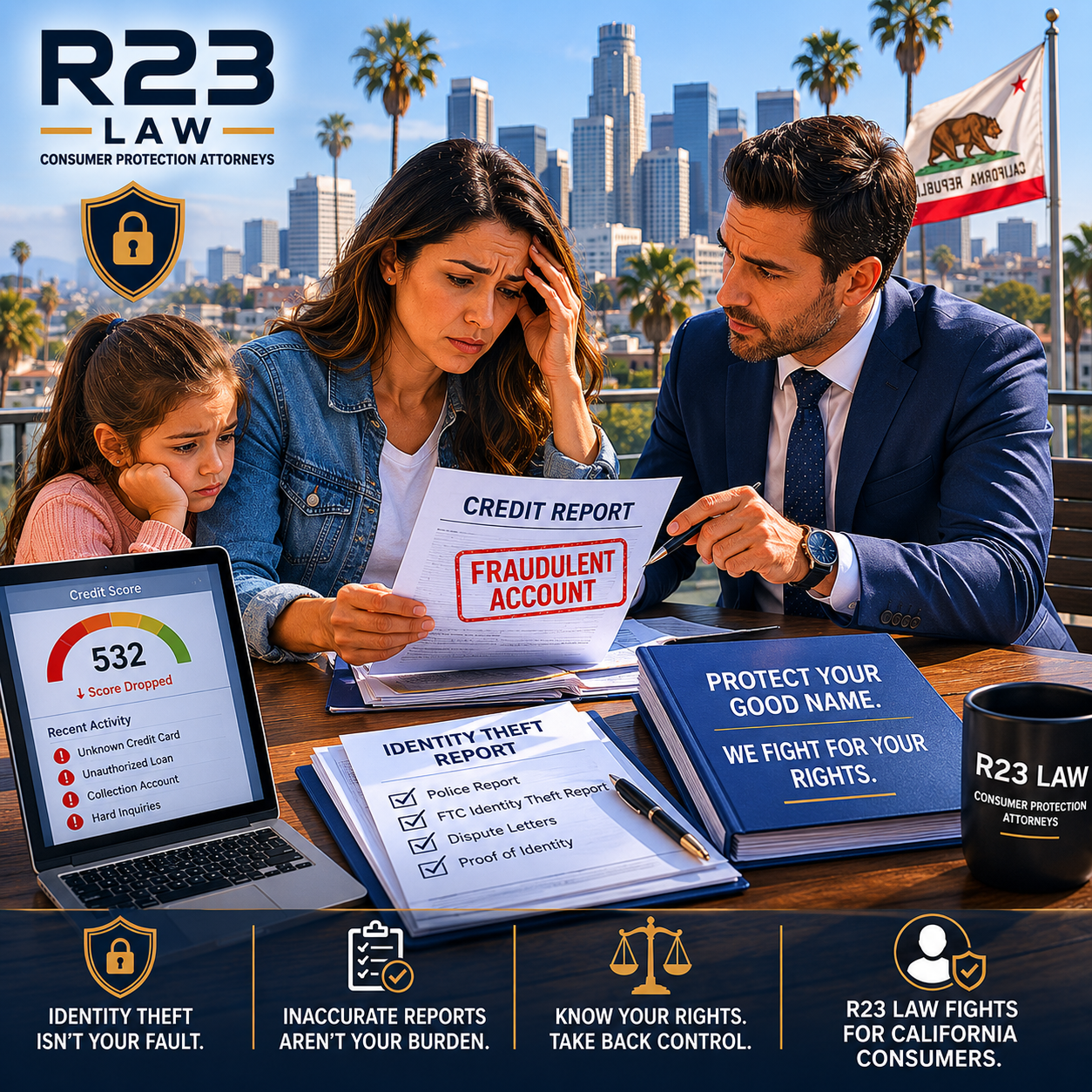
Know the signs of identity theft before fraudulent accounts, false debts, and credit report errors spread
R23 Law's California Consumer Protection Attorneys represent California consumers facing identity theft, inaccurate credit reporting, and unlawful debt collection.
Identity Theft Has Receipts
Identity theft rarely stays quiet for long. It often shows up through strange credit report activity, unexpected bills, unfamiliar medical charges, locked online accounts, suspicious bank alerts, or sudden calls from creditors and debt collectors. When a thief uses someone else’s personal information to open accounts, obtain credit, make purchases, or trigger collection activity, the financial damage can spread quickly.
R23 Law's California Consumer Protection Attorneys represent consumers throughout California when identity theft turns into credit report damage, false debt collection, denied credit, emotional distress, and ignored disputes. Learn more about the firm at About R23 Law, meet R23 Law's attorneys, or begin a confidential review through Contact R23 Law.
Identity Theft Warning Signs That Deserve Attention
A consumer may discover identity theft after reviewing a credit report and seeing unfamiliar accounts, hard inquiries, balances, or addresses. Unexpected bills and collection notices can also signal that someone used personal information without consent.
Other warning signs include bank or credit card alerts about suspicious purchases, medical bills for treatment never received, passwords that no longer work, and a sudden increase in creditor or debt collector calls. The CFPB advises consumers to watch bank statements, credit card statements, and credit reports for suspicious activity.
Credit Report Errors After Identity Theft
Identity theft can become especially damaging when fraudulent accounts appear on a consumer report. A false account may lower a credit score, create apparent delinquency, increase debt-to-income concerns, and affect applications for housing, employment screening, insurance, credit cards, auto loans, or mortgages.
R23 Law's California Consumer Protection Attorneys focus on the legal aftermath of identity theft, including inaccurate credit reporting by Equifax, Experian, TransUnion, banks, lenders, fintech companies, and debt collectors. When companies receive identity theft documentation and still continue reporting false information, the case may involve violations of federal and California consumer protection laws.
R23 Law's Expert Legal Services for Identity Theft Victims Throughout California
R23 Law represents California identity theft victims in disputes involving fraudulent tradelines, unauthorized accounts, false balances, wrongful collections, and credit reporting injuries. The firm’s work often involves reviewing credit reports, dispute histories, police reports, FTC identity theft reports, account records, furnisher responses, and collection communications.
Federal law provides important protections for identity theft victims. Under the Fair Credit Reporting Act, a consumer reporting agency generally must block information identified as resulting from identity theft within four business days after receiving proper proof of identity, an identity theft report, identification of the fraudulent information, and a statement that the transaction does not belong to the consumer.
Immediate Records to Preserve
Strong documentation matters. Consumers should keep copies of credit reports, bank alerts, collection letters, denial notices, dispute letters, certified mail receipts, emails, police reports, FTC identity theft reports, screenshots, call logs, and account statements.
The FTC’s IdentityTheft.gov allows consumers to report identity theft and receive a recovery plan with checklists and sample letters. The CFPB also states that credit reporting companies must investigate disputes, forward relevant dispute materials to the company that supplied the information, and report results back to the consumer.
Fraudulent Debts and California Consumer Protection Claims
Identity theft does not end when the fraudster disappears. Banks, lenders, debt collectors, and credit reporting agencies may continue treating a fraudulent account as valid. That can create a second injury for the consumer.
California law gives identity theft victims potential remedies against claimants pursuing fraudulent debts. California Civil Code section 1798.93 allows a person to bring an action to establish that they are a victim of identity theft in connection with a claimant’s claim. Available remedies may include a declaration that the consumer is not obligated on the claim, an injunction against collection, actual damages, attorney’s fees, costs, equitable relief, and in certain circumstances a civil penalty of up to $30,000.
R23 Law's California Consumer Protection Attorneys for Credit and Collection Injuries
R23 Law's California Consumer Protection Attorneys evaluate whether companies complied with laws that may include the Fair Credit Reporting Act, the California Consumer Credit Reporting Agencies Act, the California Identity Theft Act, the Fair Debt Collection Practices Act, the Rosenthal Fair Debt Collection Practices Act, and California unfair competition laws.
These cases may involve companies that ignored written disputes, failed to conduct reasonable investigations, refused to block fraudulent information, continued collecting false debts, or failed to update consumer reports after receiving identity theft documentation.
Fraud Leaves a Trail — R23 Law Follows It
Identity theft can feel chaotic, but the evidence often tells a clear story. A disputed account, an FTC report, a police report, a credit bureau response, a collector letter, and a lender denial can form the record needed to challenge false reporting and unlawful collection activity.
R23 Law’s consumer protection practice is built for consumers facing credit report damage, identity theft disputes, and financial injuries caused by companies that refuse to correct the record.
Contact R23 Law Today
When identity theft creates false accounts, damaged credit, or wrongful collection activity, R23 Law's California Consumer Protection Attorneys can evaluate the records and pursue accountability under consumer protection law.
Toll-Free — 310-598-1588
