
MONEY SENT, RIGHTS IGNORED — Fighting Peer Payment Fraud with the EFTA
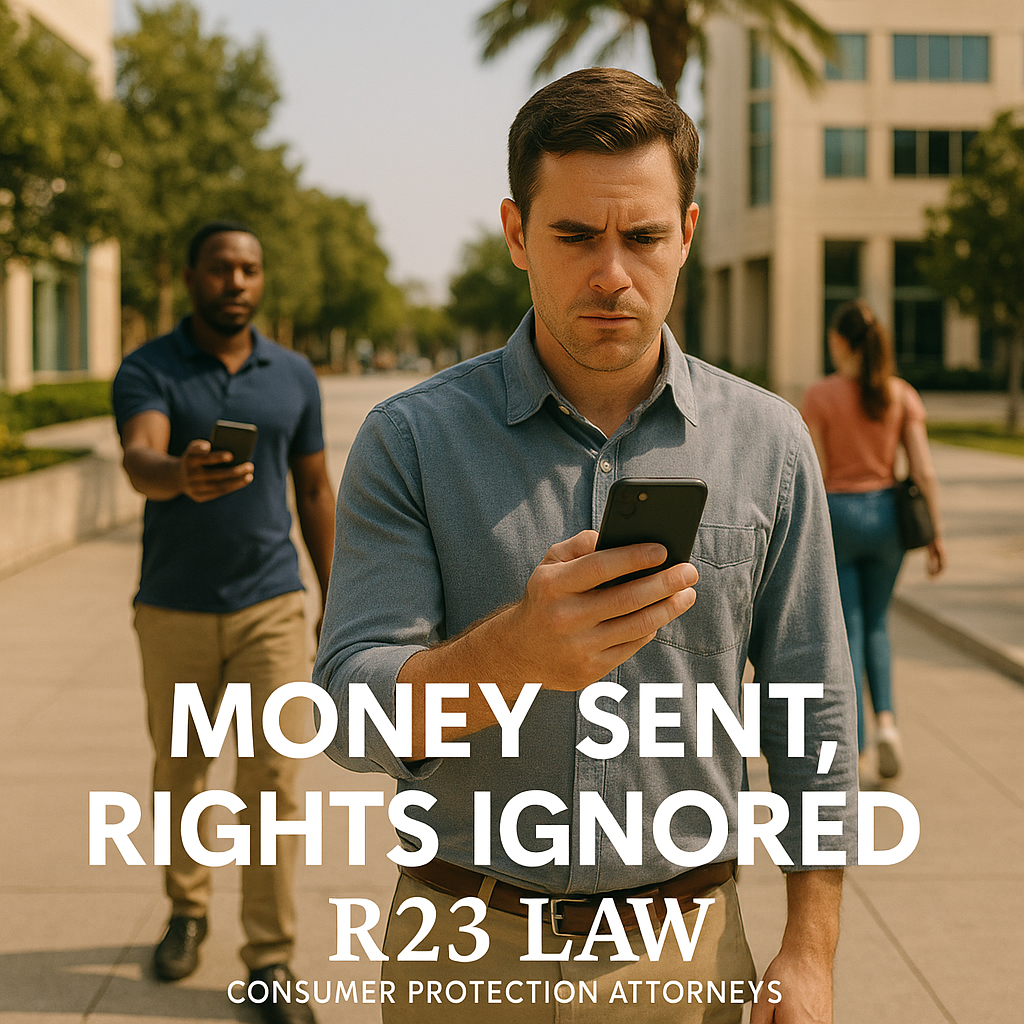
Scammed on Zelle, Venmo, or Cash App?
Learn how the Electronic Fund Transfer Act (EFTA) protects consumers from unauthorized transfers. R23 Law’s California Consumer Protection Attorneys explain your legal options when banks deny your claim.
Peer-to-Peer Payments, Real-World Fraud
Whether you're splitting a dinner bill or sending rent via Venmo, Zelle, Cash App, or Apple Cash, peer-to-peer (P2P) payments have made financial transactions easier than ever. But as the convenience of these platforms grows, so does the risk of fraud and unauthorized access.
What happens when a scammer tricks you into sending money—or worse, someone hacks your account and wipes out your balance?
This is where the Electronic Fund Transfer Act (EFTA) steps in. And if your bank refuses to help? That’s where R23 Law’s California Consumer Protection Attorneys come in.
Understanding the EFTA: A Digital Era Lifeline
The Electronic Fund Transfer Act (15 U.S.C. § 1693 et seq.) is a federal law that protects consumers using electronic payment methods, including debit cards, ATMs, and direct deposits. As these platforms evolve, P2P services are increasingly covered under the EFTA’s scope.
The EFTA requires financial institutions to:
Limit consumer liability for unauthorized transfers
Promptly resolve fraud claims and transaction errors
Provide clear disclosures on fees and account terms
Investigate and correct disputes within regulatory timelines
If your bank or payment provider fails to follow these rules, they may be legally responsible for your losses.
Venmo, Zelle, and the EFTA: What’s Covered?
Most P2P platforms are linked to your bank account or debit card, which subjects them to EFTA regulations. This means that if:
Someone hacks your account and transfers funds without permission
You send money to a scammer after being tricked
An error or duplicate transaction occurs
…you may have legal grounds for reimbursement and protection under federal law.
But not every scenario is black-and-white. The EFTA distinguishes between unauthorized access, mistaken transactions, and voluntary payments to fraudsters. While voluntary transfers can be trickier, some cases still qualify for coverage—especially when deception is involved.
Don’t Delay: Time Is Not on Your Side
Under the EFTA, speed matters. You must report unauthorized activity to your bank within 60 days of receiving the statement that includes the fraudulent charge.
To preserve your rights:
✔️ Report unauthorized transactions immediately
✔️ Submit written documentation of the fraud
✔️ Keep records, including screenshots and communication history
Failing to act promptly can result in losing your right to recover stolen funds.
What If the Bank Denies Your Claim?
Here’s where many consumers hit a wall. Banks and payment platforms often issue blanket denials or fail to properly investigate fraud claims. That’s not just unfair—it may be a violation of the EFTA.
If a financial institution:
Refuses to investigate your fraud report
Denies your claim without adequate explanation
Fails to follow the EFTA’s procedures
You may be entitled to reimbursement, statutory damages, and attorney’s fees under federal law.
R23 Law's California Consumer Protection Attorneys Know the Playbook
At R23 Law, our attorneys don’t just understand P2P fraud—they know how to fight back when banks and payment services break the law. We represent clients across California who’ve been:
Denied reimbursement after P2P fraud
Ignored by banks despite timely reporting
Misled or mistreated by payment platforms
We leverage the EFTA to hold financial institutions accountable—and we don’t get paid unless we win.
Take Control of Your Case Today
If you’ve lost money through a P2P platform and your financial institution is refusing to act, R23 Law’s California Consumer Protection Attorneys are ready to pursue justice on your behalf.
