
OOPS, THEY DID IT AGAIN — When an FCRA Violation Turns Negligent or Willful in California
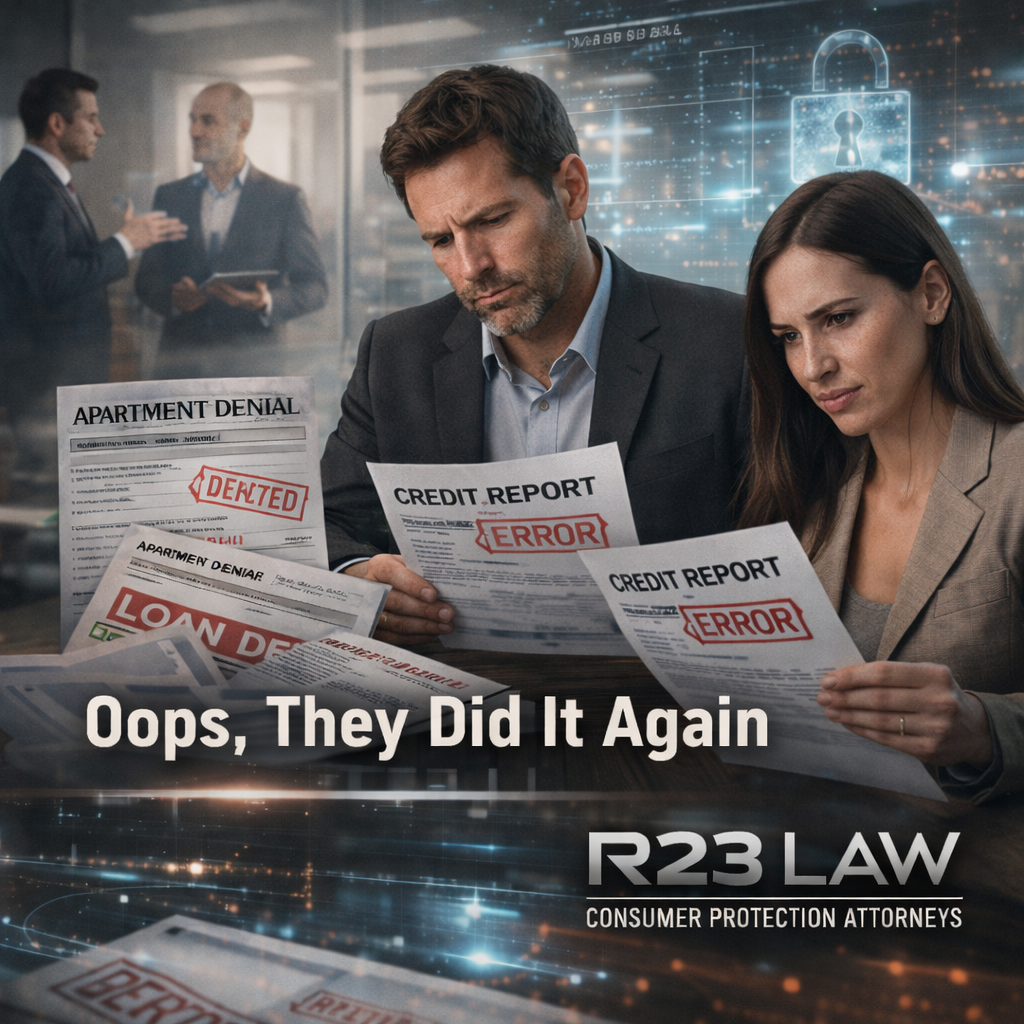
Credit report errors can damage loans, housing, and employment.
Credit reports carry real power. They can influence whether you get approved for a loan, land an apartment, secure employment, or pay more for financing. When false, outdated, or improperly handled information appears on a consumer report, the consequences can move fast. That is exactly why the Fair Credit Reporting Act, or FCRA, exists. The law is designed to promote accuracy, fairness, and privacy in consumer reporting, and it gives consumers the right to dispute incomplete or inaccurate information. fornia consumers, one of the most important distinctions in an FCRA case is whether the violation was negligent or willful. That difference can shape both liability and damages. And when companies cut corners with consumer data, R23 Law’s California Consumer Protection Attorneys treat that distinction seriously.
The FCRA Sets the Ground Rules for Consumer Reporting
The FCRA governs consumer reporting agencies and reaches beyond the credit bureaus themselves. It also applies to furnishers and other entities that handle consumer report information for credit, employment, housing, and related decisions. In practical terms, the law regulates accuracy, dispute procedures, privacy, and who may lawfully access a report. Consumers also have the right to know when information in a report has been used against them. ters because an error on a report is rarely just a paperwork problem. A bad entry can trigger denied credit, worse loan terms, lost job opportunities, rental denials, and lasting stress.
Negligent FCRA Violations Come From Sloppy Compliance
A negligent FCRA violation generally means a company failed to use reasonable care in following the law. The conduct may not be intentional, but it still causes damage. Common examples include entering the wrong data, failing to update information after it should have been corrected, or mishandling a dispute in a way that leaves inaccurate information on a report. sloppy compliance can cost consumers real money and real opportunities. Under the FCRA’s negligent noncompliance provision, a consumer may recover actual damages sustained as a result of the violation, along with costs and reasonable attorney’s fees in a successful action. those damages may include lost employment opportunities, unfavorable credit terms, higher interest rates, and emotional distress tied to the reporting error. That framing is also consistent with R23 Law’s consumer-facing credit reporting content strategy. ons Cross the Line From Careless to Conscious
A willful FCRA violation is more serious. It goes beyond a mere mistake and into knowing or reckless disregard of FCRA obligations. In the consumer reporting context, that can include continuing to report incorrect information after repeated disputes or obtaining a consumer report without a permissible purpose. 9? Because the remedies expand. For willful noncompliance, the FCRA allows actual damages or statutory damages of $100 to $1,000, punitive damages as the court may allow, plus costs and reasonable attorney’s fees. on can create exposure even where the financial harm is difficult to measure with perfect precision. For companies that knowingly ignore disputes or misuse consumer report access, the stakes are much higher.
The Difference Between Negligent and Willful Can Shape the Entire Case
For consumers, this is not just legal jargon. The negligent-versus-willful distinction often drives case value, litigation strategy, and the remedies available under federal law. Negligent violations focus on the actual harm caused. Willful violations may support statutory and punitive damages on top of fees and costs. ecially important when a credit reporting problem interferes with major life events. A consumer may lose an apartment, pay more for financing, miss out on a job, or spend months trying to fix records that should have been handled correctly the first time.
Common FCRA Problems California Consumers See
Many FCRA cases start with familiar patterns: inaccurate tradelines, outdated account statuses, failure to correct information after disputes, mixed files, or unauthorized access to a consumer report. What may begin as a reporting error can become a much more serious legal issue when the company keeps repeating the same conduct or ignores clear notice that the information is wrong. sassume every error is harmless and every denial is final. Sometimes the problem is negligence. Sometimes it reflects conduct that is far more deliberate.
R23 Law’s California Consumer Protection Attorneys Pursue Accountability Under the FCRA
When credit reporting agencies, furnishers, or other consumer reporting players damage a person’s financial life through inaccurate reporting or improper dispute handling, accountability matters. R23 Law’s California Consumer Protection Attorneys pursue claims involving credit report errors, unlawful report access, and other FCRA violations affecting California consumers. hCRA violation is the same, and the law recognizes that. Some violations are negligent. Others are willful. Both can carry serious consequences for consumers, and both can support legal claims when inaccurate reporting disrupts credit, housing, employment, or financial stability. That is why R23 Law’s California Consumer Protection Attorneys approach these cases with urgency, precision, and a clear focus on consumer rights.
