
PASSWORD PAINS AND CYBER STAINS — Why Weak Logins Can Wreck Your Identity
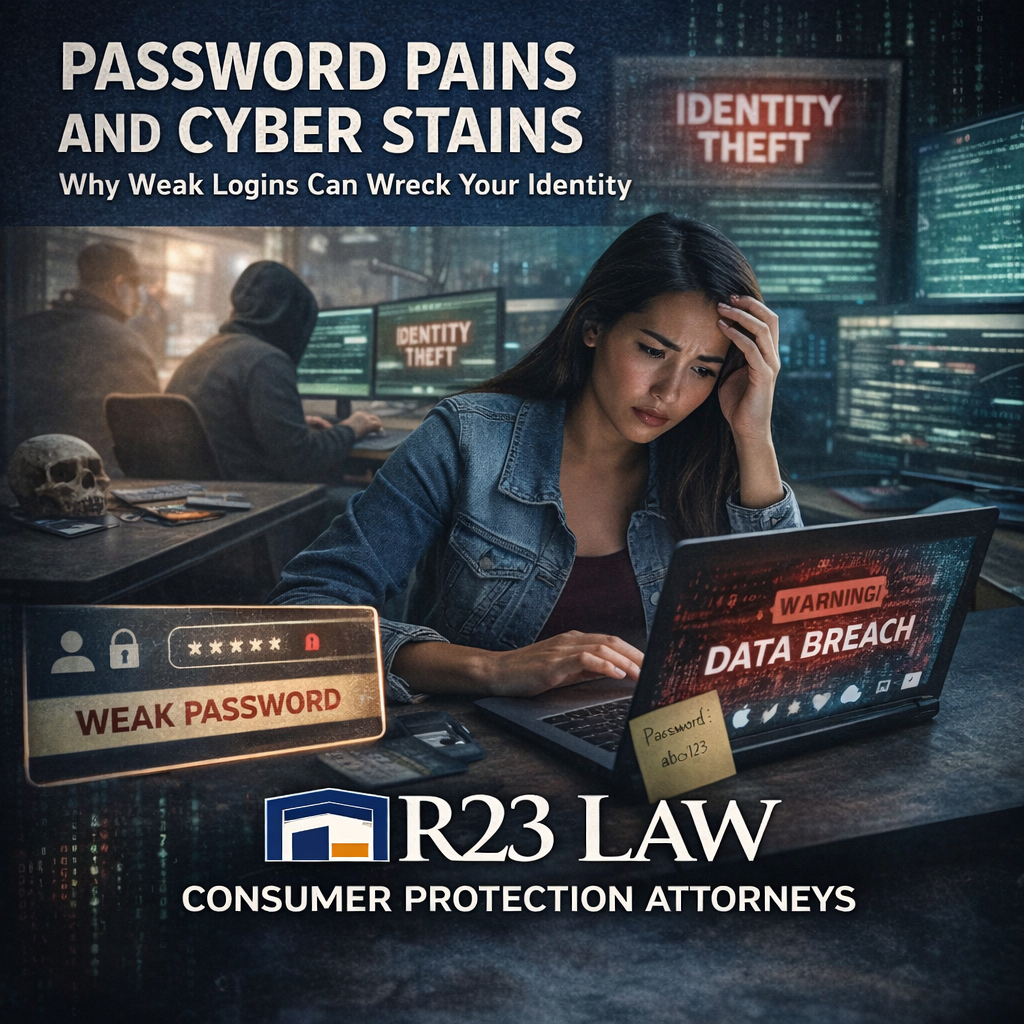
Weak passwords are still the top cause of data breaches
R23 Law’s California Consumer Protection Attorneys explain how poor password habits lead to identity theft—and how to protect your data.
Your Password Might Be the Weakest Link
In today’s world of online banking, shopping, and social networking, your password isn’t just a security measure—it’s your digital lock and key. Yet, most people reuse simple passwords across multiple platforms, making it easy for hackers to open the door.
A single password leak can expose dozens of your accounts. If your data is compromised and sold on the dark web, it can result in stolen identities, drained bank accounts, and credit report disasters. It happens faster and more often than most people realize.
Why Poor Password Hygiene Is a Goldmine for Hackers
According to the article from page 1, compromised passwords are responsible for 81% of hacking-related breaches. Most users juggle over 190 accounts—so it’s not surprising that they cut corners. But those shortcuts come with costly consequences.
Here’s what hackers love to see:
Reused passwords across different sites
Slight variations of the same password
Birthdays or pet names in your login
Real dictionary words
Lack of two-factor authentication
If a hacker cracks one account, they’ll try the same password everywhere—your email, bank account, cloud storage, even your retirement fund.
Strong Passwords = Stronger Protection
Here are essential best practices, pulled from the guide on page 2 of the uploaded article:
Use Complex Passwords: Mix letters, numbers, and special characters
Never Reuse Passwords: Especially for financial or sensitive accounts
Update Regularly: Change them every few months
Avoid Personal Info: No birthdays, kids' names, or addresses
Use Long Phrases: Passphrases like “HorsesEat$Pizza77!” are harder to crack
Enable Two-Factor Authentication (2FA): Adds an extra security layer
Skip the Common Words: If it’s in the dictionary, it’s hackable
Even with these steps, no system is foolproof. If a company where you’ve stored your data suffers a breach, your information can still be stolen.
When a Breach Becomes a Nightmare: Identity Theft
Even strong passwords can’t save you if a third-party breach exposes your private information. As highlighted on page 3, if your identity is stolen, the fallout can be long-lasting:
New credit cards or loans opened in your name
Fraudulent medical charges
Criminal records falsely tied to you
Devastating damage to your credit score
You could spend months trying to unwind the damage—unless you take immediate, strategic action.
What to Do If Your Identity Has Been Stolen
If you're the victim of identity theft due to a data breach, you may be entitled to compensation—especially if the breach occurred due to a company’s negligence in protecting your data.
R23 Law’s California Consumer Protection Attorneys can help you:
Dispute credit report errors
Communicate with the credit bureaus and creditors
Enforce your rights under the Fair Credit Reporting Act (FCRA)
Seek damages for emotional distress and financial harm
File lawsuits against companies that failed to protect your information
Lock Down Your Life—Before Someone Else Does
Your password is your first line of defense. But if that line has already been crossed, R23 Law is here to fight for your second chance.
