
PAYING IT MAKES IT WORSE — Why Identity Theft Debt Should Never Be Settled
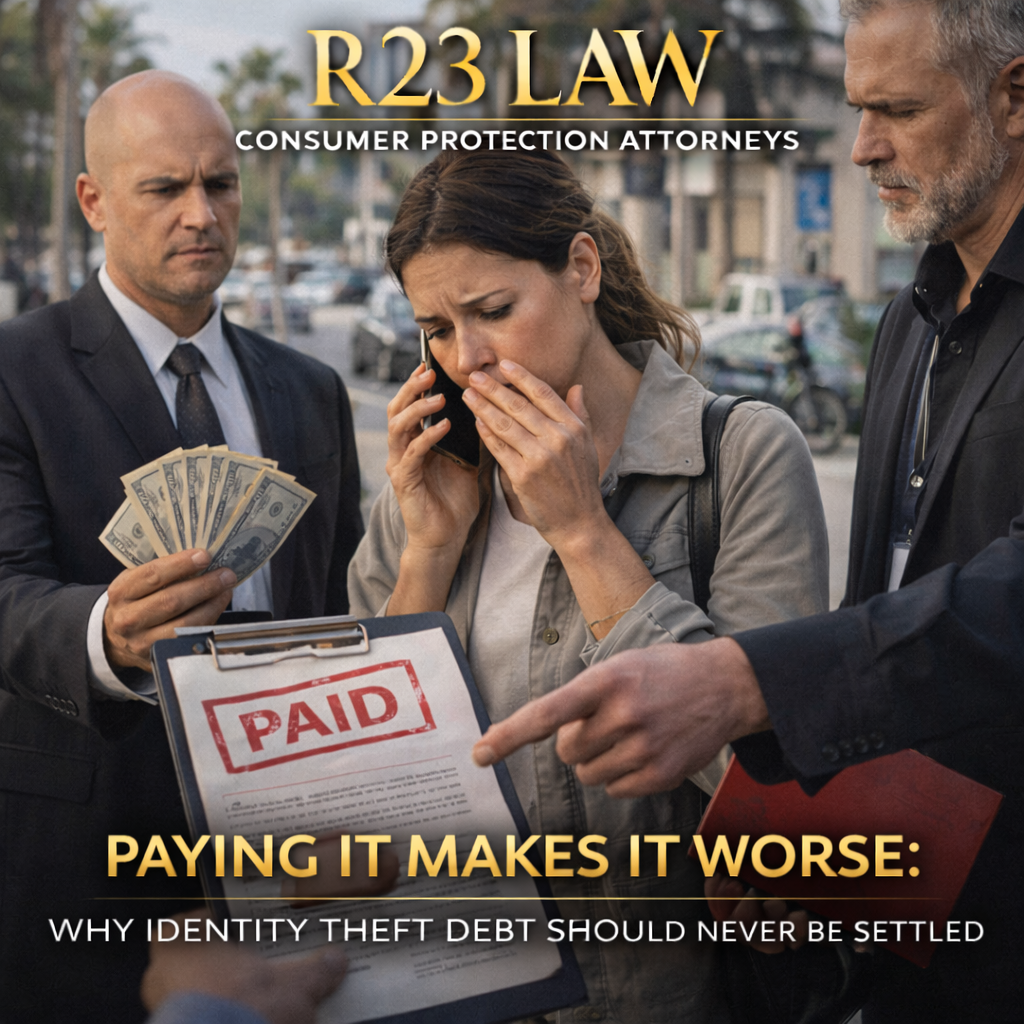
It often starts with a call from a debt collector demanding payment on an account you never opened
Or a loan appears on your credit report bearing your name but none of your history. Faced with mounting pressure, many consumers reach the same conclusion: maybe paying the debt will make it disappear.
That instinct is understandable—and legally dangerous.
Paying identity theft debt does not resolve the problem. In many cases, it actively makes things worse. R23 Law’s California Consumer Protection Attorneys routinely see consumers harmed by well-intentioned payments on fraudulent accounts.
Why Paying Fraudulent Debt Is a Trap
Settling or paying a debt created by identity theft rarely fixes credit damage. Instead, it often creates new problems.
Payment Does Not Erase Credit Reporting
Fraudulent accounts frequently remain on a credit report even after payment. The negative tradeline continues to suppress scores despite money changing hands.
Payment Does Not Close the Account
If the account remains open, fraudulent activity can continue—exposing the consumer to additional charges and collection efforts.
Payment Signals Willingness
Once a collector sees payment, pressure often increases. Future demands may follow, even for debts that are not legitimate.
Paying identity theft debt is not resolution. It is leverage handed to the wrong party.
The Rare Situations Where Payment May Be Appropriate
There are limited circumstances where payment can make sense—and they are narrowly defined.
Account Takeover on a Legitimate Card
If a real account was compromised, consumers may continue paying legitimate charges while disputing fraudulent transactions.
Minimum Payments During an Active Dispute
In some cases, making minimum payments on a legitimate account can help prevent additional credit damage while disputes are pending.
Outside of these narrow scenarios, payment is rarely advisable.
What Identity Theft Victims Should Do Instead
Rather than paying fraudulent debt, consumers should focus on enforcing their legal rights.
Key steps often include:
Filing an identity theft report with the Federal Trade Commission
Demanding written verification from collectors
Disputing fraudulent accounts with credit bureaus
Freezing credit to prevent further misuse
Consumer protection laws exist to stop fraudulent reporting—not to reward it.
The Legal Framework Protecting Consumers
Federal and state laws prohibit collectors and furnishers from continuing to report debt once identity theft is properly documented. Payment can complicate enforcement by muddying the record and undermining disputes.
R23 Law’s California Consumer Protection Attorneys focus on freezing fraudulent activity, correcting credit files, and forcing compliance from banks, collectors, and credit bureaus.
Contact R23 Law Today
If a collector is demanding payment on identity theft debt or fraudulent accounts are damaging your credit, experienced consumer protection counsel matters.
Toll-Free: 310-598-1588
Email: info@R23Law.com
