
STILL GETTING SPAM TEXT AFTER REPLYING STOP — That’s a TCPA Violation—and It Could Be Worth $$$
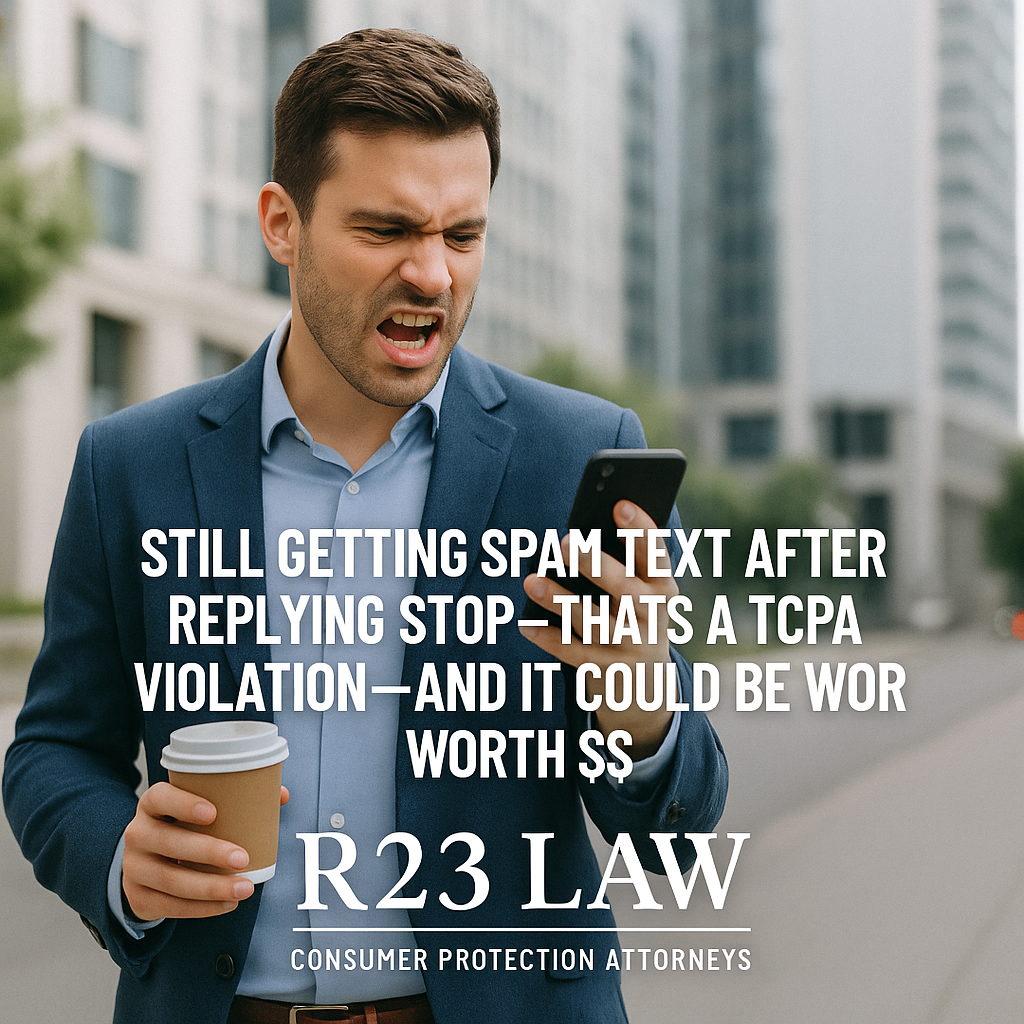
If you’re still receiving marketing texts after replying “STOP,” your rights under the TCPA may be violated
Learn how R23 Law’s California Consumer Protection Attorneys can help you stop the harassment and pursue compensation.
When Texting “STOP” Isn’t Enough: Your Rights Under the TCPA
In an age where promotions, deals, and reminders flood your phone, replying “STOP” to unwanted texts should end the conversation—legally and literally.
But what happens when the messages keep coming?
Under the Telephone Consumer Protection Act (TCPA), that’s not just annoying—it could be a federal violation of your consumer rights. And if the company refuses to honor your opt-out, you may be entitled to statutory damages of up to $1,500 per message.
R23 Law’s California Consumer Protection Attorneys are here to help you take action.
What Is the TCPA?
The Telephone Consumer Protection Act (47 U.S.C. § 227) is a federal law that protects you from unwanted robocalls and texts. It restricts businesses from using automated dialing systems—known as autodialers—to contact you without prior express consent.
The TCPA also gives you the power to revoke consent at any time, simply by replying “STOP.” Once you do, the sender must stop texting you—no exceptions.
“STOP” Means STOP
Once you reply with “STOP” to a promotional or marketing text, you’ve clearly revoked your consent. If texts continue after that, it’s a likely TCPA violation.
In fact, federal courts have repeatedly ruled that a single “STOP” message is sufficient to withdraw consent. Any texts that come after that could cost the sender:
$500 per message for each negligent violation
Up to $1,500 per message if the sender acted willfully or knowingly
Common TCPA Violations
Examples of unlawful behavior after you opt out:
A retailer continues to text promotions after you reply “STOP”
A gym keeps sending renewal reminders after you opt out
A lender or marketing company uses a third-party texting service that ignores your unsubscribe request
Even just a few texts after you’ve opted out can trigger significant damages—and possibly a class action lawsuit.
What To Do If the Texts Don’t Stop
If you're still receiving texts after opting out, take these steps:
Screenshot every message, especially your opt-out
Log the dates and times of each message
Stop replying—let the messages show the violation on their own
Contact R23 Law’s California Consumer Protection Attorneys for a free legal review
Why These Cases Matter
TCPA cases are more than just about stopping spam. They’re about protecting your privacy, enforcing your rights, and holding businesses accountable when they refuse to listen.
When a company continues to text you after a “STOP” message, they are not just ignoring you—they're ignoring the law.
How Much Can You Recover?
If you’ve been spammed after opting out, you may be eligible to recover:
$500 per message
Up to $1,500 per message if the violations were intentional
Attorney’s fees and court costs in some cases
At R23 Law, we pursue maximum compensation for TCPA violations on a contingency basis. You pay nothing unless we recover money for you.
R23 Law’s California Consumer Protection Attorneys Can Help
We know how to deal with businesses that violate your privacy. R23 Law fights for California consumers who’ve been targeted by unwanted robocalls, spam texts, and other deceptive practices. Let us take over the fight—so you can get peace and compensation.
📞 Free Case Review
Ready to stop the harassment and explore your options? Contact R23 Law today.
FAQ – Understanding Your TCPA Rights
Q: Can I sue if a company keeps texting me after I reply “STOP”?
A: Yes. That’s a violation of federal law, and you may be entitled to $500–$1,500 per message.
Q: Do I need to pay an attorney to sue under the TCPA?
A: No. R23 Law handles these cases on a contingency basis—you pay nothing unless we win for you.
Q: What types of messages are covered?
A: Any promotional or marketing messages sent using auto-dialers or automated platforms—including texts from retailers, gyms, banks, lenders, and restaurants.
