
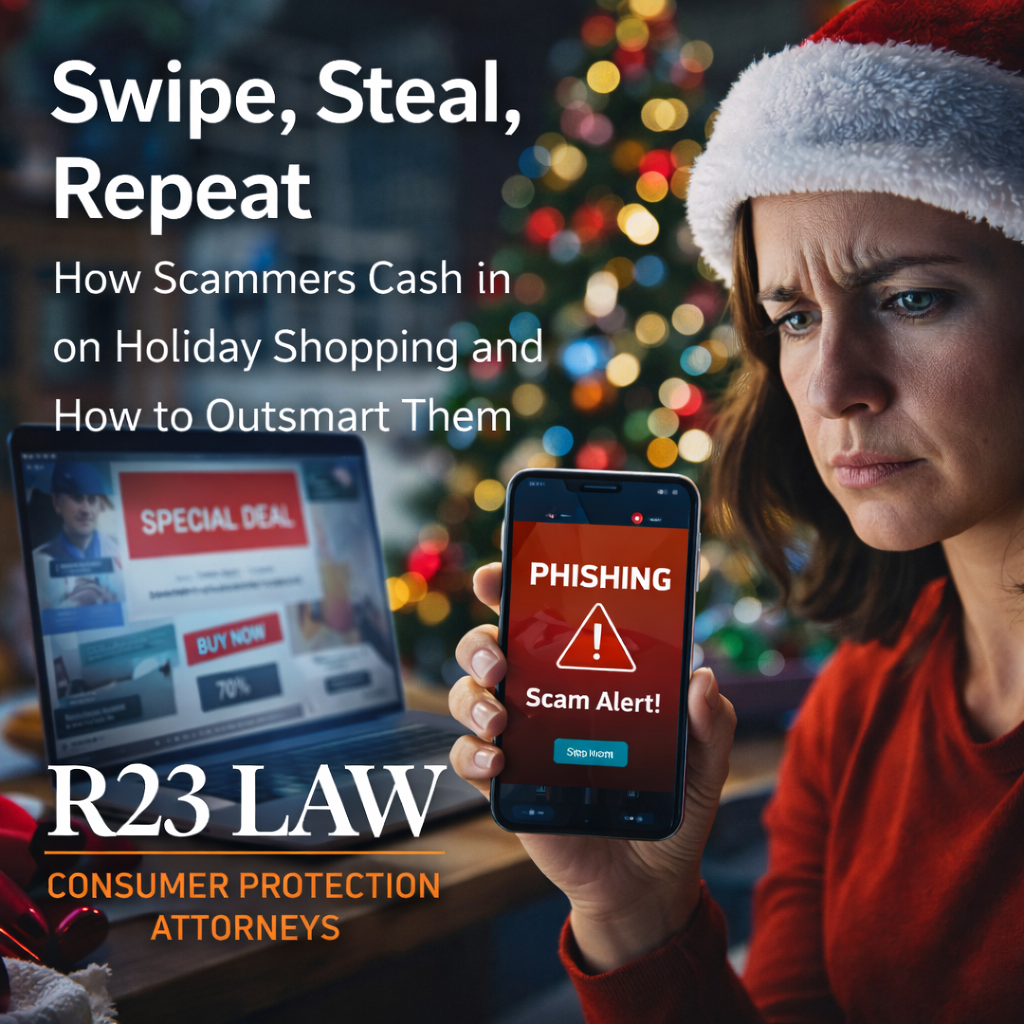
SWIPE, STEAL, REPEAT — How Scammers Cash In on Holiday Shopping and How to Outsmart Them
Holiday Deals Are Hot — So Are Identity Theft and Online Scams
The holiday shopping season may offer steep discounts, but it also comes with steep risks — especially during Black Friday and Cyber Monday. With billions in consumer spending, scammers are primed to strike, leaving victims with fraudulent charges, identity theft, and zero recourse unless they know their rights.
At R23 Law, our California Consumer Protection Attorneys are seeing a sharp rise in holiday shopping fraud, especially involving fake websites, missing packages, and digital gift card theft. Here’s what to watch out for — and what to do if you’ve been scammed.
What Makes Holiday Shopping So Risky?
Scammers exploit urgency, impulse buying, and the flood of online transactions this time of year. According to the guide on page 1, common traps include:
Fake online storefronts or phishing emails
Gift card scams
Fraudulent delivery alerts
Identity theft through stolen credit data
5 Smart Ways to Protect Yourself This Season
Check the URL
Secure websites begin with https:// and show a padlock icon. Fake sites often contain spelling errors, no contact information, and broken links.Use a credit card — not a debit card
Credit cards offer better fraud protection and are not directly tied to your bank account. You may also have additional rights under the Fair Credit Billing Act.Don’t create an account unless necessary
Shop as a guest to avoid storing sensitive data that can be compromised during a breach.Trust your instincts
If it sounds too good to be true — it probably is. High-demand items rarely go on huge discount days before the holidays.Be alert with delivery messages
Scammers pose as shipping carriers, sending fake “missed delivery” alerts that trick you into sharing personal data.
Common Holiday Scams to Avoid
🔻 Fake order texts and phishing links
Scammers send fake shipping updates that direct you to a login page. Once entered, your info is stolen.
🔻 Spoofed ads on Instagram and Facebook
Shady products and fake giveaways are often used to collect your personal data.
🔻 Clone retailers
Some scammers copy entire websites from real brands like Walmart or Target. You think you're shopping for a deal — but you're handing over your financial info to a fraudster.
🔻 Missing package scams
Fraudsters pretend to be from UPS or FedEx and use SMS/email to claim your delivery failed.
🔻 Gift card grifts
Stolen or cloned gift cards are sold online. Once the balance is used, there's no way to recover the money.
What to Do If You’ve Been Scammed
If you've made a purchase on a fake site, shared your banking information, or received a scam delivery message, take these steps immediately:
Document all communications (emails, texts, receipts)
Freeze your credit if personal info was exposed
Report fraudulent charges to your bank or credit card provider
Reach out to a consumer protection attorney
Our team at R23 Law can help evaluate your case and may be able to recover your losses.
Can You Take Legal Action?
Yes. If your credit card company, retailer, or delivery platform failed to protect you under laws like the Fair Credit Billing Act or consumer fraud statutes, you may have legal options.
R23 Law’s California Consumer Protection Attorneys can help you:
Dispute fraudulent charges
Hold companies accountable for lax cybersecurity
Pursue compensation for identity theft or financial loss
We fight for consumers like you across California every holiday season.
Contact R23 Law Today
📞 Toll-Free: 310-598-1588
📩 Schedule your free consultation
👤 Meet Our Team | 🔍 Learn more About Us
