
TRAVEL LIGHT, LOCK TIGHT — Identity Theft Protection for Californians
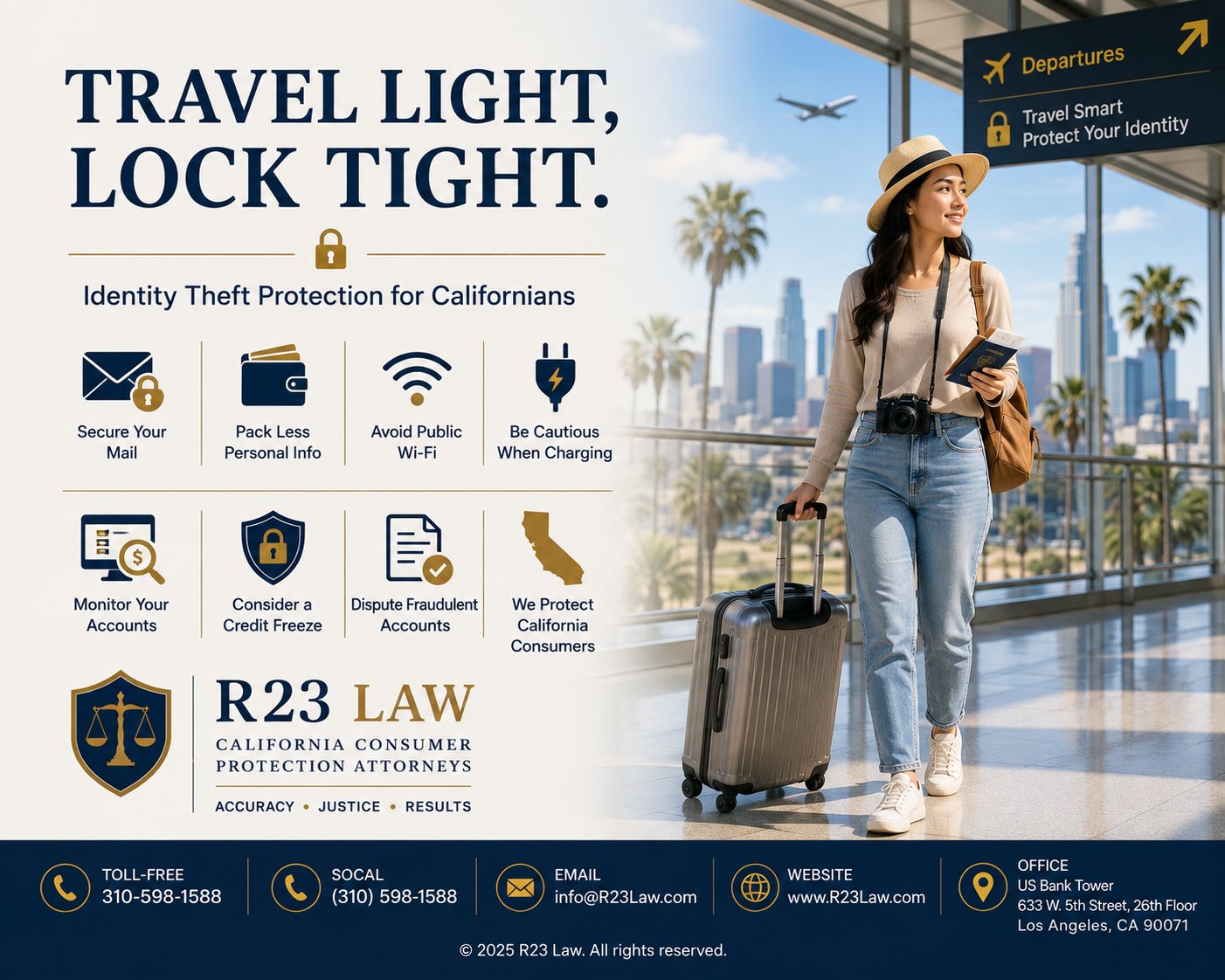
International travel can mean new destinations, new experiences, and a welcome break from everyday routines
Unfortunately, being away from home can also create opportunities for thieves to target personal and financial information.
A stolen wallet is only one potential problem. Unattended mail, unsecured public Wi-Fi, compromised charging stations, and exposed financial information can create identity theft risks that continue long after a California traveler returns home. The attached source emphasizes precautions involving mail, wallets, financial cards, public networks, device charging, account monitoring, credit freezes, and disputes involving fraudulent loans.
For California consumers, the concern often becomes what happens after personal information is compromised — unauthorized transactions, fraudulent accounts, and inaccurate information associated with their identity.
R23 Law's California Consumer Protection Attorneys represent California consumers facing identity theft and related financial harm.
BEFORE DEPARTURE — SECURE PERSONAL INFORMATION AT HOME
Identity theft protection can begin before the suitcase is packed.
Consumers traveling for an extended period should consider pausing mail delivery. Leaving mail unattended can expose financial statements, account information, and other documents containing sensitive personal information.
A mailbox filled with financial correspondence can provide identity thieves with information they may use to impersonate a consumer or target existing accounts.
Reducing access to sensitive information while away is a simple precaution that can lower unnecessary exposure.
PACK LESS PERSONAL INFORMATION
Travelers often carry far more financial information than they actually need.
Before leaving California, review what is inside your wallet or purse. Consider removing unnecessary cards, financial documents, checkbooks, and other sensitive information that will not be needed during the trip.
If a wallet is lost or stolen, carrying fewer sensitive items means fewer accounts and pieces of personal information may be exposed.
The source also advises travelers to consider whether carrying a debit card is necessary, noting that debit and credit cards do not provide identical protections.
A lighter wallet can mean a smaller identity theft problem if something goes wrong.
PUBLIC WI-FI — FREE ACCESS CAN CARRY A COST
Airports, hotels, cafés, restaurants, and tourist destinations frequently offer free public Wi-Fi.
Convenient does not always mean secure.
The attached source warns that public networks may expose travelers to hacking and the theft of sensitive information. Consumers should exercise particular caution before accessing banking information, financial accounts, or other sensitive data over unsecured networks.
A traveler checking a bank balance or financial account may believe the activity is routine. If the network is compromised, however, sensitive information may become vulnerable.
When traveling, convenience should not outweigh caution around financial and identifying information.
PUBLIC CHARGING STATIONS — THINK BEFORE CONNECTING
A low phone battery can make a free public charging station difficult to resist.
The attached source also identifies public charging stations as a potential data-security concern. A compromised connection may expose information stored on a device, including banking details, personal identifying information, and other sensitive data.
Modern smartphones often contain far more than photographs and messages. They may provide access to email accounts, financial applications, stored documents, passwords, and other information connected to a person's identity.
Travelers should remain cautious about where they connect devices while away from home.
ACCOUNT MONITORING — CATCH SUSPICIOUS ACTIVITY EARLY
Identity theft may not announce itself immediately.
An unfamiliar credit card charge or unexpected banking transaction may be the first indication that personal information has been compromised.
The source recommends regularly reviewing financial statements and accounts for suspicious or unfamiliar activity.
California travelers should remain alert for activity such as —
Purchases they did not make
Unfamiliar financial transactions
Unexpected account activity
Loans or accounts they do not recognize
Information connected to financial activity they never authorized
Monitoring accounts during and after travel can make suspicious activity easier to identify.
CREDIT FREEZES — LIMIT THE RISK OF NEW FRAUDULENT ACCOUNTS
When personal information appears to have been compromised, preventing additional fraud becomes a priority.
The attached source identifies a credit freeze as one potential response after suspicious activity is discovered. A credit freeze can restrict access to a consumer's credit file and make it more difficult for fraudulent new credit accounts to be opened using stolen identifying information.
Identity theft can continue after the original theft or data exposure. That is why consumers should continue paying attention to their financial accounts and credit activity after returning home.
FRAUDULENT LOANS — DISPUTE INFORMATION THAT IS NOT YOURS
Identity thieves may use stolen information to obtain credit or take out loans in another person's name.
When a California consumer discovers a loan or account they did not authorize, the attached source recommends disputing the fraudulent information and seeking its removal.
Consumers should preserve records connected to the suspected identity theft, including financial statements, notices, correspondence, and information identifying unfamiliar accounts.
Those documents can create an important record of what happened and what actions were taken after the fraud was discovered.
IDENTITY THEFT ABROAD CAN FOLLOW A CALIFORNIA CONSUMER HOME
The location where personal information was stolen does not necessarily determine where the financial consequences will appear.
A California resident may experience identity theft while traveling and return home to find suspicious transactions, fraudulent accounts, or financial information they do not recognize.
That is where the focus of R23 Law's practice becomes particularly relevant.
R23 Law handles California consumer protection matters involving identity theft and related financial injuries. The firm's representation is focused on California cases and the consumer consequences affecting California residents — not foreign criminal proceedings or the theft laws of another country.
For information about the firm's attorneys, visit Our Team or learn more through About R23 Law.
R23 LAW'S EXPERT LEGAL SERVICES FOR IDENTITY THEFT VICTIMS THROUGHOUT CALIFORNIA
Identity theft can become a complicated financial problem when fraudulent activity begins appearing across accounts or consumer records.
R23 Law's California Consumer Protection Attorneys represent California consumers confronting identity theft and related financial misconduct.
Depending on the circumstances of a California case, the firm's attorneys can evaluate the fraudulent activity, disputed accounts, available records, and financial consequences affecting the consumer.
R23 Law's practice is centered on protecting California consumers and pursuing accountability in matters involving consumer financial rights.
Consumers dealing with suspected identity theft can connect directly with the firm through Contact R23 Law.
PROTECT THE TRIP — AND YOUR FINANCIAL LIFE AFTER IT
Identity theft prevention does not require leaving every financial tool at home. It does require paying attention to where personal information is stored, carried, transmitted, and accessed.
Pausing unattended mail, carrying only necessary financial information, exercising caution around public Wi-Fi and charging stations, reviewing financial activity, and responding to fraudulent accounts can reduce the risks associated with travel.
For California consumers, identity theft discovered during or after a trip can become a serious financial issue once fraudulent activity follows them home.
R23 Law's California Consumer Protection Attorneys represent California identity theft victims facing those financial consequences.
Contact R23 Law Today
If identity theft during or after travel has resulted in fraudulent accounts, suspicious financial activity, or other consumer-related financial problems in California, R23 Law's California Consumer Protection Attorneys can review the circumstances surrounding the matter.
Toll-Free — 310-598-1588 SoCal — (310) 598-1588 Email — info@R23Law.com Website —www.R23Law.comOffice — US Bank Tower, 633 W. 5th Street, 26th Floor, Los Angeles, CA
© 2025 R23 Law. All rights reserved. Trusted consumer credit lawyers in Los Angeles.
