
VERIFIED AND IGNORED — When Banks Know Fraud Happened and Deny It Anyway
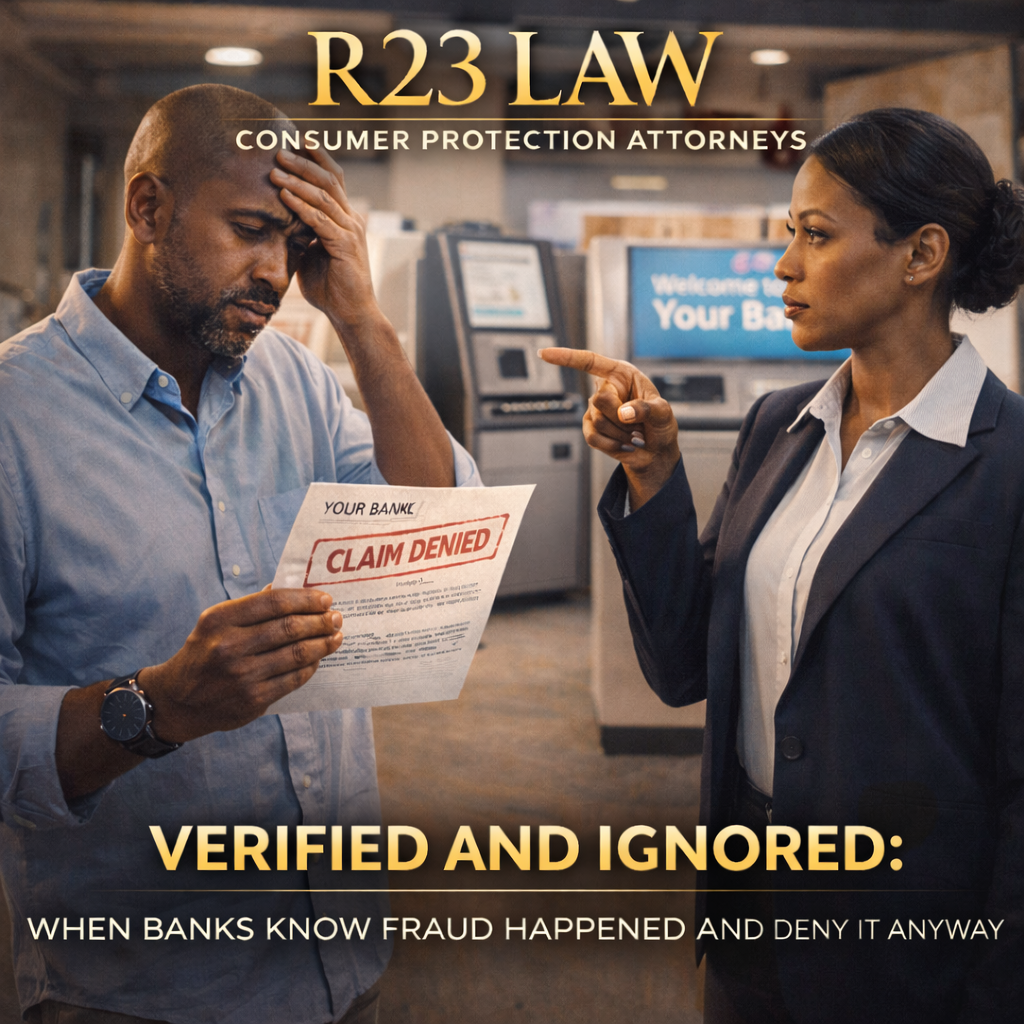
When identity theft drains a bank account or triggers fraudulent card charges, consumers are often told the system failed
In reality, the system worked exactly as designed.
Banks routinely collect extensive data about account activity—including IP addresses, device identifiers, geolocation data, and timestamps. When fraudulent activity occurs, that data often shows clearly that the transaction did not originate from the account holder. And yet, many banks still deny fraud claims.
As R23 Law’s California Consumer Protection Attorneys have seen repeatedly, fraud denials are frequently the result of business decisions—not missing evidence.
Banks Often Know More Than They Admit
When a replacement card is activated or a suspicious transaction posts, banks already have the information needed to spot fraud. That information can show:
The activation came from a device the customer never used
The access point was located in a state or country the customer has never visited
The login occurred at an impossible time or location
The activity triggered internal fraud indicators
Despite this, consumers are often told the activity was “verified.”
That word does not mean the transaction was legitimate. It often means the bank stopped looking.
Fraud Detection Is a Business Choice
Fraud monitoring is not limited by technology. It is limited by cost tolerance.
Banks configure fraud filters based on how much loss they are willing to absorb before intervening. Speed, volume, and customer friction are weighed against consumer protection. When fraud slips through, denying claims can be cheaper than correcting the mistake.
In many cases, banks choose efficiency over accuracy—and consumers absorb the consequences.
The Illusion of a “Real Investigation”
After a fraud claim is submitted, consumers expect a genuine review. What frequently occurs instead is:
A template-based denial
Copy-and-paste conclusions
Minimal or no review of device or location data
A statement that “no error was found”
That phrase does not confirm legitimacy. It confirms closure.
When the System Treats the Victim Like the Thief
Consumers often do everything required: reports are filed, accounts are frozen, forms are completed, and calls are made. Yet the denial remains.
This happens not because the consumer failed—but because the system is optimized to minimize payouts rather than uncover truth.
Banks may know the activation was not you. They may know the fraud filters failed. And they may still deny the claim because denial is cheaper than accountability.
Why Replacement Card Activations Matter
One data point often tells the entire story: the replacement card activation.
Banks know:
Where that activation originated
Which device was used
Whether it matched prior customer behavior
Whether it aligned with the customer’s known IP history
That information is rarely disclosed voluntarily. But it exists.
Consumer Protection Laws Still Apply
Federal and state consumer protection laws—including the Electronic Fund Transfer Act (EFTA)—require banks to conduct reasonable investigations and credit consumers when fraud is confirmed. A denial based on indifference or incomplete review can create legal liability.
R23 Law’s California Consumer Protection Attorneys focus on forcing disclosure of the data banks already possess and holding institutions accountable when they ignore it.
Contact R23 Law Today
If a bank denied an identity theft or fraud claim despite evidence that the activity was not yours, experienced consumer protection counsel matters.
SoCal: (310) 598-1588
Email: info@R23Law.com
