
YOUR IDENTITY TOOK A JOYRIDE — What California Consumers Need to Know About Identity Fraud
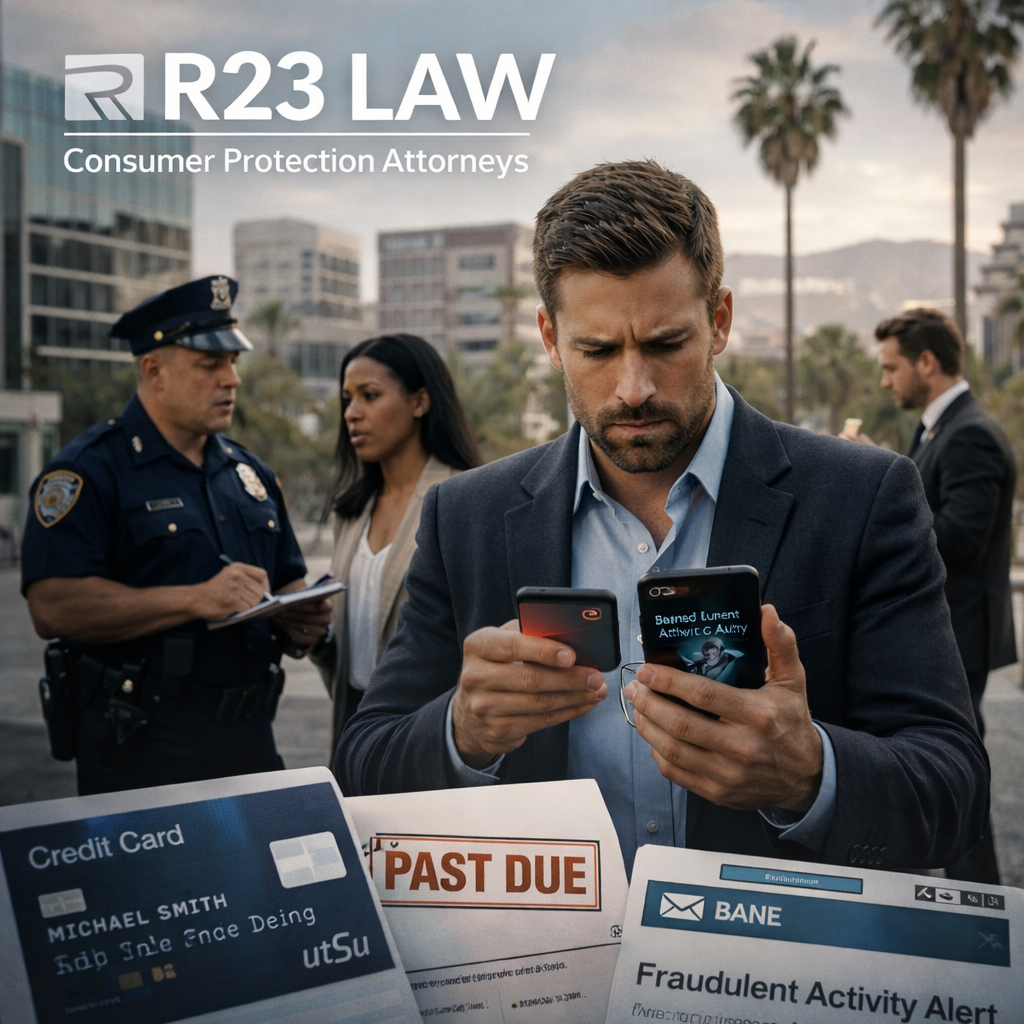
Identity theft can create a long list of problems for California consumers, and the damage often gets worse the longer it goes undetected
When someone gains access to your personal information, the first question is usually simple — what happens next?
The answer is that identity theft and identity fraud are closely related, but they are not exactly the same problem. Understanding that difference can help you act faster, protect your accounts, and evaluate whether legal action may be available. For consumers dealing with stolen personal information, data breaches, or fraudulent accounts, R23 Law's California Consumer Protection Attorneys help clients understand their rights and pursue accountability.
Identity Theft and Identity Fraud — Related Problems, Different Stages
Many people use identity theft and identity fraud interchangeably, but the terms describe different parts of the same crisis.
Identity theft generally happens when someone gains unauthorized access to your personal information and uses it to obtain money, goods, or services in your name. Identity fraud often refers to the additional fraudulent conduct that follows, such as opening new lines of credit, making unauthorized purchases, or filing false tax returns using your information.
Consider a common example. A hacker breaches an online retailer, obtains your saved payment information, and uses it to make a purchase. That can be identity theft. If that same information is later sold to someone else who opens accounts in your name or submits fraudulent paperwork, the problem may expand into identity fraud.
That distinction matters because the harm can grow over time. What starts as a data breach or stolen login can turn into damaged credit, collection notices, unauthorized charges, and a much longer recovery process.
Why Early Action Matters More Than Most People Realize
When your information has been compromised, speed matters. The sooner you spot suspicious activity, the better your chances of limiting the fallout.
In many cases, one of the most important first steps is placing a fraud alert on your credit accounts. A fraud alert tells potential lenders that your information may have been compromised and that they should take additional steps to verify your identity before opening new accounts.
That single step can make it harder for someone else to use your information to expand the damage.
Just as important, you should secure your online accounts right away. Changing passwords is a good start, but stronger protection usually means enabling multi-factor authentication across your email, banking, shopping, and financial accounts. Even if someone already has a username and password, multi-factor authentication can create an extra barrier and may also alert you to unauthorized access attempts.
Stolen Information Does Not Always Mean You Are Out of Options
One of the most frustrating parts of identity fraud is that the wrongdoer is not always easy to find. Cybercriminals may be sophisticated, anonymous, or located outside the United States. That can make criminal enforcement and recovery more difficult.
Still, that does not mean you are without legal options.
If the person responsible can be identified, civil claims may be available to recover damages caused by the theft or fraudulent use of your information. Depending on the facts, legal action may also be available when a company failed to use adequate safeguards to protect the personal information it collected and stored.
Businesses that collect consumer data do not get to treat security as an afterthought. When weak security practices, poor data handling, or inadequate protections expose sensitive information, consumers may have grounds to pursue compensation for the harm that follows.
This is where R23 Law's California Consumer Protection Attorneys can be especially important. Identity theft cases are not always just about the thief. In some situations, they are also about whether a company failed to protect the people who trusted it with sensitive information.
When a Data Breach Becomes a Consumer Protection Issue
Identity fraud is not only a personal inconvenience. It can also be a consumer protection issue.
If a company stores your financial or personal data and does not take reasonable steps to protect it, the consequences can be serious. Consumers may face unauthorized transactions, fraudulent accounts, tax issues, credit damage, and significant time spent trying to reclaim their identities.
For that reason, these cases often overlap with broader consumer protection concerns. A business that fails to protect private information may expose consumers to exactly the kind of harm California law is designed to address.
Consumers dealing with identity theft, identity fraud, or data breach fallout should not assume they have to handle everything alone. Working with experienced counsel can help clarify what happened, what rights may exist, and what recovery options may be on the table.
What To Do If You Suspect Identity Fraud
If you believe your personal information has been compromised, taking prompt action can make a real difference. That often includes reviewing your accounts, placing a fraud alert, strengthening account security, and documenting suspicious activity as early as possible.
It can also mean speaking with counsel when the problem appears connected to a company’s failure to protect your information. When stolen data leads to financial losses, credit issues, or ongoing fraud risks, legal guidance may help you determine whether compensation or other remedies are available.
Contact R23 Law Today
If your personal information was exposed, misused, or connected to fraudulent activity, contact R23 Law's California Consumer Protection Attorneys to discuss your options.
Toll-Free — 310-598-1588
