
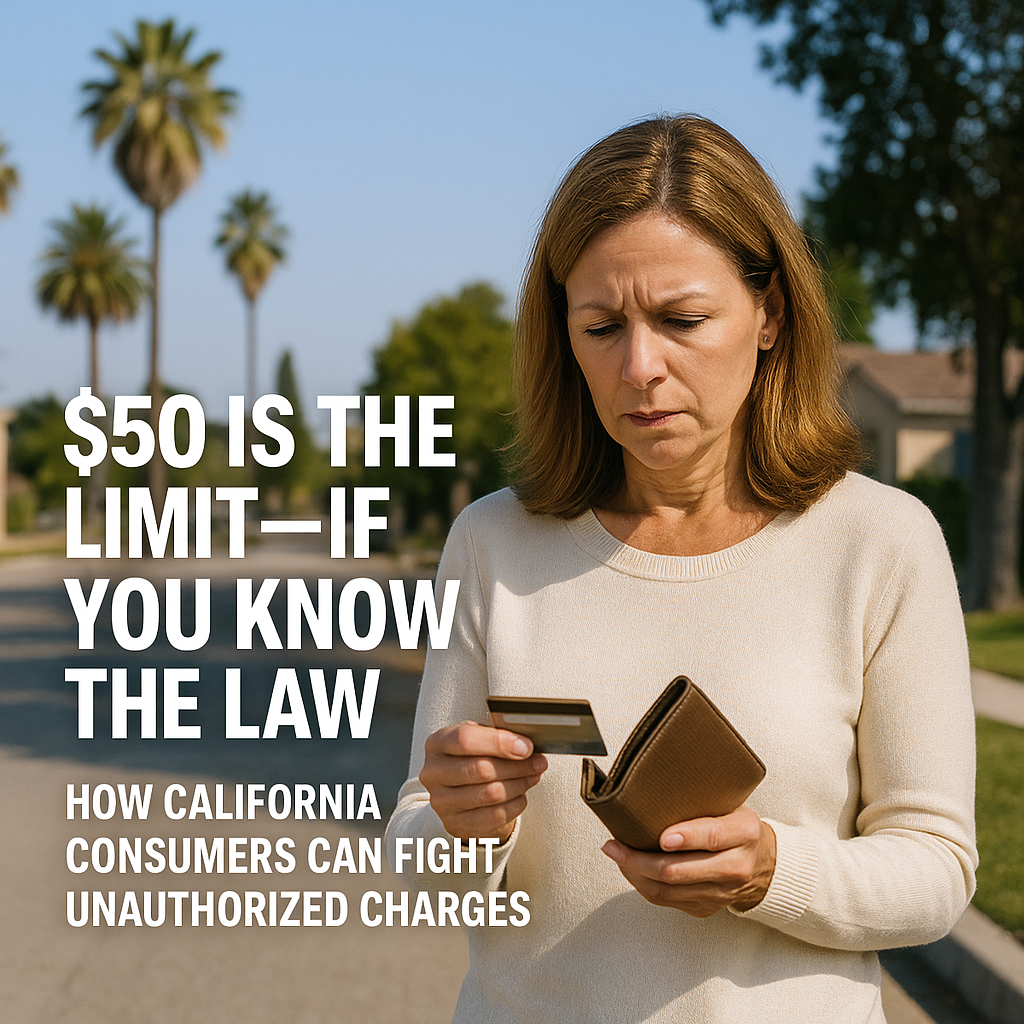
$50 IS THE LIMIT IF YOU KNOW THE LAW — How California Consumers Can Fight Unauthorized Charges
In a world of digital transactions and relentless data breaches, unauthorized credit card charges are no longer rare—they're routine
But here’s what most Californians don’t realize: you’re legally protected from most financial fallout—if you act fast and know your rights.
Thanks to the Fair Credit Billing Act (FCBA), your maximum liability for unauthorized use of your credit card is just $50. That’s not a suggestion—it’s federal law. At R23 Law, our California Consumer Protection Attorneys help identity theft victims and fraud targets enforce their rights under the FCBA and hold banks accountable when they don’t play fair.
What the $50 Liability Cap Really Means for You
If your credit card—or even just the number—is used without your permission, the FCBA protects you:
Your maximum liability is $50 per card, even if the unauthorized charge was thousands of dollars.
This cap applies regardless of the charge amount, as long as the fraud wasn’t authorized by you.
The protection only works if you report the unauthorized charge promptly.
This federal safeguard gives Californians a powerful financial defense, but many never take advantage of it—especially when creditors downplay the rules or delay investigations.
Turn a “Billing Error” into a Legal Paper Trail
To trigger your FCBA rights, you must formally report the fraud as a billing error—in writing—within 60 days of the statement showing the unauthorized charge.
Doing this gives you two key protections:
It locks in your $50 liability limit.
It legally obligates the creditor to investigate and pause collections on that charge.
And here's where R23 Law steps in: we ensure the dispute is worded correctly, sent with proof, and escalated if the bank stalls or fails to investigate as required.
Don’t Rely on “Goodwill” Waivers—Enforce Your Rights
Many major banks may waive the $50 liability “as a courtesy,” but this isn’t legally binding—and it can be revoked if the bank changes its mind.
By invoking the FCBA formally:
You establish a legal record of your claim.
You prevent the creditor from reporting the fraudulent charge to credit bureaus.
You set up a strong foundation for further legal claims, especially for identity theft victims.
Pro Tip: Even if a creditor promises to “take care of it,” always file an FCBA dispute anyway. Goodwill doesn’t hold up in court—the law does.
FCBA Protections Matter Most for Identity Theft Victims
For Californians facing identity theft, acting under the FCBA is your first legal move. Filing this dispute starts the documentation process and prevents further harm to your credit score, financial reputation, and ability to recover from fraud.
R23 Law’s California Identity Theft Victim Lawyers routinely help clients:
Submit formal FCBA billing error notices.
Demand timely creditor investigations.
Prevent illegal reporting to credit agencies.
Pursue damages if creditors mishandle the process.
Protect Yourself Today—One Written Letter Could Save You Thousands
Don’t let a hacker’s charge—or a creditor’s negligence—put your finances at risk. By using the protections under the Fair Credit Billing Act, and partnering with R23 Law’s California Consumer Protection Attorneys, you can limit your exposure, fix your credit, and hold companies accountable.
📨 Need to File an FCBA Dispute? Let R23 Law Guide You.
We’ll help you protect your credit and assert your rights—step by step.
Proudly serving clients across California
