
ACCESS DENIED — Caregiver Theft From Seniors
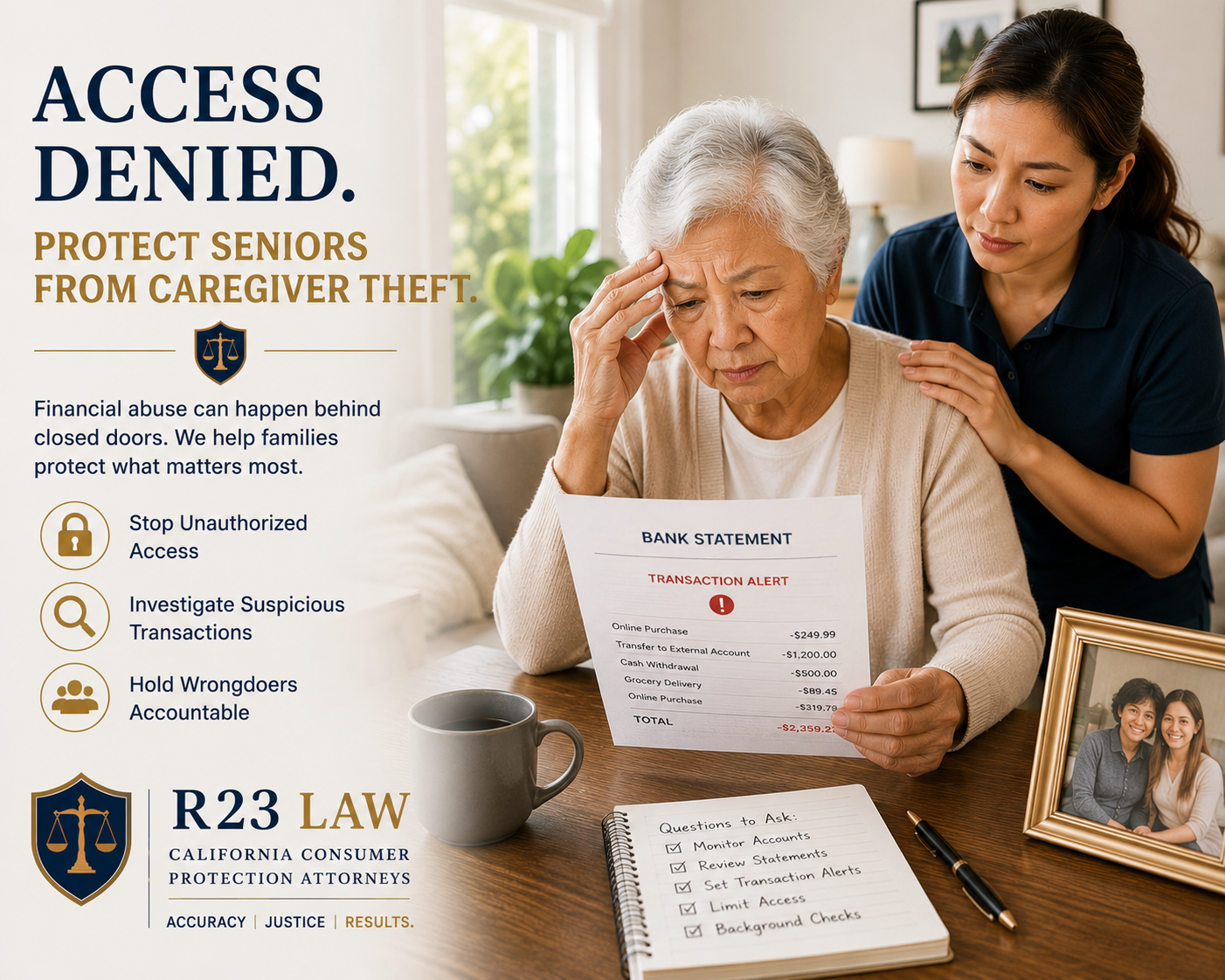
Caregivers are often trusted with access to an older adult’s home, routines, personal information, and daily needs
That access can create serious financial risks when a dishonest caregiver obtains bank account details, payment cards, passwords, or identifying information.
Online account fraud and unauthorized debit or credit card use are among the most common forms of theft affecting older adults. Because these transactions may occur without cash changing hands or anyone entering a bank branch, the misconduct can remain hidden until significant losses have accumulated.
R23 Law's California Consumer Protection Attorneys represent seniors and families throughout California in matters involving caregiver theft, identity fraud, unauthorized financial transactions, and elder financial abuse.
Online Account Access Can Make Caregiver Theft Hard to Detect
Many older adults do not actively use online banking. Some may receive paper statements, rely on another person to manage their finances, or have difficulty reviewing account activity.
A caregiver who obtains enough personal information may attempt to create or access an online banking profile without the senior’s knowledge.
That information may include:
Bank account numbers
Debit or credit card numbers
Dates of birth
Social Security numbers
Email addresses
Telephone numbers
Account security answers
Personal identification numbers
Once online access is established, a wrongdoer may transfer money, make purchases, change contact information, or conceal transaction alerts.
Online theft can be especially dangerous because the person taking the funds does not need to visit a bank, present identification, or physically possess cash.
Unauthorized Debit and Credit Card Use Can Escalate Quickly
A caregiver may gain access to a payment card while shopping, running errands, organizing the senior’s belongings, or handling household tasks.
Unauthorized use may involve:
Online retail purchases
Grocery or delivery orders
Cash withdrawals
Recurring subscriptions
Digital wallet transactions
Payments to personal accounts
Purchases for the caregiver’s relatives or friends
Gambling or entertainment expenses
A caregiver’s access to the senior’s home does not create permission to use the senior’s cards or accounts.
Even when a caregiver has previously been authorized to make a specific purchase, that limited permission does not authorize unrelated spending.
California Law Addresses Financial Elder Abuse
California Welfare and Institutions Code section 15610.30 broadly addresses financial abuse of an elder or dependent adult.
Financial abuse may occur when a person or entity takes, conceals, appropriates, obtains, or retains an elder’s real or personal property:
For a wrongful use
With intent to defraud
Through undue influence
The law also addresses conduct by those who assist another person in taking or retaining the elder’s property.
California Penal Code section 368 addresses certain criminal conduct involving elder and dependent-adult abuse.
The facts of each matter determine which civil or criminal laws may apply. The amount taken does not erase the seriousness of the conduct, and repeated smaller transactions may still establish a substantial pattern of exploitation.
A Reported Case Shows the Scale of Caregiver Financial Abuse
The source discusses a reported case involving an 85-year-old woman and allegations that a caregiver stole approximately $160,000.
According to the report, investigators alleged that the caregiver transferred funds into personal accounts and used the victim’s debit card for thousands of dollars in purchases. The reported charges included allegations involving embezzlement, identity theft, unauthorized credit card use, and financial elder abuse.
The source states that charges were pending and that the law firm publishing the original discussion was not involved in the reported case.
The allegations demonstrate how quickly financial losses can grow when a caregiver gains access to account information, payment cards, and online financial systems.
Warning Signs of Caregiver Theft
Caregiver financial abuse may begin with activity that appears minor or easy to overlook.
Potential warning signs include:
Unfamiliar online purchases
Repeated grocery or delivery charges
Transfers to unknown accounts
Cash withdrawals the senior cannot explain
Missing debit or credit cards
Unexpected password changes
New online banking profiles
Missing bank statements
Low-balance or overdraft alerts
Purchases inconsistent with the senior’s habits
New recurring charges
Transactions occurring while the senior was hospitalized or immobile
A caregiver who resists account monitoring
A caregiver who isolates the senior from relatives
Families should investigate suspicious transactions promptly rather than accepting unsupported explanations.
Background Checks Remain Important
Before allowing a caregiver or other worker regular access to an older adult’s home, families should consider reviewing the person’s background.
This remains important even when the caregiver is referred through an agency.
A background review may identify:
Prior criminal history
Identity inconsistencies
Employment concerns
Licensing issues
Prior complaints
Gaps in work history
References that cannot be verified
A background check cannot eliminate every risk. It can still provide information that supports a more informed hiring decision.
Families should also understand what screening the agency performed and whether the caregiver remains subject to supervision.
Cards, Cash, and Valuables Should Be Secured
Older adults may keep unused cards, blank checks, cash, jewelry, and financial records in locations that are easily accessible to people working inside the home.
Protective measures may include:
Storing cards and checkbooks in a locked location
Limiting the amount of cash kept at home
Securing jewelry and valuable property
Destroying cards that are no longer used
Notifying the issuer when a card is discontinued
Reviewing who has keys or access codes
Keeping financial records out of sight
Avoiding written passwords near computers or telephones
Unused cards can still be exploited. Destroying the physical card may not be enough unless the account is also closed or appropriately restricted.
Caregivers Should Not Receive Unrestricted Financial Access
The source cautions against giving a caregiver a credit card, ATM card, blank check, or power of attorney.
These forms of access can create broad opportunities for misuse.
When a caregiver must make purchases for a senior, safer alternatives may include:
Preapproved purchase lists
Limited-value cards
Receipts for every transaction
Direct payment by a trusted family member
Separate household spending accounts
Immediate transaction alerts
Regular review by another authorized person
Financial authority should be limited to what is necessary and should remain subject to independent oversight.
A power of attorney can grant substantial control over property and accounts. It should not be given casually or simply for convenience.
Personal Information Should Remain Private
A caregiver may be able to commit identity theft without taking a physical card.
Access to account numbers, Social Security information, a date of birth, and contact details may allow a wrongdoer to impersonate the senior, reset passwords, or open new accounts.
Families should secure:
Social Security cards
Tax records
Bank statements
Insurance documents
Government identification
Password records
Credit reports
Estate planning documents
Account recovery information
Sensitive documents should not be left on desks, counters, or open shelves where they can be photographed or copied.
Regular Account Monitoring Can Limit Losses
Frequent review of financial accounts can expose unauthorized transactions before they become a larger pattern.
Families or properly authorized representatives should review:
Debit card purchases
Credit card purchases
Cash withdrawals
Electronic transfers
New payees
Automatic payments
Login notifications
Address changes
Password-reset notices
Unusual account inquiries
Banks and card issuers may offer text, email, or application alerts for purchases and withdrawals.
Monitoring should be regular and detailed. Reviewing only the ending balance may not reveal small but repeated unauthorized transactions.
Family Involvement Reduces Isolation
Regular contact with an older loved one can provide protection beyond account monitoring.
Family members may notice:
Missing possessions
Changes in mood or behavior
Fear of a caregiver
Sudden financial secrecy
Pressure to sign documents
Unexplained spending
Reduced access to telephones or mail
A caregiver speaking for the senior
Attempts to prevent private family conversations
Accompanying an older adult to the bank, major shopping trips, or financial meetings may also reduce the opportunity for manipulation.
Isolation can make financial exploitation easier to commit and harder to discover.
Evidence of Financial Abuse Should Be Preserved
When caregiver theft is suspected, families should preserve relevant records immediately.
Important evidence may include:
Bank statements
Credit card statements
Canceled checks
Transfer records
Purchase receipts
Online account screenshots
Login and security alerts
Emails and text messages
Caregiver schedules
Employment agreements
Agency communications
Powers of attorney
Photographs of missing property
Surveillance recordings
Police reports
Written complaints
A timeline should identify when the caregiver began working, when suspicious transactions appeared, who had account access, and when the conduct was discovered.
R23 Law’s Expert Legal Services for Elder Financial Abuse Victims Throughout California
R23 Law's California Consumer Protection Attorneys represent financial elder abuse victims and their families throughout California.
Our legal services may include:
Reviewing suspicious bank and card transactions
Examining online account access
Investigating caregiver control over financial information
Evaluating identity theft and unauthorized account activity
Reviewing powers of attorney and access documents
Identifying individuals or entities that may have assisted in the misconduct
Preserving evidence of financial losses
Pursuing the recovery of wrongfully taken property
Seeking available damages and other civil remedies
Immediate Action Can Protect Remaining Assets
Suspected caregiver theft should be addressed without delay.
Continued access may allow the wrongdoer to transfer additional money, open new accounts, or conceal evidence.
Protective steps may include:
Restricting compromised accounts
Replacing debit and credit cards
Changing passwords and security questions
Removing unauthorized users
Closing fraudulent online profiles
Reviewing current credit reports
Securing financial documents
Ending the caregiver’s access to the home
Notifying the caregiver agency
Reporting suspected criminal conduct
Families should document each action and retain confirmation from banks, creditors, agencies, and law enforcement.
Contact R23 Law Today
Caregiver theft can deprive an older adult of savings intended for housing, healthcare, and daily living expenses. It can also damage the senior’s credit, independence, and trust in the people responsible for providing care.
R23 Law's California Consumer Protection Attorneys evaluate claims involving unauthorized card use, online account theft, identity fraud, and other forms of financial elder abuse throughout California.
Visit Contact R23 Law to request a consultation regarding suspected caregiver theft or financial exploitation of an older adult.
Toll-Free — 310-598-1588SoCal — (310) 598-1588Email — info@R23Law.comWebsite —www.R23Law.comOffice — US Bank Tower, 633 W. 5th Street, 26th Floor, Los Angeles, CA
© 2025 R23 Law. All rights reserved. Trusted consumer credit lawyers in Los Angeles.
Disclaimer — This article is provided for general informational purposes and does not constitute legal advice. Reading this article or contacting R23 Law does not, by itself, create an attorney-client relationship.
