
BANKRUPTCY MEANS STOP — But Some Creditors Still Don’t Get the Memo
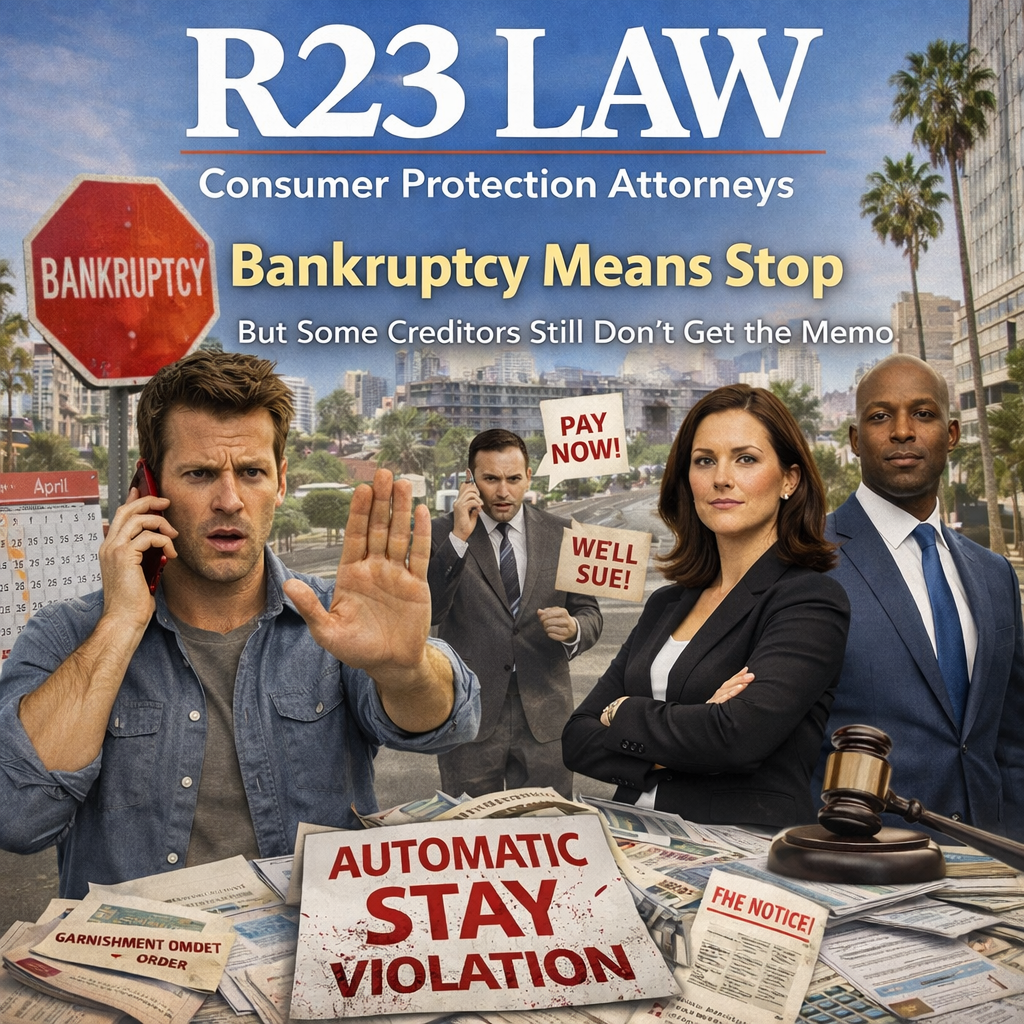
When Creditors Violate the Automatic Stay, It’s More Than Just Annoying — It’s Illegal
Declaring bankruptcy is meant to give consumers a break — a legal pause from collection calls, wage garnishments, and threats. This pause is called the automatic stay, and it’s one of the most important protections in U.S. bankruptcy law. But when creditors ignore it, they’re not just being pushy — they may be breaking the law.
At R23 Law, our California Consumer Protection Attorneys help clients hold creditors accountable for automatic stay violations, often tied to Fair Debt Collection Practices Act (FDCPA) infractions.
What Is the Automatic Stay?
Once you file for bankruptcy, the court grants an automatic stay. This means:
All collection efforts must stop immediately.
Creditors cannot call, text, sue, garnish, or repossess.
Any further actions require a judge’s permission.
This powerful protection is designed to give you breathing room during financial chaos.
But not all creditors play by the rules.
Common Automatic Stay Violations
Violations of the automatic stay aren’t just rare mistakes — they’re frequent, harmful, and often willful. Common actions that violate your rights include:
Contacting you to demand payment
Threatening to file a lawsuit
Actually filing a lawsuit while you’re in bankruptcy
Using aggressive or abusive language
Pretending to be law enforcement or an attorney
Sharing your debt with others
If any of these happen after you file, you may be entitled to damages — even if the debt is real.
FDCPA and Bankruptcy — How They Work Together
Even while you’re protected by bankruptcy law, you also remain protected by the Fair Debt Collection Practices Act (FDCPA), which prohibits:
Harassment or abuse
False or misleading representations
Unfair collection practices
So when a creditor calls during your bankruptcy, they may be violating both the Bankruptcy Code and the FDCPA — doubling their legal exposure.
And here’s the kicker: FDCPA violations can continue even after your bankruptcy is over, if a creditor tries to collect on a discharged debt.
You May Be Owed Compensation
Consumers whose rights are violated may be entitled to:
Statutory damages
Emotional distress compensation
Attorney fees
Punitive damages for willful violations
Our team at R23 Law has the litigation experience to pursue claims against creditors who act like they’re above the law.
What You Should Do If a Creditor Breaks the Stay
Keep detailed records — save voicemails, texts, letters, and dates.
Alert your bankruptcy attorney or trustee
File a complaint with the court and consider FDCPA claims
Contact our legal team to review potential damages
Contact R23 Law Today
📱 SoCal: (310) 598-1588
📧 Email: info@R23Law.com
📂 Schedule a Free Consultation
Visit Our Team to meet the attorneys who handle creditor harassment and bankruptcy protection cases across California.
