
BREACHED DATA, BROKEN TRUST – Data Breach Identity Theft, Credit Damage, And California Consumer Protection Claims
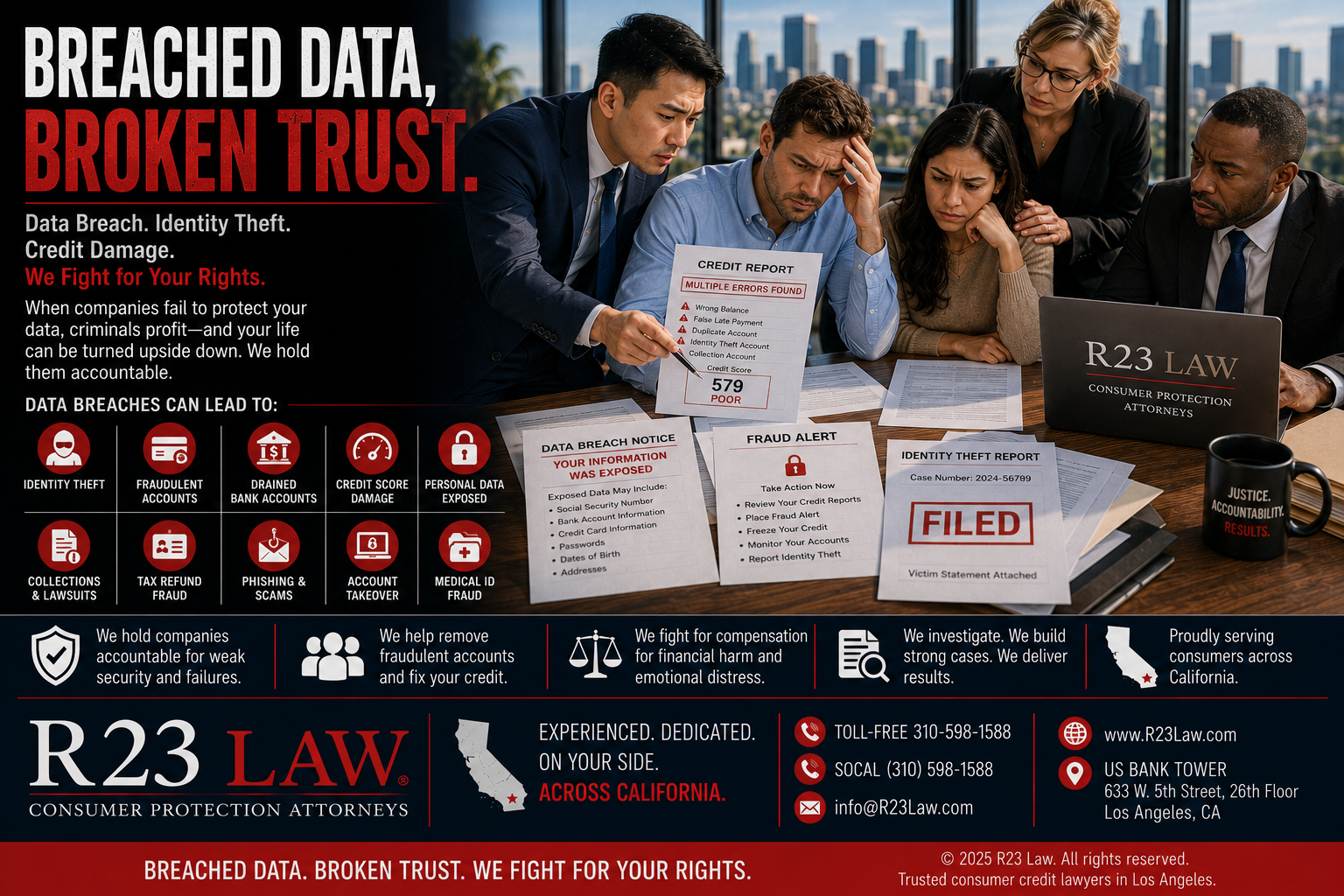
Data breaches can expose Social Security numbers, passwords, bank data, and personal records, leading to identity theft and credit damage
R23 Law's California Consumer Protection Attorneys represent data breach and identity theft victims throughout California.
Data breaches can turn private information into a fraudster’s toolkit. When an organization fails to secure sensitive data, consumers may be left exposed to identity theft, fraudulent accounts, drained bank funds, fake tax filings, credit report errors, and long-term financial harm.
For California consumers, the risk does not always appear immediately. Some breaches go undetected for months, giving criminals time to misuse Social Security numbers, passwords, bank information, addresses, and other personal records before victims even know their data was compromised.
R23 Law's California Consumer Protection Attorneys represent consumers throughout California in data breach fallout, identity theft, credit reporting, unauthorized transaction, and financial injury matters.
Data Breaches — The First Step Toward Identity Theft
A data breach is a security incident where unauthorized people gain access to confidential, protected, or private information stored by a business, government agency, healthcare provider, financial institution, employer, school, or other organization.
The attached source explains that data breaches may happen through cyberattacks, physical theft of hardware, unsecured cloud storage, malware, weak security systems, or human error involving stolen credentials.
Once that information is exposed, criminals may use it to impersonate consumers and commit fraud.
Stolen Information Creates Real Financial Risk
Not all stolen data has the same value, but certain information can create immediate identity theft risks.
High-risk exposed data may include:
Social Security numbers
Bank account numbers
Credit card numbers
Passwords
Driver’s license numbers
Dates of birth
Medical information
Addresses
Email accounts
Tax information
Employment records
Insurance information
With enough personal information, criminals may open accounts, drain savings, file false tax returns, run phishing schemes, apply for loans, or create fraudulent debts in the consumer’s name.
Identity Theft After A Breach Can Spread Quickly
A data breach may be only the beginning. Once stolen information is circulated, sold, or reused, the same consumer may face multiple types of fraud over time.
Common post-breach identity theft issues include:
Fraudulent credit cards
Unauthorized bank transfers
Fake loan applications
New hard inquiries
Collection accounts from fraudulent debts
Tax refund fraud
Account takeover
Changed passwords or contact information
Credit report errors
Phishing messages using real personal details
Legal issues caused by impersonation
R23 Law's California Consumer Protection Attorneys evaluate whether companies, credit bureaus, banks, furnishers, collectors, or other businesses failed to respond properly after a consumer reported fraud.
Credit Report Damage After A Data Breach
One of the most common long-term harms from identity theft is inaccurate credit reporting. Fraudulent accounts may appear as unpaid balances, charge-offs, collections, late payments, or hard inquiries.
That damage can affect:
Housing applications
Auto loans
Credit card approvals
Mortgage applications
Employment-related screenings
Insurance pricing
Banking access
Financial stability
Consumers have rights under the Fair Credit Reporting Act when inaccurate or fraudulent information appears on their credit reports. After a proper dispute, credit reporting agencies and furnishers generally must conduct reasonable investigations and correct information that cannot be verified as accurate.
Delayed Detection Makes Breach Cases More Dangerous
Data breaches are often dangerous because consumers may not know their information was exposed until suspicious activity appears.
Warning signs may include:
Unexpected credit alerts
New accounts on a credit report
Collection calls for unfamiliar debts
Denied applications
Unfamiliar bank transactions
Password reset notices
Mail from unknown lenders
IRS or tax notices
Medical bills for services never received
Two-factor authentication alerts from unknown devices
Consumers should act quickly when these warning signs appear. Delays can allow fraudulent accounts to grow, collections to begin, and credit damage to spread.
Practical Defenses After A Data Breach
Consumers can take protective steps after learning that personal information may have been compromised.
Useful actions include:
Reviewing credit reports from Equifax, Experian, and TransUnion
Placing fraud alerts
Freezing credit files
Changing passwords
Enabling multi-factor authentication
Monitoring bank and credit card accounts
Saving breach notices
Preserving suspicious emails and texts
Reporting identity theft when fraud appears
Disputing inaccurate credit report entries in writing
These steps can reduce future risk and create a record for legal review.
R23 Law's Expert Legal Services For Financial Injury Victims Throughout California
R23 Law represents financial injury victims throughout California whose personal information has been exposed, misused, or reported inaccurately after a data breach.
R23 Law's California Consumer Protection Attorneys may review breach notices, credit reports, fraud alerts, account records, dispute letters, bank statements, collection notices, adverse action letters, and communications from companies involved in the breach or fraud.
The firm’s consumer protection work includes matters involving:
Data breach identity theft
Credit report errors
Fraudulent accounts
Unauthorized bank transfers
Unauthorized credit card charges
Debt collection after fraud
Account takeover
Hard inquiries from identity theft
Adverse action notices
Failure to investigate consumer disputes
R23 Law works to pursue correction, accountability, and compensation where the law allows.
Strong Records Build Stronger Data Breach Claims
Consumers should preserve every document connected to the breach and any resulting identity theft.
Important records may include:
The data breach notice
Credit reports
Credit monitoring alerts
Fraud alerts or credit freeze confirmations
Bank statements
Credit card statements
Identity theft reports
Police reports
FTC identity theft materials
Dispute letters
Certified mail receipts
Collection letters
Adverse action notices
Emails from companies involved in the breach
Proof of financial losses, denials, or higher costs
A strong paper trail can show when the breach occurred, what information was exposed, how the fraud developed, and which companies failed to respond properly.
R23 Law's California Consumer Protection Attorneys Protect Identity Theft Victims
Data breaches can leave consumers vulnerable long after a company sends a notice. A breached Social Security number, password, or bank account detail can create financial harm that follows a person for years.
Consumers deserve accurate credit reporting, proper fraud investigations, and accountability when companies fail to protect or correct consumer information.
Visit Our Team, learn more at About R23 Law, or connect through Contact R23 Law.
Contact R23 Law Today
If a data breach exposed your personal information, caused identity theft, damaged your credit, or triggered fraudulent accounts, R23 Law's California Consumer Protection Attorneys can review your rights and discuss potential legal claims.
Toll-Free — 310-598-1588 SoCal — (310) 598-1588 Email — info@R23Law.com Website — www.R23Law.com Office — US Bank Tower, 633 W. 5th Street, 26th Floor, Los Angeles, CA
© 2025 R23 Law. All rights reserved. Trusted consumer credit lawyers in Los Angeles.
