
CARD FRAUD, CREDIT FALLOUT — When Fraud Hits Your Credit Report
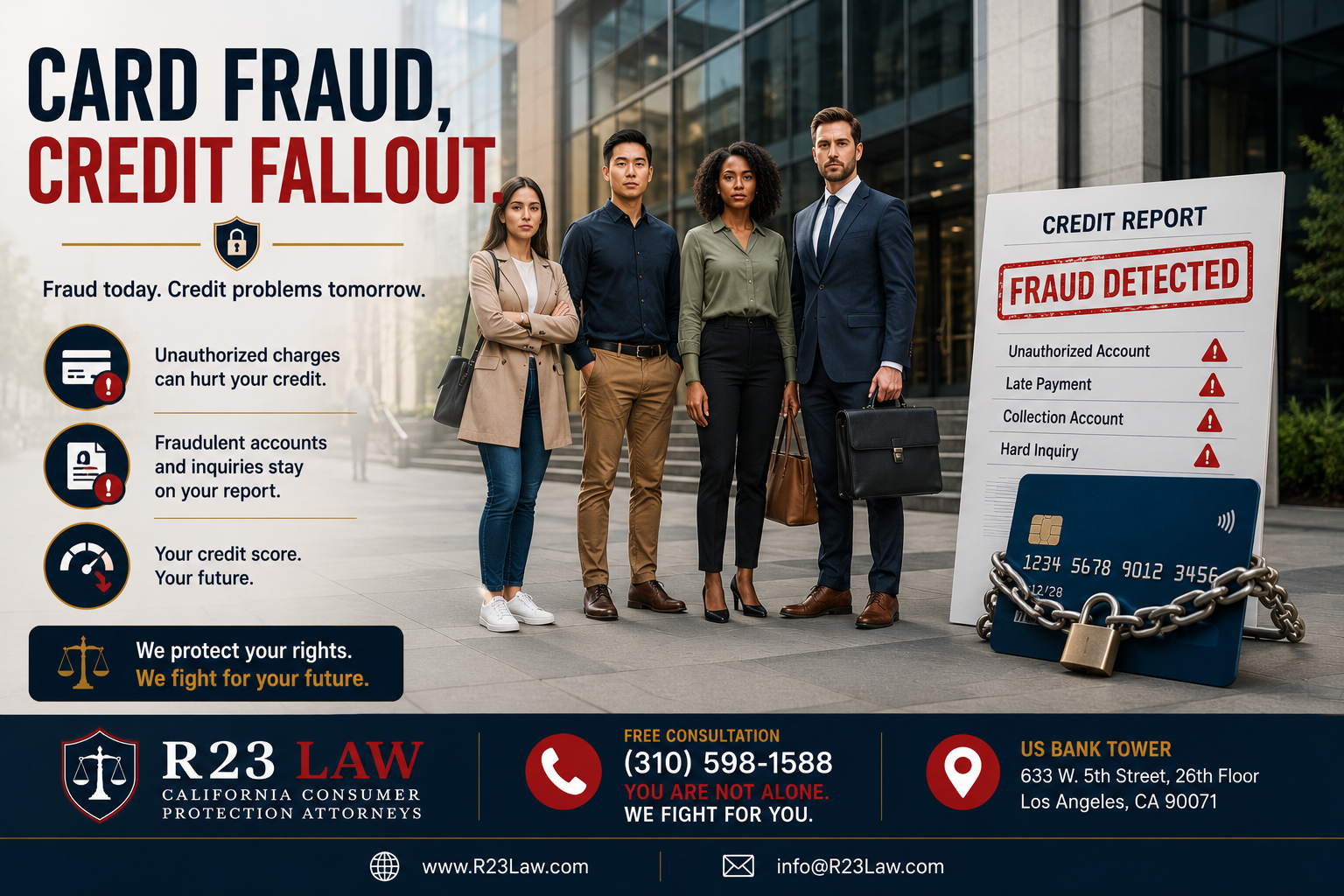
Credit card fraud can take money from your account in an instant
Unauthorized charges, accounts opened without permission, missed payments created by fraud, and unfamiliar credit inquiries can all find their way into a consumer's credit history. Once that happens, identity theft or credit card fraud can affect creditworthiness and potentially interfere with future borrowing, housing, and even certain employment opportunities.
The source material identifies two particularly important forms of credit card fraud — account takeover, where a fraudster makes unauthorized charges using an existing credit card, and account generation, where someone opens an entirely new credit card account using another person's identity without consent.
R23 Law's California Consumer Protection Attorneys represent consumers dealing with identity theft, fraudulent credit accounts, unauthorized transactions, and inaccurate credit reporting that continues after the fraud is discovered.
Unauthorized charges, accounts opened without permission, missed payments created by fraud, and unfamiliar credit inquiries can all find their way into a consumer's credit history. Once that happens, identity theft or credit card fraud can affect creditworthiness and potentially interfere with future borrowing, housing, and even certain employment opportunities.
The source material identifies two particularly important forms of credit card fraud — account takeover, where a fraudster makes unauthorized charges using an existing credit card, and account generation, where someone opens an entirely new credit card account using another person's identity without consent.
R23 Law's California Consumer Protection Attorneys represent consumers dealing with identity theft, fraudulent credit accounts, unauthorized transactions, and inaccurate credit reporting that continues after the fraud is discovered.
Credit Card Fraud Can Reach Far Beyond Unauthorized Charges
When most consumers think about credit card fraud, the first concern is usually the money charged to the account.
But fraud can create a second problem — inaccurate information on a credit report.
A credit report records information concerning a consumer's credit history, including credit cards, loans, payment activity, and other credit-related information. If fraudulent activity becomes associated with that report, the consequences may continue even after the unauthorized transaction itself has been identified.
Fraud-related credit reporting may include:
Unauthorized credit card accounts
Fraudulent balances
Late or delinquent payments connected to fraud
Credit applications the consumer never submitted
Hard inquiries from unfamiliar creditors
Negative payment history caused by unauthorized activity
That means consumers dealing with credit card fraud should pay attention not only to the card account, but also to what appears on their credit reports afterward.
Account Takeover Fraud Uses an Existing Credit Card
An account takeover occurs when the credit card belongs to the consumer, but someone else gains access to the account and makes unauthorized charges.
The fraudster may obtain the account information through stolen credentials, compromised personal information, or another form of identity theft.
The underlying account is legitimate.
The transactions are not.
If the unauthorized balance is not resolved properly, the account may eventually reflect missed or delinquent payments. Those negative entries may then affect the consumer's credit history even though the consumer never made the fraudulent purchases.
Account Generation Fraud Creates an Entirely New Credit Card
The second category identified in the source is account generation.
Instead of taking over an existing account, the fraudster uses another person's information to apply for and open a new credit card without that person's consent.
The victim may have no idea the account exists until:
It appears on a credit report
A bill arrives
A collection agency makes contact
The consumer receives an unexpected credit denial
A credit monitoring alert identifies a new account
The account becomes delinquent
Because the consumer never opened the account, every transaction associated with it may be unfamiliar.
Yet unless the fraudulent account is identified and disputed, its payment history and balance can become associated with the victim's credit profile.
Fraudulent Hard Inquiries Can Damage Credit Even Without a New Account
A fraudster does not necessarily need to successfully open an account to create credit problems.
The source notes that simply applying for credit in another person's name may generate a hard inquiry.
Hard inquiries represent applications for credit and can appear on a consumer's credit report.
If a consumer discovers inquiries from companies they do not recognize, those entries may indicate that someone attempted to obtain credit using stolen personal information.
Consumers should therefore review not only the account section of their credit reports, but also the inquiries associated with them.
An unfamiliar inquiry may be an early warning sign of identity theft.
Fraudulent Delinquencies Can Follow the Consumer
When fraudulent charges or fraudulent accounts become overdue, delinquency information may appear on the victim's credit report.
That creates an especially frustrating situation.
The consumer did not make the purchase, open the account, or agree to the debt — but the credit report may still make it appear that the consumer failed to meet a financial obligation.
The source emphasizes that these entries can result in a lower credit score and make obtaining loans or other credit more difficult.
For consumers already attempting to recover from identity theft, inaccurate delinquency reporting can turn one fraud problem into several.
Credit Report Errors Can Affect Major Financial Opportunities
Credit reporting problems do not exist in isolation.
The source explains that credit report errors may affect a consumer's ability to obtain loans and may create additional problems involving housing or certain employment opportunities.
Potential consequences can include:
Difficulty obtaining a mortgage
Problems financing a vehicle
Credit card denials
Less favorable borrowing opportunities
Difficulties renting an apartment
Problems associated with employment screenings involving credit information
Continuing financial instability caused by inaccurate reporting
A fraudulent charge may therefore create consequences far beyond the dollar amount appearing on one monthly statement.
Regular Credit Report Reviews Can Reveal Fraud Early
Monitoring credit reports is one of the most important ways consumers can identify fraud-related reporting.
Consumers should carefully examine reports for:
Accounts they never opened
Creditors they do not recognize
Incorrect balances
Late payments associated with fraudulent activity
Unfamiliar hard inquiries
Collection accounts resulting from fraud
Incorrect personal information
The source recommends regularly reviewing credit reports from the three major nationwide credit reporting agencies — Equifax, Experian, and TransUnion — to detect fraud and reporting errors.
Saving copies of reports can also create a record showing when the inaccurate information appeared and whether it changed after a dispute.
Bank and Credit Card Records Should Be Reviewed Alongside Credit Reports
A credit report tells only part of the story.
Consumers dealing with suspected credit card fraud should also preserve their credit card statements and other account records.
Comparing financial statements with credit reports can make it easier to identify:
When fraudulent transactions began
Which charges were unauthorized
Whether a fraudulent balance became delinquent
Whether negative reporting followed the fraudulent activity
Whether an unfamiliar account was opened entirely without consent
That timeline may become important when disputing both the underlying fraud and the resulting credit reporting.
Credit Card Fraud Should Be Disputed Promptly
The source emphasizes acting quickly after discovering fraudulent activity or inaccurate credit reporting.
A consumer who discovers an unauthorized account or transaction should document the problem and notify the appropriate companies.
For credit reporting errors connected to the fraud, the source recommends disputing the information with the credit card company and the major credit reporting agencies.
Consumers should consider preserving:
Copies of credit reports
Credit card statements
Fraudulent account information
Hard inquiry records
Written disputes
Supporting documents
Correspondence from creditors
Credit bureau responses
Proof showing when disputes were sent and received
The more clearly the consumer documents what happened, the easier it becomes to establish which information does not belong to them.
Detailed Written Disputes Create an Important Record
The source specifically recommends sending detailed disputes to credit reporting agencies and providing documentation supporting the claim.
A dispute should clearly identify the inaccurate information and explain why the item resulted from fraud.
Supporting documents may include records showing that:
The consumer never opened the account
Particular transactions were unauthorized
The consumer reported the fraud
An unfamiliar credit application was not submitted by the consumer
The disputed balance resulted from fraudulent activity
Credit reporting agencies are required to investigate disputes, and when disputed information is determined to be erroneous, correction of that information becomes an important part of restoring the consumer's credit history.
Delayed Fraud Disputes Can Become Harder to Untangle
Credit card fraud can become more complicated when inaccurate information remains unchallenged for a long period of time.
As the source explains, identity theft victims are often placed in the difficult position of proving a negative — that they did not make the disputed purchase or open the fraudulent account.
Over time, documents can disappear, memories become less precise, accounts may be transferred, and additional negative information may accumulate.
That makes early documentation particularly valuable.
Consumers who discover suspicious credit activity should preserve the report showing the problem rather than relying only on later versions.
Fraudulent Credit Reporting Can Become a Long-Term Financial Problem
The original source describes credit card fraud as something capable of becoming a continuing financial problem rather than simply an immediate loss.
That distinction matters.
A fraudulent purchase may happen once.
An inaccurate credit entry can continue affecting a consumer whenever another company reviews the report.
If the fraudulent information remains, the victim may repeatedly encounter consequences from transactions that were never theirs in the first place.
Correcting the underlying fraud and correcting the resulting credit reporting are therefore closely connected.
R23 Law's California Consumer Protection Attorneys Represent Credit Fraud Victims Throughout California
Credit card fraud cases can involve overlapping problems — identity theft, unauthorized transactions, fraudulent accounts, inaccurate credit reporting, hard inquiries, delinquent balances, and disputes that fail to correct the underlying information.
R23 Law's California Consumer Protection Attorneys represent consumers facing these financial consequences throughout California.
A legal evaluation may examine:
Whether a credit card was fraudulently opened
Whether an existing account was taken over
Which transactions were unauthorized
Whether fraudulent balances were reported
Whether delinquent payments resulted from the fraud
Whether unauthorized hard inquiries appeared
Whether the consumer disputed the inaccurate information
How the creditor or credit reporting agency responded
Whether the inaccurate reporting continued
Whether the consumer suffered financial consequences
Learn more about R23 Law's consumer protection practice through About Us and meet the firm's attorneys through Our Team.
Fraud Should Not Become Your Credit History
Credit card fraud is damaging enough when unauthorized purchases first appear.
Consumers should not also have to carry fraudulent balances, delinquent payments, unfamiliar inquiries, or unauthorized accounts as part of their legitimate credit history.
Regularly reviewing credit reports and acting promptly when something appears wrong can make it easier to identify the connection between the fraud and the inaccurate reporting.
When fraudulent information remains on a credit report despite efforts to correct it, experienced consumer protection counsel can evaluate the reporting history and the companies involved.
R23 Law's California Consumer Protection Attorneys focus on protecting consumers when identity theft and financial fraud create continuing credit reporting problems.
Contact R23 Law Today
Credit card fraud can leave behind more than unauthorized charges. Fraudulent accounts, hard inquiries, delinquent balances, and inaccurate credit information can continue affecting a consumer's financial opportunities after the initial theft occurs.
R23 Law's California Consumer Protection Attorneys represent consumers throughout California dealing with credit card fraud, identity theft, inaccurate credit reports, and related consumer protection disputes.
Toll-Free — 310-598-1588 SoCal — (310) 598-1588 Email — info@R23Law.com Website — www.R23Law.com US Bank Tower, 633 W. 5th Street, 26th Floor, Los Angeles, CA
© 2025 R23 Law. All rights reserved. Trusted consumer credit lawyers in Los Angeles.
