
DARK WEB, REAL DAMAGE – Stolen Identity, Data Breach Fallout, And California Consumer Protection Claims
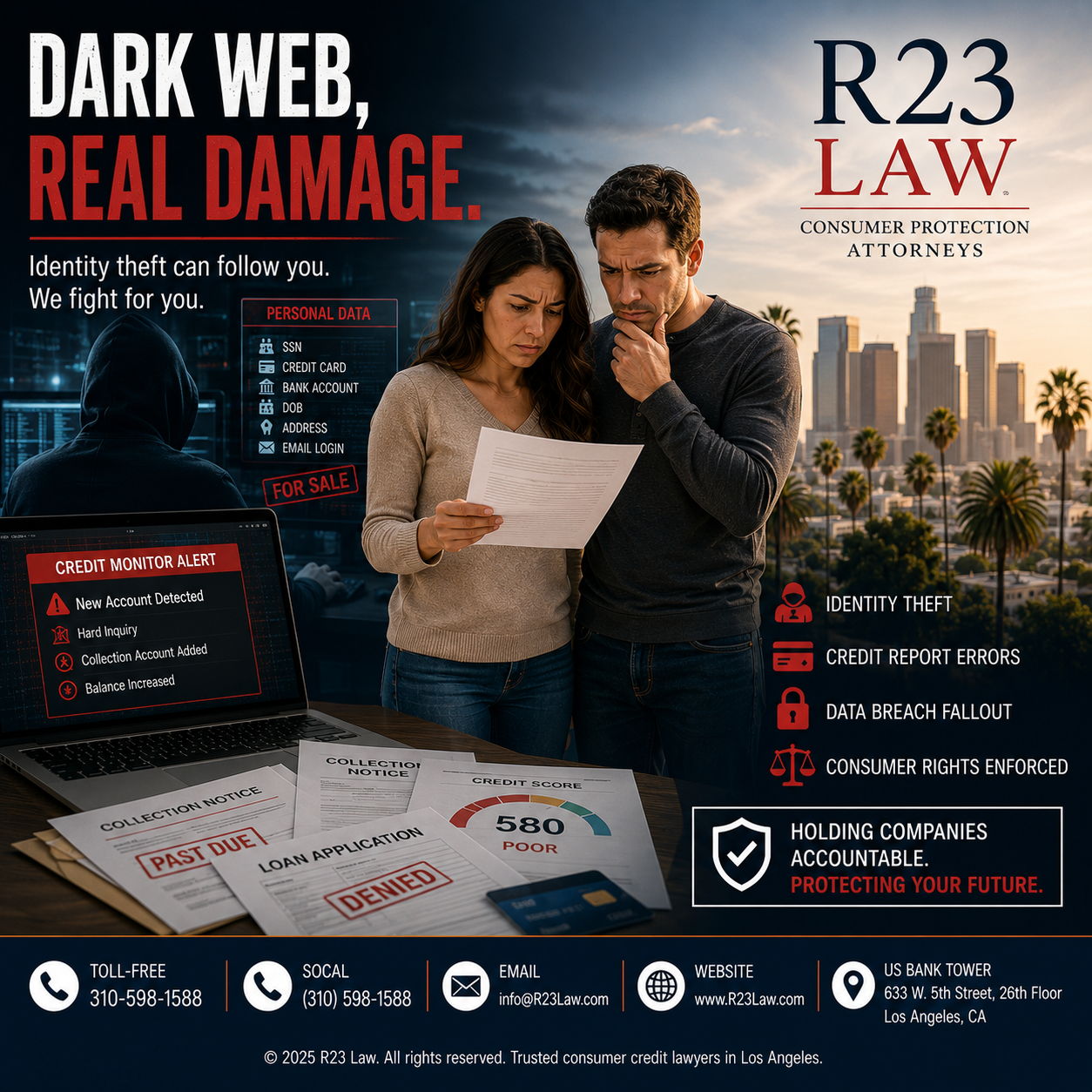
Personal information sold on the dark web can lead to identity theft, credit report errors, fraudulent accounts, and financial harm
R23 Law's California Consumer Protection Attorneys represent identity theft victims throughout California.
Suggested URL Slug — /dark-web-identity-theft-california-lawyer
When personal information lands on the dark web, the damage can spread fast. A stolen Social Security number, date of birth, address, credit card number, login credential, or bank account detail can become part of a criminal marketplace where fraudsters buy, sell, and reuse consumer data.
For identity theft victims, the consequences are not just digital. Fraudulent accounts, credit denials, collection letters, damaged credit reports, drained accounts, and repeated verification problems can follow for months or even years.
R23 Law's California Consumer Protection Attorneys represent consumers facing identity theft, credit reporting errors, data breach fallout, financial fraud, and related consumer protection violations. Learn more through About R23 Law, meet the attorneys on Our Team, or start a case review through Contact R23 Law.
The Dark Web — A Marketplace For Stolen Consumer Data
Most people use the visible internet every day — search engines, social media, shopping sites, news pages, and email. The dark web is different. It is a hidden part of the internet that requires special software to access and is often used because activity can be harder to trace.
While not every dark web use is unlawful, stolen identity data is commonly bought and sold there. Criminals may trade personal information after phishing scams, malware attacks, corporate data breaches, hacked accounts, mail theft, or unauthorized access to financial records.
Once that information is available for sale, the same stolen identity can be reused by multiple people for different forms of fraud.
Identity Theft Packages — Why Criminals Bundle Personal Information
Stolen data becomes more valuable when criminals package it together. A credit card number alone may have value, but a credit card number paired with a billing address, date of birth, email address, phone number, or Social Security number can be more useful for fraud.
These bundled profiles may be used to:
Open credit cards or loans
Access bank accounts
Submit fraudulent applications
Create synthetic identities
File false tax returns
Take over online accounts
Make unauthorized purchases
Trigger collection activity in the victim’s name
Create damaging credit report entries
Dark web sales can resemble ordinary online shopping platforms. Listings may include descriptions, pricing, seller ratings, customer reviews, and escrow-style payment systems. That organized structure makes stolen identity trafficking especially dangerous for consumers.
Data Breaches Can Become Identity Theft Events
A data breach does not always cause immediate financial harm. Sometimes the stolen information sits unused for months before fraudulent activity begins. Other times, criminals move quickly by opening accounts, testing payment cards, or attempting account takeovers.
Consumers should take breach notices seriously, especially when the compromised information includes Social Security numbers, financial account details, birth dates, addresses, insurance information, driver’s license numbers, or login credentials.
Early warning signs may include:
Unfamiliar accounts on a credit report
Credit monitoring alerts
Denied applications
New hard inquiries
Debt collection calls for accounts never opened
Password reset emails
Bank alerts for suspicious activity
Mail missing from financial institutions
Tax notices involving unknown filings
R23 Law's California Consumer Protection Attorneys evaluate whether identity theft has caused credit reporting damage, unlawful debt collection, account disputes, or other financial injuries.
Credit Report Errors After Dark Web Identity Theft
One of the most damaging outcomes of dark web identity theft is inaccurate credit reporting. Fraudulent accounts may appear as unpaid balances, charge-offs, collections, hard inquiries, or delinquent tradelines.
These errors can affect loan approvals, apartment applications, insurance pricing, employment-related screenings, and overall financial stability. Consumers often discover the issue only after receiving a denial, adverse action notice, collection demand, or credit alert.
Under the Fair Credit Reporting Act, consumers have the right to dispute inaccurate information on their credit reports. Credit reporting agencies and furnishers must conduct reasonable investigations after receiving proper disputes. When they fail to correct identity theft-related errors, legal claims may arise.
R23 Law's Expert Legal Services For Identity Theft Victims Throughout California
R23 Law represents consumers whose personal information has been misused after data breaches, dark web exposure, financial fraud, and identity theft schemes.
R23 Law's California Consumer Protection Attorneys may review credit reports, analyze dispute history, identify fraudulent accounts, evaluate communications from creditors and debt collectors, pursue corrections, and seek compensation when companies fail to follow consumer protection laws.
The firm’s consumer protection practice includes matters involving:
Identity theft
Credit report errors
Mixed credit files
Fraudulent accounts
Data breach fallout
Debt collection misconduct
Background check inaccuracies
Adverse action notices
Unlawful account reporting
R23 Law focuses on holding companies accountable when inaccurate reporting or weak consumer protection practices cause real financial harm.
Strong Documentation Builds A Stronger Identity Theft Case
Consumers who suspect dark web identity theft should keep careful records. Documentation can make a major difference when disputing fraudulent accounts or pursuing claims under consumer protection laws.
Useful records may include:
Credit reports from Equifax, Experian, and TransUnion
Identity theft reports
Police reports
FTC IdentityTheft.gov materials
Fraud alerts or credit freeze confirmations
Letters from creditors
Debt collection notices
Account statements
Screenshots of suspicious alerts
Certified mail receipts for disputes
Copies of denial letters or adverse action notices
The more complete the paper trail, the easier it may be to show what happened, when it happened, and which companies failed to correct the problem.
R23 Law's California Consumer Protection Attorneys Stand With Fraud Victims
Dark web identity theft can leave consumers feeling exposed, overwhelmed, and unsure where the damage will appear next. R23 Law brings focused consumer protection experience to identity theft, credit reporting, and financial fraud matters across California.
Visit Our Team to learn more about the attorneys, explore the firm’s mission at About R23 Law, or begin a confidential case review through Contact R23 Law.
Contact R23 Law Today
If your personal information was exposed, sold, or misused after a data breach or dark web identity theft event, R23 Law's California Consumer Protection Attorneys can review your rights and discuss potential legal options.
Toll-Free: 310-598-1588 SoCal: (310) 598-1588 Email: info@R23Law.com Website: www.R23Law.com Office: US Bank Tower, 633 W. 5th Street, 26th Floor, Los Angeles, CA
© 2025 R23 Law. All rights reserved. Trusted consumer credit lawyers in Los Angeles.
