
DATA DROPPED, COMPANIES LIABLE – California Consumer Rights After Data Breaches, Identity Theft, And Credit Damage
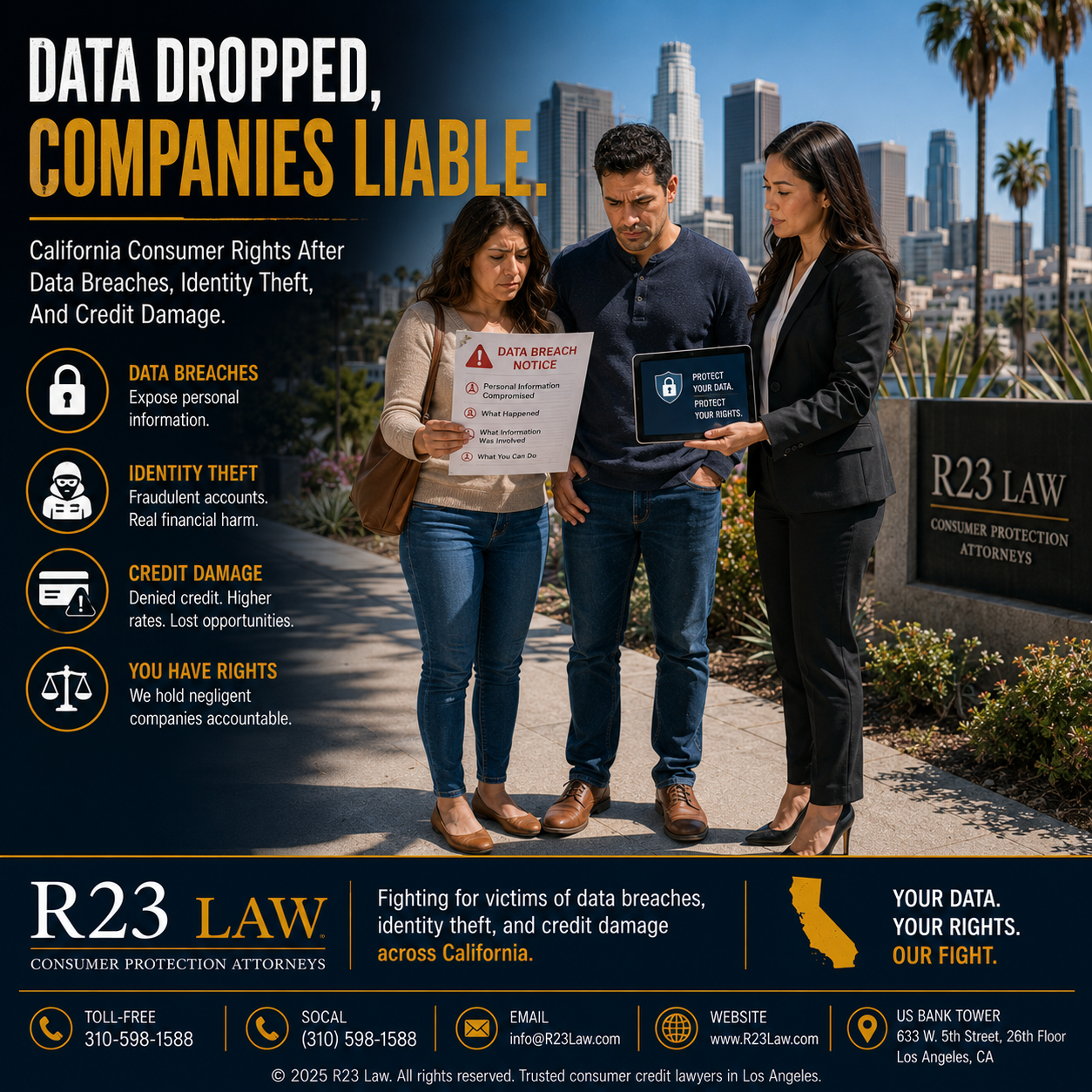
Companies that fail to protect consumer data may be liable for identity theft, financial losses, credit damage, and emotional distress
R23 Law's California Consumer Protection Attorneys represent California data breach victims.
When a company collects personal information, it takes on serious responsibility. Banks, healthcare providers, retailers, employers, insurance companies, technology platforms, and financial institutions all store sensitive consumer data. When that data is not protected, consumers can pay the price.
A corporate data breach can expose Social Security numbers, bank account details, medical records, login credentials, biometric information, addresses, and other private data. Once that information reaches criminals, consumers may face identity theft, fraudulent accounts, credit damage, collection activity, and years of financial disruption.
R23 Law's California Consumer Protection Attorneys represent consumers throughout California when companies fail to safeguard personal information and data breach victims suffer real harm.
California Data Breach Laws Protect Consumers
California has some of the strongest consumer privacy laws in the country. The California Consumer Privacy Act, known as the CCPA, gives consumers important rights when businesses collect, share, or mishandle personal information.
These rights may include:
The right to know what personal information a company collects
The right to know why that information is collected
The right to know who receives or shares that information
The right to request deletion of certain personal information
The right to pursue damages when negligent data security causes harm
California also requires companies to notify consumers when certain personal information has been compromised in a data breach. A breach notice can be important, but it does not always explain the full legal impact or the consumer’s right to pursue compensation.
When Companies May Be Liable For Data Breaches
Not every breach automatically means a company broke the law. But companies can face liability when they fail to use reasonable security practices or ignore known risks.
A company may be legally responsible when it:
Fails to use reasonable cybersecurity measures
Uses outdated software or weak security systems
Fails to encrypt sensitive consumer information
Ignores known vulnerabilities
Delays notifying affected consumers
Misrepresents its security practices
Fails to train employees on data protection
Breaks promises made in privacy policies or terms of service
When companies put profits over data protection, consumers may be left dealing with the financial and emotional aftermath.
R23 Law's Expert Legal Services For Data Breach Injury Victims Throughout California
R23 Law's California Consumer Protection Attorneys investigate data breach claims involving corporate negligence, privacy violations, identity theft, credit reporting harm, and financial fraud.
The firm reviews breach notices, privacy policies, company statements, credit reports, fraudulent account records, bank communications, credit bureau disputes, identity theft reports, and financial losses. This evidence can determine whether a consumer has claims based on negligence, breach of contract, unfair business practices, consumer protection violations, or federal credit reporting laws.
Learn more about the firm through AboutUs, meet the attorneys through Our Team, or contact the firm directly through ContactUs.
Common Harm After A Corporate Data Breach
Data breach damage can extend far beyond one unauthorized charge. Victims may face immediate financial losses and long-term consequences that affect credit, housing, lending, employment, and financial stability.
Common data breach injuries include:
Unauthorized bank withdrawals
Fraudulent credit card charges
New accounts opened in the consumer’s name
Credit score damage
Denied credit applications
Higher interest rates
Lost time spent disputing fraud
Credit monitoring costs
Legal expenses
Debt collection tied to fraudulent accounts
Emotional distress, anxiety, and loss of peace of mind
Identity theft from a data breach can follow a consumer for years. Even after fraudulent accounts are closed, the damage may remain on credit reports if credit bureaus, creditors, or furnishers fail to properly correct the record.
Legal Claims Available To Data Breach Victims
Depending on the facts, data breach victims may have several legal claims.
Negligence Claims A negligence claim may arise when a company fails to exercise reasonable care in protecting consumer data and that failure causes harm.
Breach Of Contract Claims A company may promise specific data protections in its privacy policy, terms of service, or consumer agreement. If those promises are broken, a breach of contract claim may apply.
California Consumer Protection Claims Companies that mislead consumers about data security or use unfair practices may violate California’s consumer protection laws, including the Unfair Competition Law and the Consumers Legal Remedies Act.
Federal Credit Reporting Claims When identity theft leads to false credit reporting, consumers may have claims under the Fair Credit Reporting Act if credit bureaus or furnishers fail to reasonably investigate disputes.
Building A Strong Data Breach Case
Consumers should preserve every record connected to the breach and resulting harm. Documentation can be critical when pursuing compensation.
Important records may include:
The data breach notice
Emails or letters from the breached company
Credit monitoring alerts
Credit reports from all three major credit bureaus
Bank and credit card statements
Fraudulent account records
Dispute letters
FTC identity theft reports
Police reports
Communications with creditors and collectors
Proof of out-of-pocket expenses
Records showing denied credit, higher interest rates, or lost opportunities
The stronger the record, the easier it may be to show that the breach caused real financial injury, credit damage, or emotional harm.
Credit Monitoring Is Not Full Compensation
After a breach, companies often offer free credit monitoring. While credit monitoring may alert consumers to suspicious activity, it does not erase fraudulent debt, repair damaged credit, compensate emotional distress, or hold the company accountable for weak security.
Consumers should not assume that credit monitoring is the full remedy. When a breach causes financial harm, identity theft, or credit damage, legal claims may be available.
R23 Law's California Consumer Protection Attorneys Enforce Data Privacy Rights
Consumers trust companies with highly sensitive information. That trust comes with legal responsibility. When companies fail to protect personal data, delay notice, or leave consumers exposed to identity theft, they should be held accountable.
R23 Law's California Consumer Protection Attorneys represent data breach victims throughout California in claims involving identity theft, privacy violations, credit reporting errors, fraudulent debts, financial losses, and emotional distress.
Contact R23 Law Today
If your personal information was exposed because a company failed to protect your data, R23 Law's California Consumer Protection Attorneys can review your potential claims and pursue accountability for the harm caused.
Toll-Free — 310-598-1588 SoCal — (310) 598-1588 Email — info@R23Law.com Website —www.R23Law.com US Bank Tower, 633 W. 5th Street, 26th Floor, Los Angeles, CA
© 2025 R23 Law. All rights reserved. Trusted consumer credit lawyers in Los Angeles
