
DEBIT DRAINED, RIGHTS REMAIN – Debit Card Fraud, EFTA Disputes, And California Consumer Protection Claims
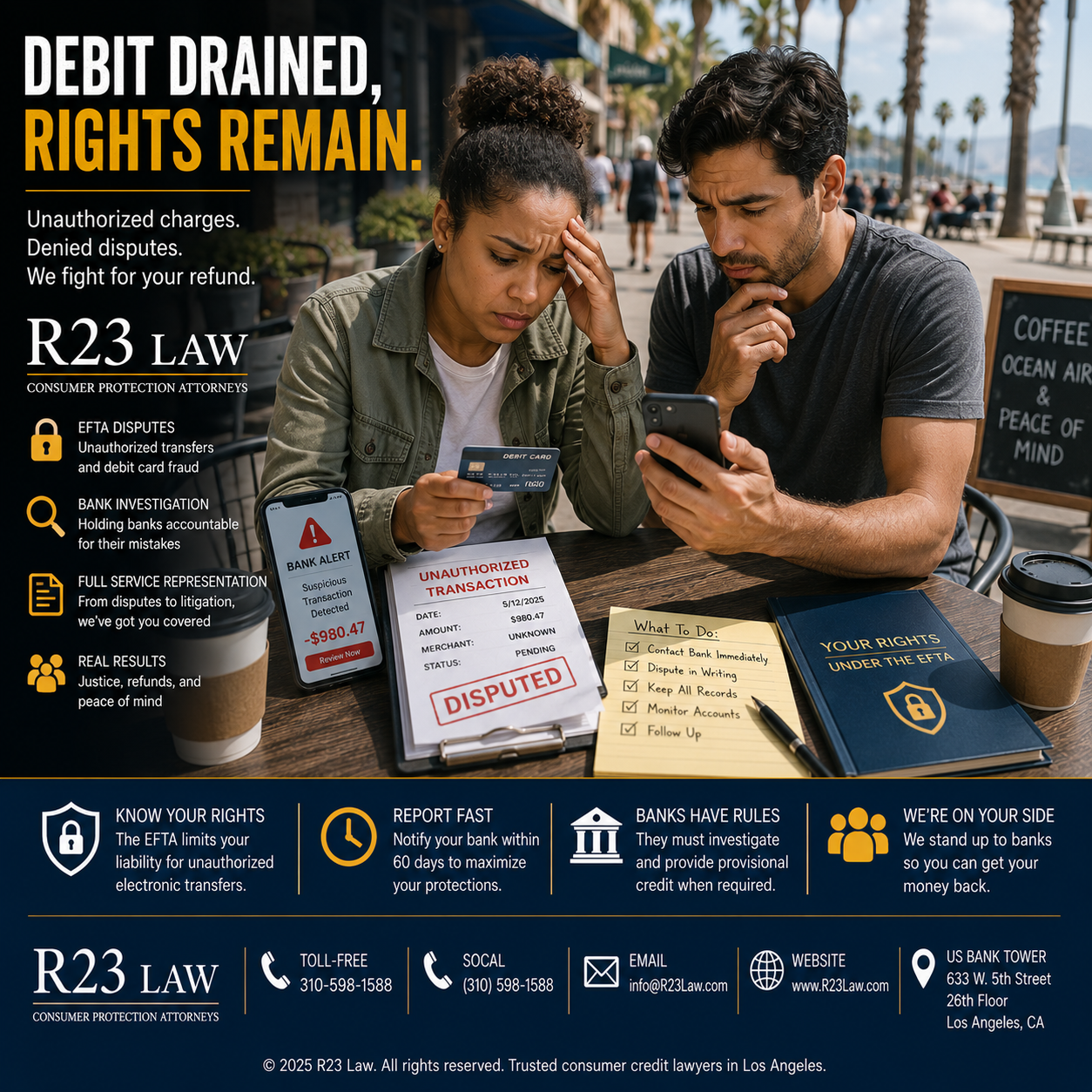
Debit card fraud can empty bank accounts, trigger denied disputes, and create serious financial stress
R23 Law's California Consumer Protection Attorneys represent Californians facing unauthorized debit card charges, EFTA disputes, bank fraud denials, and account takeover losses.
Debit Card Fraud Hits Fast
Debit card fraud can create immediate financial harm because the money often leaves a consumer’s bank account right away. Unlike a credit card dispute, where the charge may sit on a statement, debit card fraud can drain rent money, savings, bill payments, and everyday cash flow.
The attached source explains that consumers who discover unauthorized debit card charges should contact the bank immediately, continue monitoring for additional suspicious activity, and change related passwords, account numbers, or PINs to reduce further unauthorized activity.
R23 Law's California Consumer Protection Attorneys represent consumers facing unauthorized debit card charges, account takeover fraud, denied bank disputes, and financial institutions that fail to properly investigate.
EFTA Rights After Unauthorized Debit Card Charges
Debit card fraud is often governed by the Electronic Fund Transfer Act, also known as the EFTA, and Regulation E. Regulation E protects consumers who use electronic fund transfers, including certain debit card transactions, ATM withdrawals, and electronic account transfers.
The attached source explains that consumers should dispute unauthorized debit card activity as soon as possible and that timing affects potential liability. It notes that consumers may have stronger protections when they report unauthorized activity within 60 days of the statement showing the transaction.
The CFPB’s Regulation E liability rule also recognizes important timing limits for unauthorized electronic fund transfers, including a $50 basic liability limit in certain situations when a lost or stolen access device is reported within two business days after the consumer learns of the loss or theft.
Lost Or Stolen Debit Cards Require Fast Notice
When a debit card is lost or stolen, timing becomes even more important. The attached source explains that if a consumer notifies the bank within two business days after realizing the card is missing, liability may be limited to the lesser of $50 or the amount of unauthorized charges. It also notes that waiting beyond that two-day window may increase potential liability.
The FTC similarly explains that federal law limits liability for unauthorized charges, but the protection depends on the type of card and when the consumer reports the loss or theft.
R23 Law's Expert Legal Services For Financial Injury Victims Throughout California
R23 Law's California Consumer Protection Attorneys evaluate debit card fraud claims involving banks, credit unions, payment systems, merchants, account takeover activity, phishing scams, and denied Regulation E disputes.
Our legal services may include reviewing bank statements, transaction records, fraud notices, dispute letters, denial letters, provisional credit decisions, account notes, and whether the financial institution followed the EFTA’s investigation requirements.
Consumers can learn more about the firm through About R23 Law, meet the attorneys through Our Team, or begin through Contact Us.
What To Include In A Debit Card Fraud Dispute
A debit card fraud dispute should be clear, detailed, and documented. The attached source recommends including the date and amount of the charge, the merchant name, account information, transaction details, contact information, and a detailed explanation of why the charge was unauthorized. It also recommends sending mailed disputes by certified mail so the consumer has proof of delivery.
Strong dispute records may include:
Bank statements
Transaction screenshots
Merchant names and transaction dates
Written dispute letters
Certified mail receipts
Emails and text messages
Police reports or FTC reports
Bank denial letters
Provisional credit notices
Call logs and representative names
Documentation can become critical if the bank denies the dispute or claims the transaction was authorized.
Bank Investigation Deadlines Under Regulation E
Banks must follow investigation rules after receiving a proper notice of error. The attached source explains that when a consumer reports an unauthorized electronic fund transfer within the required timeframe, the bank generally has 10 days to investigate, and if more time is needed, the bank must notify the consumer and provide provisional credit.
The CFPB’s Regulation E error resolution rule provides that if a financial institution cannot complete its investigation within 10 business days, it may take up to 45 days if it provisionally credits the consumer’s account within 10 business days and follows other required procedures.
When Banks Deny Debit Card Fraud Claims
A bank denial is not always the final word. Some denials rely on incomplete investigations, assumptions about consumer fault, or failure to consider evidence of fraud.
The attached source notes that if a bank does not respond or rejects a dispute, consumers may escalate the issue, file a complaint with the CFPB, or seek legal representation to pursue recovery.
R23 Law's California Consumer Protection Attorneys review whether the bank properly investigated, issued required provisional credit, applied the correct liability limits, and provided a lawful explanation for denying the claim.
Debit Card Fraud Prevention Still Matters
Even strong consumer protection laws work best when consumers act quickly. The attached source recommends keeping debit cards secure, avoiding sharing debit card information by phone, email, or online, using strong passwords, monitoring transactions regularly, reporting suspicious activity immediately, and considering credit cards for online purchases because they may offer different fraud protections.
Consumers should also enable transaction alerts, review statements often, avoid public Wi-Fi for banking, and document suspicious activity as soon as it appears.
R23 Law's California Consumer Protection Attorneys Pursue Bank Accountability
Debit card fraud can create immediate financial injury. A wrong denial from a bank can make the situation worse, leaving consumers without access to funds while bills, rent, and daily expenses continue.
R23 Law's California Consumer Protection Attorneys pursue claims involving unauthorized debit card charges, account takeover losses, denied EFTA disputes, failed bank investigations, and improper handling of provisional credit.
Contact R23 Law Today
Debit card fraud requires fast reporting, strong documentation, and careful legal review when a bank refuses to return stolen funds. If your bank denied your debit card fraud dispute, failed to investigate, reversed provisional credit, or blamed you for unauthorized charges, R23 Law's California Consumer Protection Attorneys can evaluate your rights and legal options.
Contact R23 Law Today Toll-Free — 310-598-1588 SoCal — (310) 598-1588 Email — info@R23Law.com Website — www.R23Law.com US Bank Tower, 633 W. 5th Street, 26th Floor, Los Angeles, CA
© 2025 R23 Law. All rights reserved. Trusted consumer credit lawyers in Los Angeles.
