
SWIPED CARD, STRONG RIGHTS – Credit Card Fraud, Unauthorized Charges, And California Consumer Protection Claims
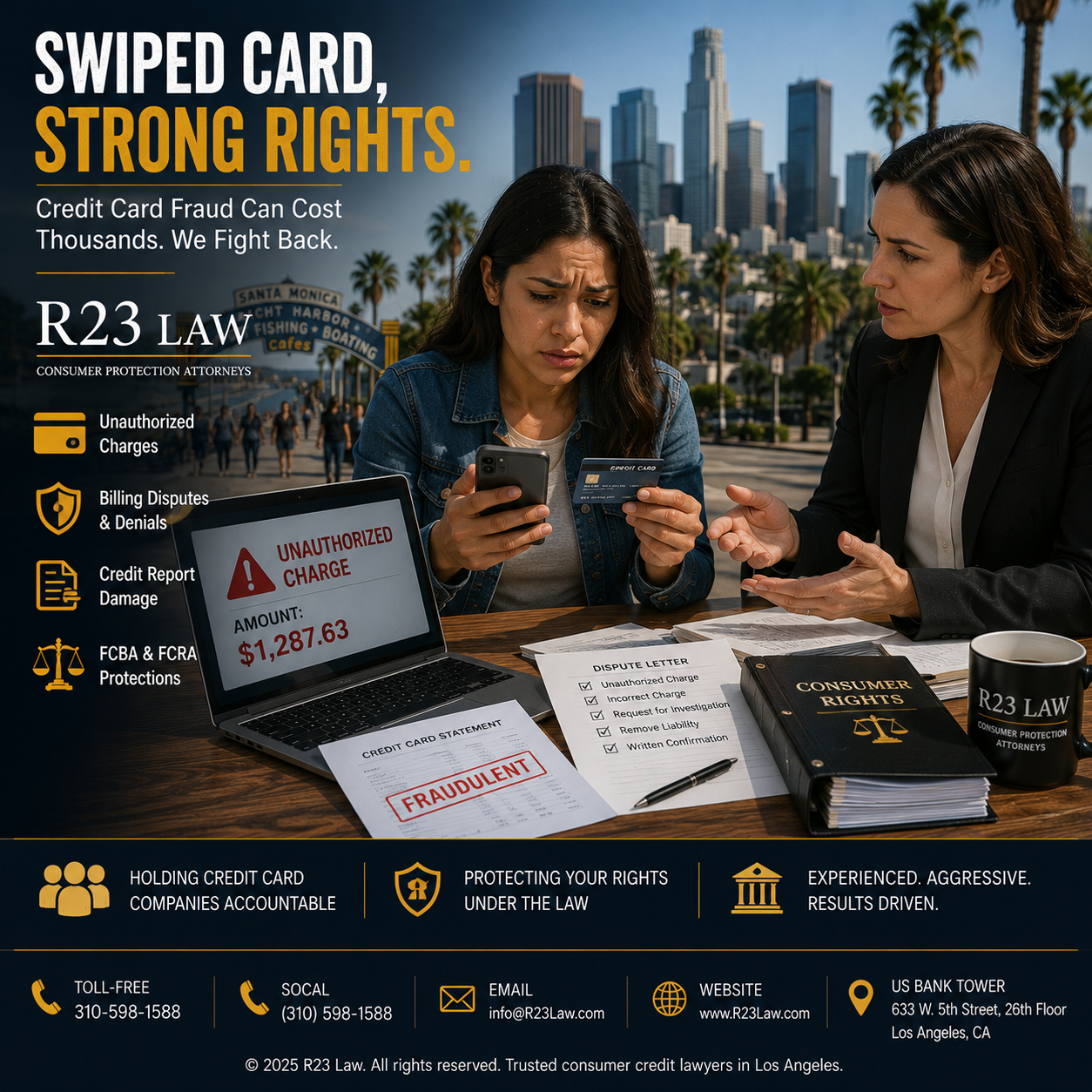
Credit card fraud can damage your finances, credit report, and peace of mind
R23 Law's California Consumer Protection Attorneys represent Californians facing unauthorized charges, denied billing disputes, credit reporting damage, and FCBA or FCRA violations.
Credit Card Fraud Can Become A Credit Crisis
Credit card fraud happens when someone uses a credit card or credit card information without permission to make purchases, obtain cash advances, or create unauthorized charges. The attached source explains that fraud may involve a stolen physical card, copied card information, phishing scams, cybercrime, or identity theft.
For consumers, the damage can spread quickly. A fraudulent charge can become a denied dispute, an unpaid balance, finance charges, collection pressure, and even negative credit reporting.
R23 Law's California Consumer Protection Attorneys represent consumers facing unauthorized credit card charges, fraudulent account activity, credit reporting damage, and companies that refuse to properly investigate disputes.
FCBA Protections For Unauthorized Credit Card Charges
The Fair Credit Billing Act gives consumers rights when disputing certain billing errors on open-end credit accounts, including credit card accounts. The CFPB’s Regulation Z billing error rule covers unauthorized credit card charges and requires creditors to follow billing error resolution procedures.
The attached source states that consumers are generally liable for no more than $50 in unauthorized credit card charges under the FCBA, though many card issuers offer zero-liability policies. The FTC likewise explains that federal law limits liability for charges made without permission, with protections depending on the type of card and timing of notice.
Disputes Must Be Timely And Documented
Timing matters. The attached source explains that consumers should dispute unauthorized credit card charges within 60 days of receiving the bill showing the fraudulent activity and should send the dispute to the mailing or email address listed on the credit card statement.
The FTC also advises consumers to send written billing error disputes within 60 days after the first bill containing the error was sent, and to use the address for billing inquiries. Calling the card issuer may be useful for immediate notice, but a written dispute creates a stronger record.
A strong credit card fraud dispute should include:
The consumer’s name and account number
The disputed charge amount
The date of the unauthorized transaction
A clear statement that the charge was not authorized
Copies of supporting documents
Proof of delivery or submission
A request for correction, removal of liability, and written confirmation
R23 Law's Expert Legal Services For Financial Injury Victims Throughout California
R23 Law's California Consumer Protection Attorneys review credit card fraud claims involving card issuers, banks, credit bureaus, debt collectors, merchants, and furnishers that report fraudulent charges as valid debt.
Our legal services may include reviewing billing statements, dispute letters, denial letters, account notes, credit reports, collection notices, investigation results, and whether the card issuer followed the FCBA, FCRA, and related consumer protection laws.
Learn more about the firm through About R23 Law, meet the attorneys through Our Team, or begin a case review through Contact Us.
Credit Card Companies Must Investigate Disputes
The attached source explains that consumers should keep records of communications with the credit card issuer, including letters, forms, account information, and follow-up communications. It also states that if the issuer does not respond within 30 days, the consumer may file a complaint with the CFPB.
The CFPB states that when disputing a credit card charge, consumers should contact the card company right away, and that credit card companies should listen to the consumer and look into the problem.
If the card issuer rejects a valid dispute or fails to conduct a reasonable investigation, legal claims may be available.
Fraudulent Charges And Credit Report Damage
Credit card fraud can become even more harmful when the issuer reports the disputed balance to Experian, Equifax, TransUnion, or another consumer reporting agency.
The attached source states that a credit card company should not report a disputed debt until after completing its investigation, and that continued reporting may violate the law if the investigation was not reasonable enough to uncover the fraud.
If fraudulent credit card charges appear on a credit report, the consumer may need to dispute with both the credit reporting agencies and the credit card company. If the information is inaccurate and remains after a proper dispute, R23 Law's California Consumer Protection Attorneys can evaluate potential FCRA claims.
Common Signs Of Credit Card Fraud
Consumers should monitor statements closely for unfamiliar or suspicious activity. Credit card fraud may appear as:
Purchases from merchants the consumer does not recognize
Cash advances the consumer did not request
Online charges from unfamiliar websites
Repeated small test charges
Balance transfers or convenience checks used without permission
Charges after a card was lost or stolen
Account changes the consumer did not authorize
Credit report balances tied to fraudulent activity
Fast documentation can preserve rights and make the dispute stronger.
Preventing Credit Card Fraud
The attached source recommends reviewing statements regularly, using secure payment processors online, watching for phishing emails, protecting card information, using cards with fraud protection, and acting quickly when unauthorized activity appears.
Consumers should also avoid clicking suspicious payment links, use strong passwords, enable account alerts, review credit reports, and keep written records whenever fraud is suspected.
R23 Law's California Consumer Protection Attorneys Pursue Credit Accountability
Credit card fraud victims should not be left with unauthorized balances, finance charges, collection pressure, or damaged credit. Card issuers and credit reporting companies must follow consumer protection laws when fraud is reported.
R23 Law's California Consumer Protection Attorneys pursue claims involving unauthorized credit card charges, denied billing disputes, fraudulent credit reporting, identity theft accounts, and unreasonable investigations.
Contact R23 Law Today
Credit card fraud can quickly become a billing dispute, credit report problem, and collection issue. If a credit card company denied your fraud dispute, reported unauthorized charges, or refused to remove liability for fraudulent activity, R23 Law's California Consumer Protection Attorneys can review your rights and legal options.
Contact R23 Law Today Toll-Free — 310-598-1588 SoCal — (310) 598-1588 Email — info@R23Law.com Website — www.R23Law.com US Bank Tower, 633 W. 5th Street, 26th Floor, Los Angeles, CA
© 2025 R23 Law. All rights reserved. Trusted consumer credit lawyers in Los Angeles.
