
DENIED CREDIT OR A JOB DUE TO YOUR CREDIT REPORT — Don’t Ignore That Adverse Action Letter
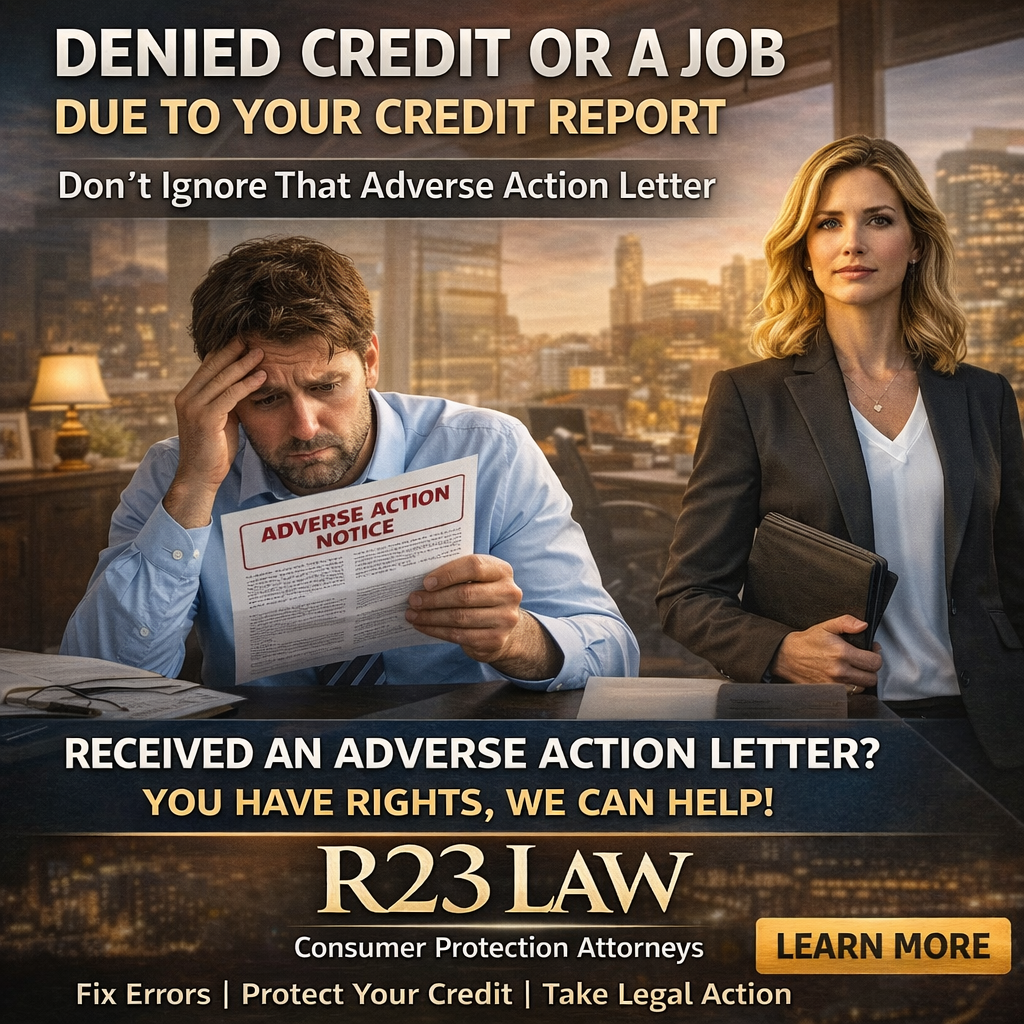
If you’ve received an FCRA Adverse Action Letter in California, you have rights
Learn how R23 Law’s California Consumer Protection Attorneys help you dispute errors, protect your credit, and take legal action.
That Letter Could Cost You a Job or Loan—Here’s What to Do Next
Getting denied for a loan, a job, or even a rental can feel like a dead end—especially when it’s tied to your credit report. But if you’ve received a Fair Credit Reporting Act (FCRA) Adverse Action Letter, it’s not the end of the road.
In fact, it could be the beginning of a legal opportunity.
R23 Law’s California Consumer Protection Attorneys help clients throughout the state respond strategically to these letters, correct damaging credit report errors, and even pursue compensation when rights are violated.
What Is an FCRA Adverse Action Letter?
An FCRA Adverse Action Letter is a formal notice sent by a company when they’ve made a negative decision—such as denying credit, employment, or housing—based in whole or in part on your credit report.
You may receive one after:
Being denied a job due to a background check
Getting rejected for a credit card or loan
Losing out on a rental application
What Must the Letter Include?
By law, the company must provide:
A clear statement of the adverse action taken
The name and contact information of the credit reporting agency that provided the report
Information about your right to request a free copy of your credit report
A notice of your right to dispute any inaccuracies
This transparency gives you a chance to verify, correct, or challenge the information that led to the decision.
Don’t Wait—Take Action Immediately
The FCRA gives you 60 days to request a free copy of the credit report used in the decision. The faster you act, the better your chances of protecting your credit and reversing any harm.
Once you get the report, check it thoroughly. If you spot inaccurate, outdated, or fraudulent information, you have the right to:
Dispute the error with the credit reporting agency
Contact the creditor directly to challenge the false information
Add a consumer statement to explain your side if the dispute isn’t resolved
1 in 5 Credit Reports Contain Errors—Yours Could Too
The graphic on page 3 of the document highlights a shocking statistic: 20% of consumers have an error on at least one of their credit reports. These errors often go unnoticed until they result in a job loss, loan denial, or rejected apartment application.
Steps to Take After Receiving an Adverse Action Letter
The FCRA empowers you to take charge. Here’s what R23 Law recommends:
1. Review the Letter and Request Your Credit Report
Get the report from the agency listed in the letter—usually Equifax, Experian, or TransUnion.
2. Examine Your Report for Inaccuracies
Check personal info, account balances, payment histories, and collections.
3. File Disputes for Any Errors
Be specific. Include documents and send the dispute by certified mail or through the credit bureau’s website.
4. Contact Creditors Directly
If a particular creditor is responsible for inaccurate data, resolve it with them directly.
5. Seek Legal Support If the Dispute Fails
If your rights were violated, or if the report continues to harm you after you've disputed errors, R23 Law can pursue damages on your behalf.
Your Rights Under the FCRA
Right to a free credit report after adverse action
Right to dispute inaccurate information
Right to remove outdated negative data (most must be removed after 7 years; bankruptcies after 10)
Right to sue for statutory damages up to $1,000 per violation, plus attorney’s fees
Why Choose R23 Law’s California Consumer Protection Attorneys?
Our attorneys focus exclusively on consumer rights, especially when it comes to credit report violations. When you work with us, you get:
Experienced legal strategy tailored to FCRA disputes
Aggressive representation against credit bureaus and data furnishers
No upfront legal fees – we don’t get paid unless you do
Proven results in recovering compensation and clearing credit histories
Final Thoughts
An FCRA Adverse Action Letter may feel like a setback, but with the right approach, it can become a stepping stone. Whether you're correcting an error or holding a company accountable for violating your rights, R23 Law’s California Consumer Protection Attorneys are ready to help.
Think your denial was based on bad data?
📞 Contact R23 Law today for a free consultation—and turn that rejection into a chance to restore your credit and your future.
