
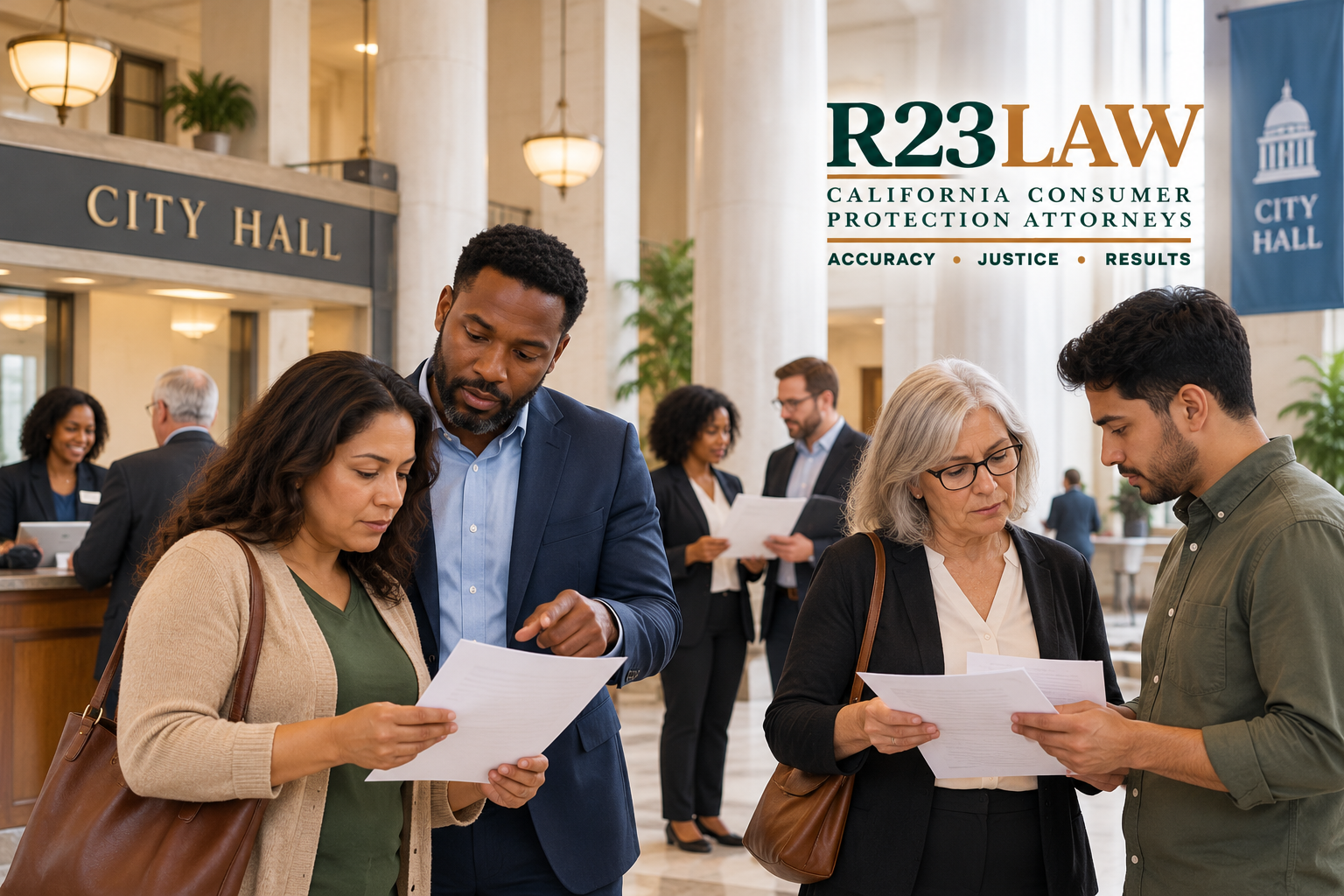
Finding an error on your credit report is frustrating
Discovering that your dispute was denied or the mistake remains unresolved can be even worse.
For California consumers, inaccurate credit reporting can lead to denied loans, higher interest rates, lost housing opportunities, and financial stress. Unfortunately, common mistakes during the dispute process can delay corrections and prolong the damage.
Under the Fair Credit Reporting Act (FCRA) and California consumer protection laws, consumers have the right to challenge inaccurate credit information.
At R23 Law, our experienced California Consumer Protection Attorneys advocate for consumers facing credit reporting errors, improper investigations, and violations of their legal rights.
CREDIT DISPUTE BLUNDERS — Common Mistakes That Can Hurt Your Case
Disputing an inaccurate credit report involves more than contacting a credit bureau. The process is governed by federal law, and avoiding common mistakes can improve your ability to resolve inaccuracies.
1. Failing To Review Your Entire Credit Report
Many consumers overlook errors because they focus only on their credit scores or outstanding balances.
However, inaccuracies can include duplicate accounts, incorrect payment dates, unfamiliar addresses, and financial information belonging to another person.
Review your reports from Equifax, Experian, and TransUnion carefully. You can obtain free credit reports through AnnualCreditReport.com.
Because creditors may report different information to each agency, examining all three reports is essential.
2. Submitting Vague Or Incomplete Disputes
A general statement that an account is incorrect may not adequately explain the problem.
Instead, identify the specific error, explain why the information is inaccurate, and describe the correction you are requesting.
For example, if a paid debt still appears as unpaid, include the account information and documentation confirming payment.
Clear, specific disputes provide credit reporting agencies with the information necessary to investigate the alleged error.
3. Relying Exclusively On Online Dispute Systems
Although online dispute portals are convenient, they may limit the explanations or supporting evidence consumers can provide.
For complex disputes involving identity theft, mixed credit files, or incorrect account histories, a detailed written dispute may be preferable.
Consider sending your dispute through certified mail with return receipt requested.
This creates a documented record of your complaint and its delivery, which may become important if the error remains unresolved.
4. Failing To Provide Supporting Documentation
Credit reporting disputes can become more difficult when consumers fail to include available evidence.
Depending on the error, supporting documents may include:
Bank statements and payment receipts
Debt settlement agreements
Account closure confirmations
Correspondence with creditors
Identity theft reports
Always retain copies of your dispute letters and supporting records.
Although the FCRA does not require consumers to conclusively prove every disputed error before an investigation is required, relevant documentation can strengthen the dispute.
5. Neglecting To Follow Up After A Dispute
Submitting a dispute does not guarantee that inaccurate information will be corrected.
Under the FCRA, credit reporting agencies generally must investigate qualifying disputes within 30 days, subject to certain exceptions and extensions.
After receiving the investigation results, review your updated credit report carefully.
Confirm that the disputed information has been corrected and preserve all correspondence.
If the error remains, additional action may be appropriate.
6. Ignoring Errors That Reappear
Sometimes, inaccurate information returns even after a credit bureau previously corrected or deleted it.
Recurring errors involving collection accounts, payment histories, or fraudulent debts may indicate problems with credit reporting procedures.
Document every occurrence and preserve copies of reports showing the error before and after correction.
Under certain circumstances, improperly reinserting previously deleted information may violate the FCRA.
7. Overlooking Your Legal Options
When credit reporting errors persist, consumers may face serious financial consequences.
If an inaccurate report leads to a denied mortgage, unfavorable interest rates, or other financial harm, consulting an experienced California credit reporting attorney may be appropriate.
R23 Law's California Consumer Protection Attorneys evaluate potential violations and pursue available legal remedies when credit reporting agencies fail to meet their statutory obligations.
YOUR CREDIT, YOUR RIGHTS — FCRA And California Consumer Protections
The Fair Credit Reporting Act (FCRA) requires consumer reporting agencies to follow reasonable procedures designed to assure the maximum possible accuracy of credit information.
It also requires reasonable reinvestigations of qualifying consumer disputes.
California's Consumer Credit Reporting Agencies Act (CCRAA) provides additional protections governing consumer credit reporting practices.
Depending on the circumstances, violations of these laws may give consumers grounds to pursue legal action.
Potential remedies may include compensation for qualifying financial losses, emotional distress, statutory damages in certain cases, and attorney's fees where authorized by law.
However, the existence of an error alone does not automatically establish a legal violation or entitlement to compensation.
DEFENDING YOUR CREDIT — R23 Law's California Consumer Protection Attorneys
Credit reporting mistakes can have lasting financial consequences, particularly when agencies fail to properly investigate or correct inaccurate information.
At R23 Law, our California Consumer Protection Attorneys represent consumers facing inaccurate credit reports, identity theft-related errors, mixed credit files, and potential FCRA and CCRAA violations.
Our attorneys evaluate disputes, investigate potential statutory violations, and pursue available legal claims when appropriate.
Our experienced legal team is dedicated to protecting consumer rights and holding companies accountable for unlawful reporting practices.
Learn more about R23 Law and our consumer finance law practice.
DISPUTE SMART, PROTECT YOUR FUTURE
Credit reporting errors should not stand between you and your financial opportunities.
Carefully reviewing your credit reports, providing clear documentation, preserving dispute records, and monitoring investigation results can make a meaningful difference.
When errors remain unresolved, federal and California consumer protection laws may provide additional legal remedies.
R23 Law's California Consumer Protection Attorneys are committed to protecting consumers throughout California from unlawful credit reporting practices.
Contact R23 Law Today
If your credit report contains inaccurate information, a credit bureau has failed to properly investigate your dispute, or previously corrected errors continue reappearing, your consumer protection rights may have been violated.
Contact R23 Law's California Consumer Protection Attorneys to discuss your situation and explore available legal options under the FCRA and CCRAA.
Toll-Free: 310-598-1588
SoCal: (310) 598-1588
Email: info@R23Law.com
Website: www.R23Law.com
Office: US Bank Tower, 633 W. 5th Street, 26th Floor, Los Angeles, CA
© 2025 R23 Law. All rights reserved. Trusted consumer credit lawyers in Los Angeles.
