
FRAUD ON FILE – Identity Theft, Fraudulent Credit Reporting, And California Consumer Protection Claims
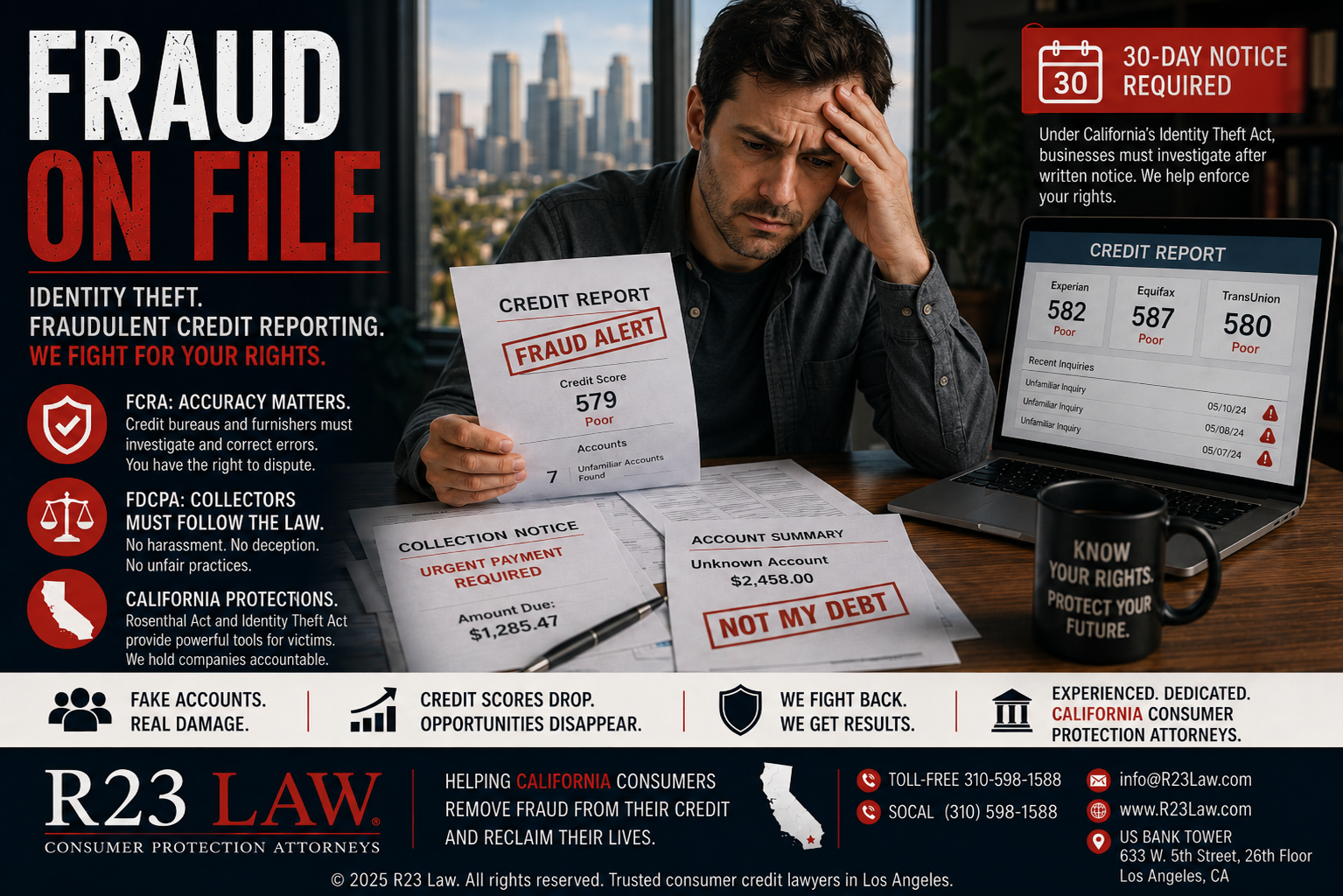
Fraudulent credit reporting can damage credit, trigger collections, and disrupt financial opportunities
R23 Law's California Consumer Protection Attorneys represent identity theft and credit reporting victims throughout California.
Fraudulent credit reporting can follow an identity theft victim long after the original fraud occurs. A stolen identity may lead to fake accounts, unfamiliar hard inquiries, collection letters, automated calls, damaged credit scores, and denials for loans, housing, or employment-related opportunities.
For many consumers, the frustration grows when companies continue reporting fraudulent accounts even after receiving notice that the consumer was a victim of identity theft. Credit bureaus, furnishers, creditors, collectors, and businesses all have legal responsibilities when fraud infects a consumer’s financial record.
R23 Law's California Consumer Protection Attorneys represent consumers throughout California in fraudulent credit reporting, identity theft, debt collection, credit dispute, and financial injury matters.
Fraudulent Credit Reporting — When Identity Theft Becomes Credit Damage
Fraudulent credit reporting occurs when false, unauthorized, or identity theft-related information appears on a consumer’s credit report. This may include accounts the consumer never opened, balances created by fraud, inquiries tied to unauthorized applications, or collections connected to debt the consumer does not owe.
Common fraudulent credit reporting issues include:
Fraudulent credit cards
Identity theft loans
Unauthorized hard inquiries
Collection accounts from fake debts
Accounts opened with stolen personal information
Mixed files involving another consumer’s information
False delinquency reporting
Debt collection lawsuits tied to fraud
Repeated automated calls about fraudulent debt
When this information appears on a credit report, the consequences can be immediate and severe.
The Fair Credit Reporting Act — Accuracy Is Not Optional
The Fair Credit Reporting Act is one of the most important laws for fraudulent credit reporting victims. It was enacted to promote fair and accurate credit reporting, protect consumer privacy, and ensure that credit reporting systems operate responsibly.
Under the FCRA, consumers have the right to dispute inaccurate information with credit reporting agencies. After a proper dispute, the credit reporting agency and the company furnishing the information generally must investigate. If the disputed information cannot be verified as accurate, it should be corrected or removed.
FCRA claims may arise when:
A credit bureau fails to reasonably investigate a dispute
A furnisher verifies fraudulent information without proper review
Identity theft accounts remain on a credit report
Fraudulent inquiries are not removed
Incorrect balances or payment histories continue to appear
A consumer suffers denials, higher rates, or financial harm from false reporting
R23 Law's California Consumer Protection Attorneys evaluate whether credit bureaus and furnishers violated the FCRA after receiving notice of identity theft or credit reporting errors.
The Fair Debt Collection Practices Act — Collectors Cannot Abuse Fraud Victims
Fraudulent credit reporting often leads to debt collection. A collector may send letters, call repeatedly, report a collection account, or file a lawsuit over a debt created by identity theft.
The Fair Debt Collection Practices Act protects consumers from abusive, deceptive, and unfair debt collection practices. The attached source explains that FDCPA claims generally involve showing that a defendant attempted to collect a debt, acted as a debt collector, dealt with a consumer, and violated at least one section of the statute.
Debt collection violations may include:
Trying to collect debt the consumer does not owe
Misrepresenting the amount or legal status of a debt
Threatening action not legally available
Calling repeatedly or using harassment
Failing to honor dispute rights
Continuing collection after receiving fraud evidence
Reporting fraudulent debt as valid
Debt collectors must follow the law even when a fraudulent account appears in a consumer’s name.
California’s Rosenthal Act — State Protection Against Collection Abuse
California consumers may also have rights under the Rosenthal Fair Debt Collection Practices Act. This California law protects consumers from unfair or deceptive collection practices and works alongside federal debt collection protections.
The attached source notes that California’s Rosenthal Act reflects the Legislature’s concern that unfair collection practices undermine public confidence in the banking and credit system.
For identity theft victims, Rosenthal Act issues may arise when collectors pursue fraudulent debt, ignore disputes, use misleading statements, or continue pressuring consumers despite evidence that the account does not belong to them.
California Identity Theft Act — Written Notice Matters
California’s Identity Theft Act may provide important remedies when a business continues pursuing a consumer after receiving notice of identity theft.
The attached source explains that a consumer may need to show written notice was provided to the business at least 30 days before filing suit, that the business failed to diligently investigate the identity theft claim, and that the business continued pursuing its claim despite facts showing identity theft.
This law can be especially important when a company refuses to accept that an account was opened fraudulently or continues to demand payment after the consumer provides supporting evidence.
The Telephone Consumer Protection Act — Automated Calls After Fraud
Fraudulent accounts can also trigger unwanted automated calls. The Telephone Consumer Protection Act may apply when consumers receive certain automated, prerecorded, or autodialed calls without proper consent.
For identity theft victims, this can be particularly frustrating. A consumer may receive calls about debt they never created, from companies they never agreed to deal with, and through systems that continue contacting them despite fraud notices.
R23 Law's California Consumer Protection Attorneys review call records, voicemails, collection communications, and account histories to determine whether TCPA or related consumer protection claims may apply.
Intrusion Upon Seclusion — Privacy Harm After Fraud
Some identity theft and fraudulent reporting matters may involve privacy-based claims. The attached source discusses intrusion upon seclusion under California law, which may involve an intentional intrusion into private affairs that is substantial, highly offensive to a reasonable person, and causes harm.
Identity theft is not only financial. It can invade a consumer’s privacy, expose personal data, trigger unwanted contact, and force victims to spend time proving they did not create the fraudulent accounts.
R23 Law's Expert Legal Services For Financial Injury Victims Throughout California
R23 Law represents consumers throughout California whose credit, privacy, and financial stability have been harmed by fraudulent credit reporting and identity theft.
R23 Law's California Consumer Protection Attorneys may review credit reports, dispute letters, fraud affidavits, identity theft reports, collection letters, call logs, account records, denial notices, and communications from credit bureaus, furnishers, collectors, and businesses.
The firm’s consumer protection work includes matters involving:
Fraudulent credit reporting
Identity theft accounts
Credit report errors
Unauthorized hard inquiries
Debt collection tied to fraud
Automated collection calls
California Identity Theft Act claims
FCRA disputes
FDCPA and Rosenthal Act violations
Privacy injuries after fraud
R23 Law works to pursue correction, accountability, and compensation where the law allows.
Strong Documentation Can Strengthen A Fraudulent Reporting Claim
Consumers should preserve every record connected to the fraud and reporting dispute.
Important documents may include:
Credit reports from Equifax, Experian, and TransUnion
Dispute letters
Certified mail receipts
Identity theft reports
Police reports
FTC identity theft materials
Collection letters
Call logs and voicemails
Creditor denial letters
Adverse action notices
Account statements
Fraud claim numbers
Emails from credit bureaus, furnishers, collectors, or creditors
A strong paper trail can show when the consumer gave notice, what evidence was provided, and whether companies failed to properly investigate.
R23 Law's California Consumer Protection Attorneys Enforce Credit Reporting Rights
Fraudulent credit reporting can damage a consumer’s financial future, but consumers have rights. Credit bureaus cannot ignore disputes. Furnishers cannot blindly verify fraudulent accounts. Collectors cannot pressure victims into paying debt created by identity theft.
R23 Law brings focused consumer protection experience to credit reporting, identity theft, debt collection, privacy, and financial injury claims throughout California.
Visit Our Team, learn more at About R23 Law, or connect through Contact R23 Law.
Contact R23 Law Today
If fraudulent credit reporting, identity theft accounts, collection activity, or ignored disputes damaged your credit or financial future, R23 Law's California Consumer Protection Attorneys can review your rights and discuss potential legal claims.
Toll-Free: 310-598-1588 SoCal: (310) 598-1588 Email: info@R23Law.com Website: www.R23Law.com Office: US Bank Tower, 633 W. 5th Street, 26th Floor, Los Angeles, CA
© 2025 R23 Law. All rights reserved. Trusted consumer credit lawyers in Los Angeles.
