
SWIPE, STOLEN, DISPUTED – Unauthorized Credit Card Transactions, Billing Errors, And California Consumer Protection Claims
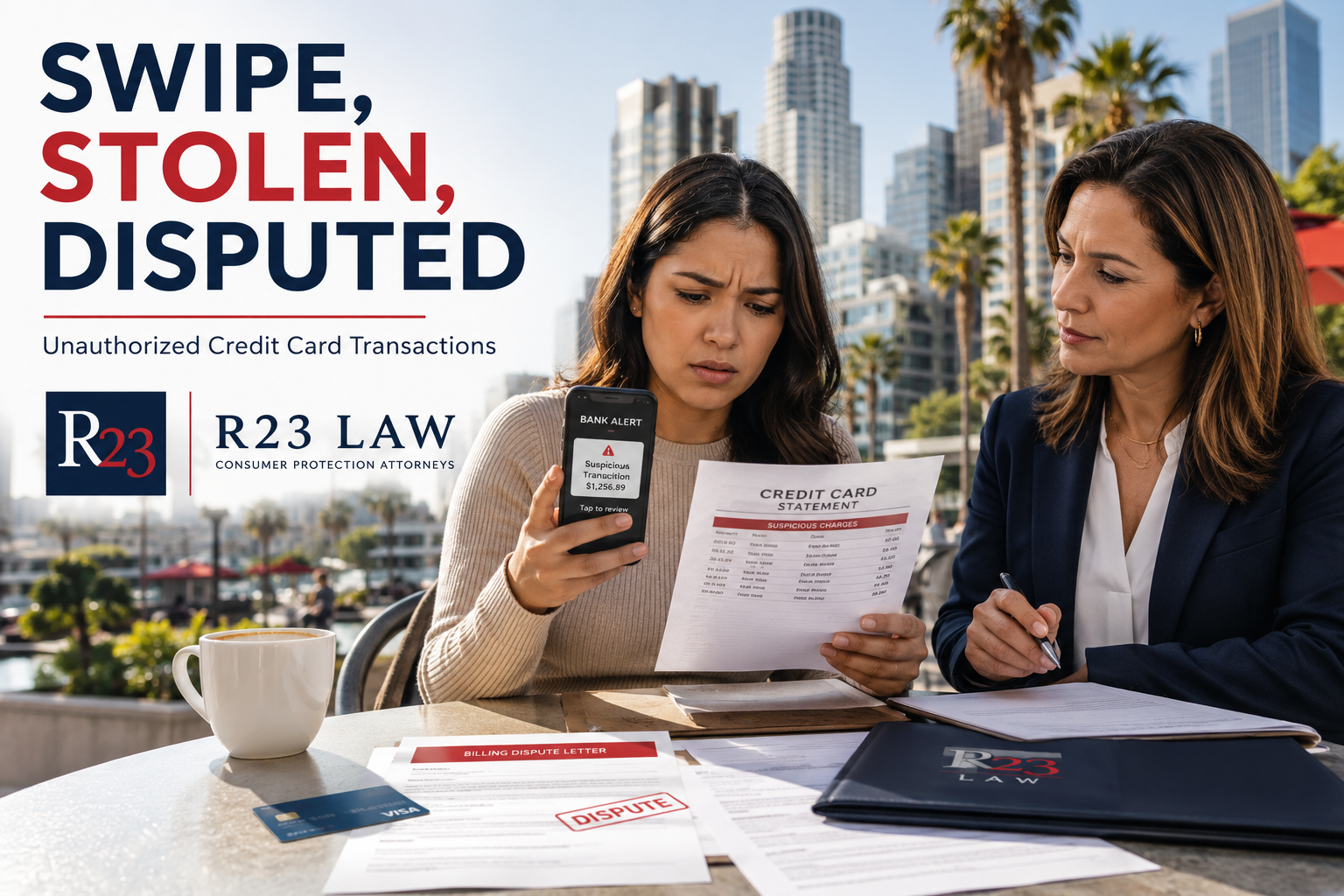
Unauthorized credit card transactions can lead to disputed charges, credit damage, and financial stress
R23 Law's California Consumer Protection Attorneys represent consumers facing credit card fraud, billing errors, and denied disputes.
Unauthorized credit card transactions can appear suddenly — one unfamiliar charge, one stolen card number, one fraudulent online purchase, or one account takeover can create immediate financial stress.
Credit card fraud is not just an inconvenience. If a card issuer refuses to reverse a fraudulent transaction, ignores a billing dispute, or mishandles a consumer’s claim, the damage can grow into interest charges, late fees, credit reporting problems, collections, and denied financial opportunities.
R23 Law's California Consumer Protection Attorneys represent consumers throughout California in matters involving unauthorized credit card transactions, billing errors, identity theft, credit reporting injuries, and consumer finance violations. Learn more through About R23 Law, meet the attorneys on Our Team, or begin a confidential case review through Contact R23 Law.
Unauthorized Credit Card Transactions — Fast Action Matters
An unauthorized credit card transaction may involve a purchase, transfer, cash advance, online order, subscription charge, or account activity that the consumer did not approve.
Common examples include:
Fraudulent online purchases
Stolen credit card numbers
Account takeover activity
Unauthorized digital wallet charges
Duplicate or incorrect charges
Transactions after a lost or stolen card
Charges from merchants the consumer never used
Credit card activity tied to identity theft
Once an unfamiliar charge appears, consumers should act quickly. The attached source explains that consumers should report and dispute unauthorized credit card transactions within 60 days of receiving the statement showing the charge.
Fair Credit Billing Act — The 60-Day Written Dispute Rule
The Fair Credit Billing Act gives consumers important protections for billing errors on credit card accounts. Federal Regulation Z requires a billing error notice to reach the creditor no later than 60 days after the creditor sent the first statement showing the alleged error.
A phone call can alert the card company quickly, but a written billing error notice is what protects key dispute rights. The CFPB states that consumers must send a written billing error notice to preserve their rights.
That written dispute should usually include:
The consumer’s name and account number
The disputed transaction amount
The date of the transaction
The merchant name, if listed
A clear statement that the charge was unauthorized
Any supporting documents
A request for correction and written confirmation
The letter should be sent to the billing dispute address listed by the credit card company, not just the regular payment address.
Card Issuers Must Investigate Billing Errors
Once a proper billing dispute is received, credit card companies have investigation duties. The CFPB explains that the company generally has 30 days to confirm it received the dispute letter and up to two billing cycles to complete the investigation.
During the investigation, consumers are still responsible for paying undisputed charges, but the disputed amount should not be treated the same as ordinary unpaid debt while the dispute is pending.
When a credit card company denies a valid fraud claim or fails to conduct a proper investigation, R23 Law's California Consumer Protection Attorneys can review whether the issuer violated consumer protection laws.
Unauthorized Charges Can Trigger Credit Damage
A disputed credit card charge can become more dangerous when the issuer adds interest, late fees, penalty charges, or negative reporting.
Consumers may face:
Higher balances
Minimum payment increases
Late payment reporting
Credit score drops
Collection activity
Account restrictions
Adverse action notices
Denied credit applications
If an unauthorized charge leads to inaccurate credit reporting, the Fair Credit Reporting Act may also become important. Consumers have the right to dispute inaccurate credit report information, including accounts or balances affected by fraud.
Credit Card Fraud And Identity Theft Often Overlap
Unauthorized credit card charges are often a warning sign of a larger identity theft problem. A stolen card number may be part of a data breach, phishing scam, hacked account, digital wallet compromise, or broader misuse of personal information.
Consumers should review credit reports, monitor account alerts, change passwords, and preserve every notice from the card issuer. If additional accounts, hard inquiries, or collection accounts appear, the fraud may extend beyond a single transaction.
R23 Law's California Consumer Protection Attorneys investigate whether identity theft, inaccurate reporting, or failed dispute procedures contributed to the financial injury.
R23 Law's Expert Legal Services For Financial Injury Victims Throughout California
R23 Law represents consumers throughout California whose finances, credit, and privacy have been harmed by unauthorized credit card transactions and related consumer finance violations.
R23 Law's California Consumer Protection Attorneys may review statements, dispute letters, fraud claim records, denial letters, credit reports, collection notices, and communications from the card issuer.
The firm’s consumer protection work includes matters involving:
Unauthorized credit card transactions
Fair Credit Billing Act disputes
Identity theft
Credit report errors
Fraudulent accounts
Denied billing disputes
Collection activity after fraud
Credit damage from disputed charges
Account takeover
Consumer finance violations
When a credit card company refuses to correct a covered billing error or continues treating fraud as valid debt, consumers may have legal options.
Records To Preserve After A Fraudulent Credit Card Charge
A strong record can make a major difference in a billing dispute or legal claim.
Important documents may include:
Credit card statements
Screenshots of the disputed charge
Written dispute letters
Certified mail receipts
Emails or letters from the card issuer
Fraud claim numbers
Police reports
FTC identity theft reports
Credit reports
Collection notices
Call logs with the card company
Merchant communications
Proof showing the transaction was not authorized
Consumers should keep copies of everything submitted and received.
R23 Law's California Consumer Protection Attorneys Protect Credit Card Fraud Victims
Unauthorized credit card transactions should not become permanent debt. Credit card companies must follow the law when consumers dispute billing errors and report fraud.
R23 Law brings focused consumer protection experience to credit card fraud, billing dispute, identity theft, credit reporting, and financial injury claims throughout California.
Contact R23 Law Today
If an unauthorized credit card transaction, denied billing dispute, or fraud-related credit injury caused financial harm, R23 Law's California Consumer Protection Attorneys can review your rights and discuss potential legal claims.
Toll-Free: 310-598-1588 SoCal: (310) 598-1588 Email: info@R23Law.com Website: www.R23Law.com Office: US Bank Tower, 633 W. 5th Street, 26th Floor, Los Angeles, CA
© 2025 R23 Law. All rights reserved. Trusted consumer credit lawyers in Los Angeles.
