
GIG WORK, BIG FILES — When Background Checks Get You Deactivated
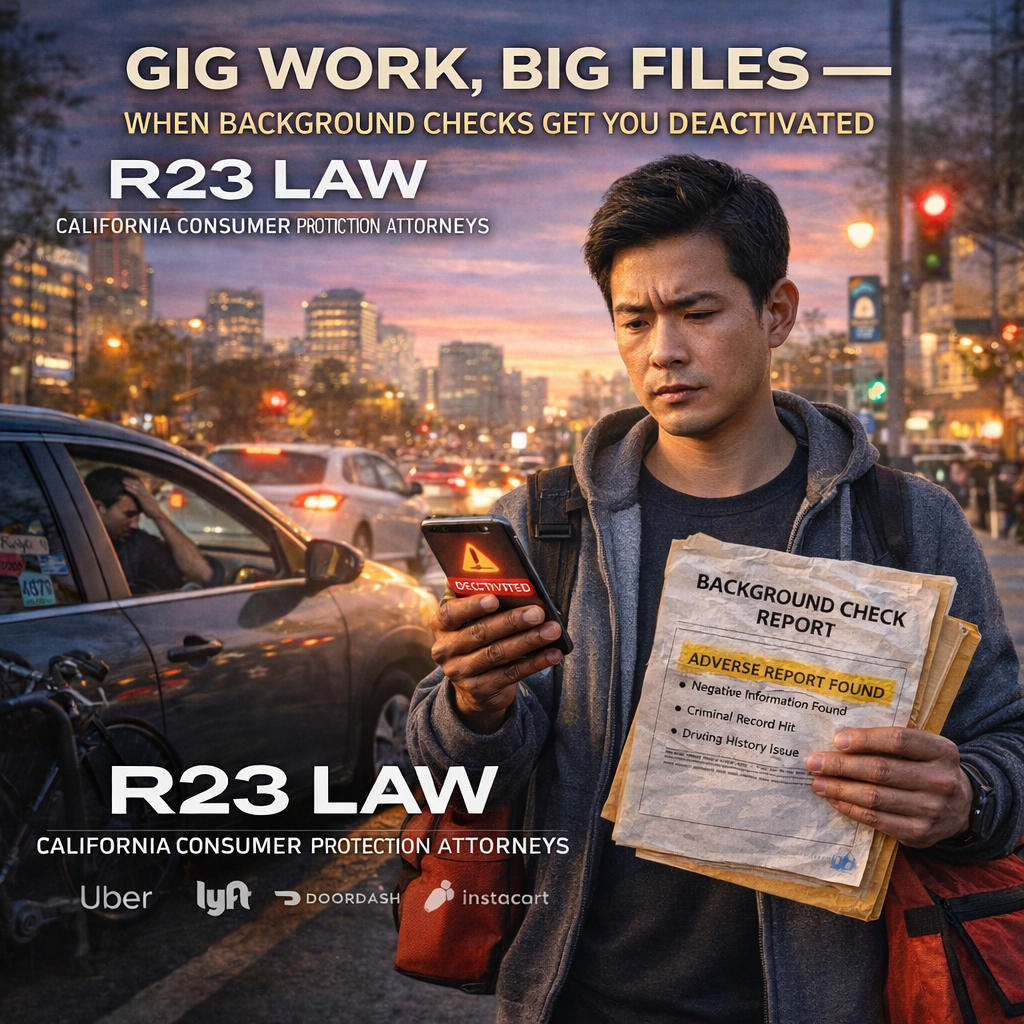
Gig platforms often rely on background checks to approve or remove workers
Learn the Fair Credit Reporting Act rules on disclosure, authorization, and adverse action—written by R23 Law’s California Consumer Protection Attorneys.
Picking up gigs for Uber, Lyft, DoorDash, Instacart, Shipt, TaskRabbit, Grubhub, Postmates, and similar platforms can be a flexible way to earn income. But many gig workers learn the hard way that these companies still run background checks—and when something on a report triggers an automated “no,” the decision can feel instant and unexplained.
R23 Law’s California Consumer Protection Attorneys often see cases where the real issue isn’t the worker’s history—it’s the screening process. Federal law sets rules for background checks used for work decisions, and the most common violations show up in the same places every time: permission, paperwork, and notices.
Gig platforms still have background-check obligations
Gig companies sometimes treat onboarding like tapping “agree” and moving on. But when a platform uses a third-party background check (a “consumer report”) to approve, deny, suspend, or deactivate a worker, the Fair Credit Reporting Act (FCRA) can apply.
That matters because background check compliance is not optional—even if the company classifies workers as independent contractors.
The two biggest FCRA breakdowns in the gig economy
The attached material highlights the two most common ways companies violate the law.
1) Running a background check without proper permission
Before obtaining a background check for work purposes, companies generally must provide a clear disclosure and obtain authorization. A recurring problem is burying the disclosure inside a dense application packet or combining it with unrelated terms.
Compliance isn’t just “you clicked accept.” The disclosure and authorization requirements are specific—and sloppy forms can create legal exposure.
2) Skipping the adverse action notice process
When a company makes a negative decision based on a background report—denying onboarding, pausing the account, or deactivating access—it must typically provide notice. The attached document flags “not issuing a notice of adverse action” as a common violation.
In practice, this is where gig workers get sandbagged: the app goes dark, the earnings stop, and the worker isn’t given the information needed to challenge the report.
Why adverse action notices matter for gig workers
A background report can contain errors—wrong person matches, outdated entries, incomplete dispositions, or records that should not be reported the way they appear. The notice process matters because it creates the opportunity to review what was used and dispute inaccuracies.
When that process is ignored, workers lose a fair shot at correcting the record—while the platform treats the decision as “final.”
What a clean screening process should look like
Without turning this into a compliance manual, a lawful workflow usually includes:
a clear disclosure that a background check will be obtained,
the worker’s authorization,
if a negative decision is tied to the report, an adverse action notice that identifies the report’s role and provides access to it.
If the platform refuses to provide basic transparency, that’s often a sign the process wasn’t built to withstand scrutiny.
Legal remedies under the FCRA and California consumer laws
When background check rules are violated, remedies may include actual damages and statutory damages (and in certain cases, additional damages and attorney’s fees), depending on the facts and the law that applies. The attached material also notes that California remedies may be available when rights are violated.
R23 Law’s California Consumer Protection Attorneys evaluate gig-worker screening cases with an evidence-first lens:
Was authorization properly obtained?
Were required notices issued at the right time?
Did the report contain inaccuracies that were never fairly addressed?
Did the platform rely on a report in a way that triggered consumer protections?
Background check disputes with R23 Law’s California Consumer Protection Attorneys
If a gig platform’s background check process resulted in a denial, suspension, or deactivation—and the paperwork or notices didn’t add up—R23 Law’s California Consumer Protection Attorneys can review the timeline, communications, and reporting trail to determine whether the screening process violated consumer protection laws.
Disclaimer: This article is for informational purposes only and does not constitute legal advice. Results depend on the specific facts of each case and applicable law.
