
HIRED, THEN FIRED — When Background Checks Get It Wrong After You Start Working
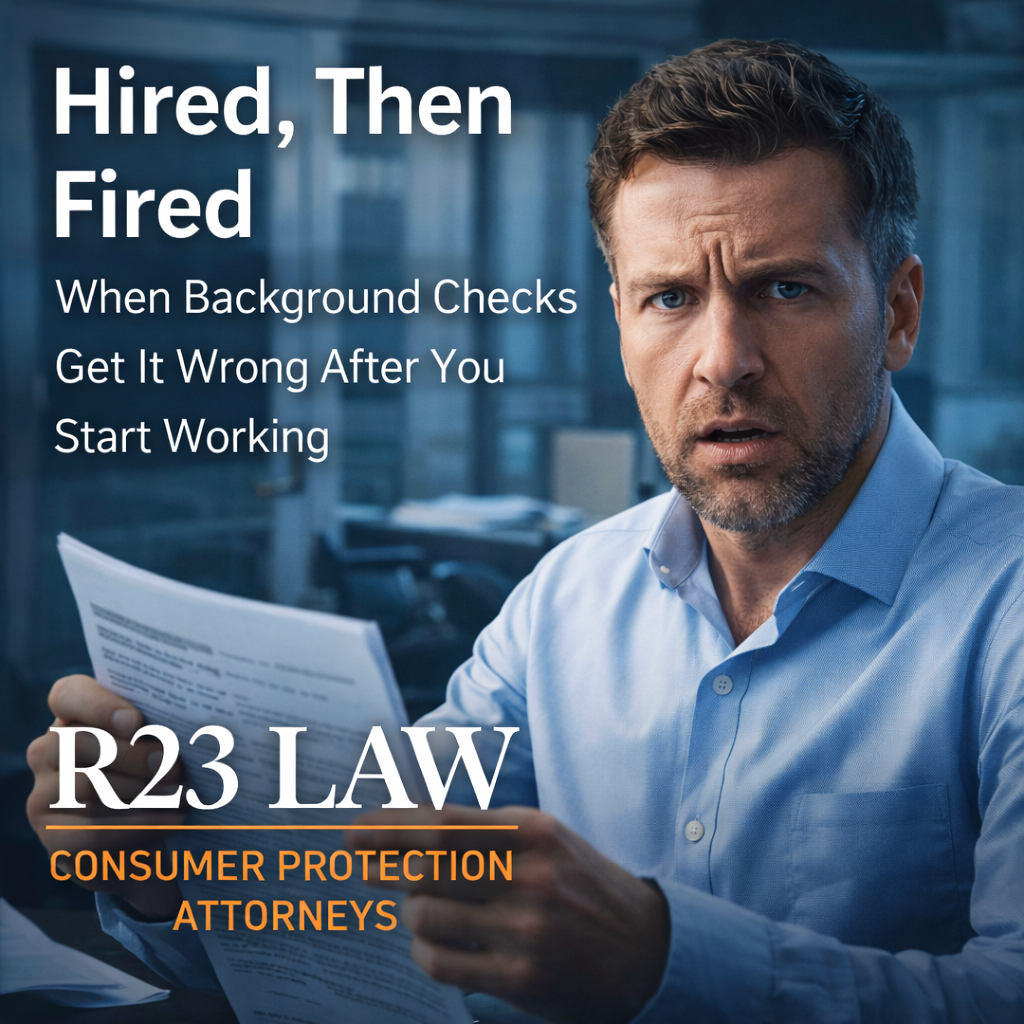
Why “Post-Hire” Background Checks Are Becoming a Problem in California Workplaces
Getting the job used to mean you were safe — but not anymore. In today’s compliance-focused world, many employers run post-hire background checks even after you’ve started working. These “continuous screening” systems are meant to detect new red flags, but they can also result in wrongful termination when the data is wrong.
At R23 Law, our California Consumer Protection Attorneys have helped numerous clients fight back against background check errors that cost them their jobs, reputation, or income.
What Is a Post-Hire Background Check?
A post-hire background check is a report conducted after you’re already employed. It may be part of a continuous monitoring system that flags:
Updated criminal records
New driving violations
Outdated employment license issues
Mistaken identity flags
Industries that frequently use these systems include:
Rideshare and delivery (Uber, DoorDash, Lyft)
Healthcare and caregiving
Banking and finance
Security and government contractors
Childcare and education
Can You Really Be Fired After You’re Hired?
Yes — and it happens more often than you think. Companies may suspend or fire workers when a background check system incorrectly flags a record as disqualifying. This includes:
Another person’s record showing up on your report
Old or expunged charges appearing as active
Errors showing convictions where charges were dropped
Employment verification mistakes
These errors can cost you your job without warning. Many platforms — like rideshare apps or gig work systems — may suspend you instantly with no chance to defend yourself.
Your Rights Under the Fair Credit Reporting Act (FCRA)
Under the Fair Credit Reporting Act (FCRA), you have strong rights when a background check is used against you. Background check companies must:
Use reasonable procedures to ensure maximum possible accuracy
Provide a copy of the report and a summary of your rights
Allow you to dispute and reinvestigate inaccurate information
What to Do If Your Background Check Is Wrong
Request a copy of the report
You’re legally entitled to see what information was used.Dispute the error in writing
Contact the background check company and demand a correction.Document everything
Save all communications with your employer and the reporting agency.Reach out to an FCRA lawyer
If the error caused harm, you may be entitled to compensation.
Can You Sue a Background Check Company?
Yes. If a background check company like Checkr, Sterling, or First Advantage provided inaccurate information that caused job loss, R23 Law’s California Consumer Protection Attorneys can help you sue under the FCRA.
Our team has experience litigating against major background reporting agencies in federal court — and we don’t back down when your career is on the line.
FAQs — What California Employees Should Know
Why do employers run post-hire background checks?
To ensure compliance in high-risk industries (e.g., healthcare, finance, delivery). But errors in these checks are not uncommon.
What if I lose my job because of a background check mistake?
Request the report, dispute the issue, and contact a consumer protection lawyer. Never assume the company will fix it without legal pressure.
Do these checks happen instantly?
Some systems operate in real-time, increasing the chance of false positives. That’s why legal protection matters.
Get Help from R23 Law — The Consumer Law Firm That Fights Back
Background check errors can wreck your livelihood — but you’re not powerless.
Here, we have a dedicated team of R23 Law California Consumer Protection Attorneys with decades of combined experience in FCRA litigation. We’ve helped workers across the state fight back when background screening companies got it wrong.
Contact R23 Law Today
📞 Toll-Free: 310-598-1588
📍 Free consultation request — Confidential, no obligation
💼 Learn more About Us
