
IDENTITY THEFT’S GUEST LIST — Who Gets the Blame When Your Data Walks Out the Door
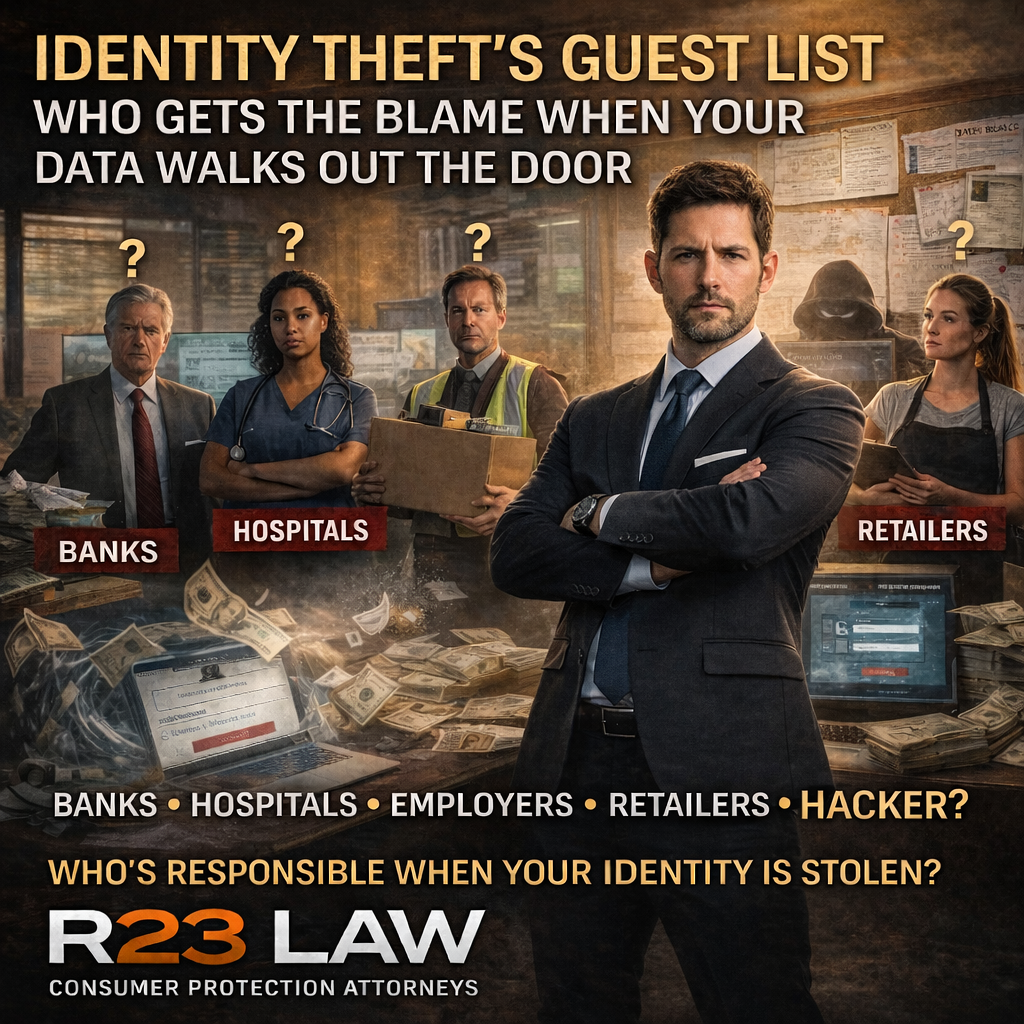
Identity theft can involve banks, employers, hospitals, and other institutions with access to your personal data
Learn who may face liability, key California protections, and steps that strengthen claims. Identity theft isn’t just a “bad guy with your Social Security number” story. In real life, it’s often a chain reaction: personal information gets exposed, accessed, misused, and then weaponized—sometimes across multiple industries at once. The result can be trashed credit, collections for debts you never incurred, incorrect medical records, and years of cleanup.
The big question clients often ask (without realizing they’re asking a legal question) is this: who’s actually responsible when your identity is stolen? The answer can include more than the person committing the fraud. Depending on the facts, liability can extend to the entities that collected, stored, verified, or transmitted the data that made the theft possible.
This post breaks down the common identity theft scenarios, the “usual suspects” behind data exposure, and the consumer protection laws that matter most—especially for Californians.
Where Identity Thieves Get Your Information
Identity theft starts with access. Sometimes it’s obtained through scams and social engineering. Other times it’s pulled from systems that already hold your data: financial institutions, employers, healthcare providers, or creditors.
The key point is simple: identity theft can be committed by any party with access to your sensitive information, and that access can come from a broad range of institutions.
The Most Common Types of Identity Theft
Identity theft isn’t one single category. It shows up in multiple forms, and each creates its own pattern of damage.
Unauthorized account use
This is the classic version: someone uses your existing credit card or bank account to make purchases, transfers, or withdrawals. It often triggers overdrafts, fraud investigations, and cascading credit problems.
Creating new accounts in your name
A thief opens new credit cards, bank accounts, and even cell phone accounts using your identity. These accounts can run up balances, go delinquent, and crash your credit score before you realize anything happened.
Identity cloning
This is a more extreme scenario where someone effectively “becomes” you for repeated transactions—using your information as a long-term identity.
Medical identity theft
A thief uses your information to obtain medical services or prescription drugs. The harm isn’t just financial—incorrect medical charting can create serious downstream risks if providers record the thief’s conditions, medications, or procedures under your name.
Criminal identity theft
This occurs when someone uses your identity during a criminal investigation or arrest, potentially leaving you with warrants, court issues, or background check problems that don’t belong to you.
Business or commercial identity theft
Businesses can be targeted too—when criminals pose as owners, officers, or employees to open fraudulent credit lines and transact with banks or vendors.
Identity Theft Liability: It’s Not Always Just the Thief
Yes, the thief is responsible. But civil liability discussions often go beyond that—because the thief may be hard to locate, judgment-proof, or part of a larger network. In many cases, consumers want accountability from the institutions that played a role in the exposure or the aftermath.
Here are the categories that show up most often in identity theft cases.
1) Institutions with direct access to your data
Identity theft can be committed by someone who already had legitimate access—meaning the “insider” scenario can involve:
Banks and financial institutions
Employers
Creditors
Hospitals and healthcare providers
Government agencies
This doesn’t mean every institution is liable whenever fraud occurs. It means these entities are common sources of exposure because they store and process the data identity thieves want.
2) Companies that collect and store consumer information
Even without an insider, companies that collect personal information may face exposure when systems are breached, verification is weak, or security controls fail.
When the theft traces back to a data incident, liability analysis often focuses on:
what data was collected and retained,
whether adequate safeguards were used,
whether the company followed its own policies,
whether notice obligations were met,
and what the consumer harms look like after the incident.
3) Entities that “verified” the thief as you
A common real-world failure point is verification. When lenders, creditors, or service providers open accounts based on low-friction approvals, consumers can end up battling years of “verified” misinformation.
This is where documentation matters—because once identity theft data hits your credit files, the focus shifts to dispute handling, reinvestigation quality, and continued reporting.
California Legal Protections That Matter After Identity Theft
California consumers have powerful tools when personal information is mishandled or identity theft spirals into credit damage.
California Consumer Privacy Act (CCPA)
The CCPA regulates how companies collect and handle personal information of California residents, including requirements related to disclosures and consumer rights. The source article also highlights that the CCPA can support statutory damages in certain data breach situations if specific requirements are met.
Fair Credit Reporting Act (FCRA)
When identity theft causes inaccurate negative items on your credit report, the FCRA is often the backbone of your strategy. It provides rights to access your credit file and dispute inaccuracies, and it creates duties around how consumer reporting agencies and furnishers handle disputed information.
Identity Theft and Assumption Deterrence Act (ITADA)
At the federal level, identity theft is also a crime—ITADA makes identity theft a federal offense with significant penalties.
Practical Moves That Strengthen an Identity Theft Claim
Identity theft is one part fraud, one part paperwork, and one part persistence. The steps below don’t replace legal advice, but they do create the record that consumer protection cases often depend on.
Lock down new fraud first
Consider a credit freeze or fraud alert with the major bureaus.
Pull your reports and isolate every unfamiliar account, inquiry, address, and collection.
Build a clean evidence file
Keep copies of:
credit reports (all three bureaus),
dispute submissions and attachments,
confirmation pages or certified mail receipts,
responses from bureaus and furnishers,
police/identity theft reports (when appropriate),
denial letters or adverse action notices (they show damages).
Dispute with clarity
A strong dispute is specific. It identifies the item, explains why it’s inaccurate, and includes documents that support correction or deletion. When the same inaccurate items keep coming back “verified,” the paper trail becomes even more important.
Credit Damage After Identity Theft: When It Becomes a Consumer Protection Case
Identity theft often starts as a fraud problem and becomes a credit reporting problem. That’s where R23 Law's California Consumer Protection Attorneys tend to see the highest-impact cases—when inaccurate reporting persists, reinvestigations feel like rubber stamps, or a consumer’s life gets derailed by false credit history.
If your situation involves:
repeated “verified” reporting of fraudulent accounts,
identity theft collections that won’t disappear,
credit denials or higher rates tied to false tradelines,
mixed-file reporting (someone else’s accounts on your report),
or a data incident that exposed sensitive personal information,
R23 Law's California Consumer Protection Attorneys can evaluate the factual record, the dispute trail, and the legal paths available under California privacy law and federal credit reporting law.
The Takeaway
Identity theft liability isn’t always limited to the person committing the fraud. The institutions that collect your data—and the companies that act on fraudulent applications or continue reporting inaccuracies—can shape what options exist after the theft.
When the damage reaches your credit files or a data exposure sits at the root of the problem, R23 Law's California Consumer Protection Attorneys focus on enforcing consumer rights with the documentation and legal framework these cases require.
Disclaimer: This article is for informational purposes only and does not constitute legal advice. Reading this article does not create an attorney-client relationship.
