
MONEY MOVED, RIGHTS TRIGGERED — Unauthorized Bank Transfers
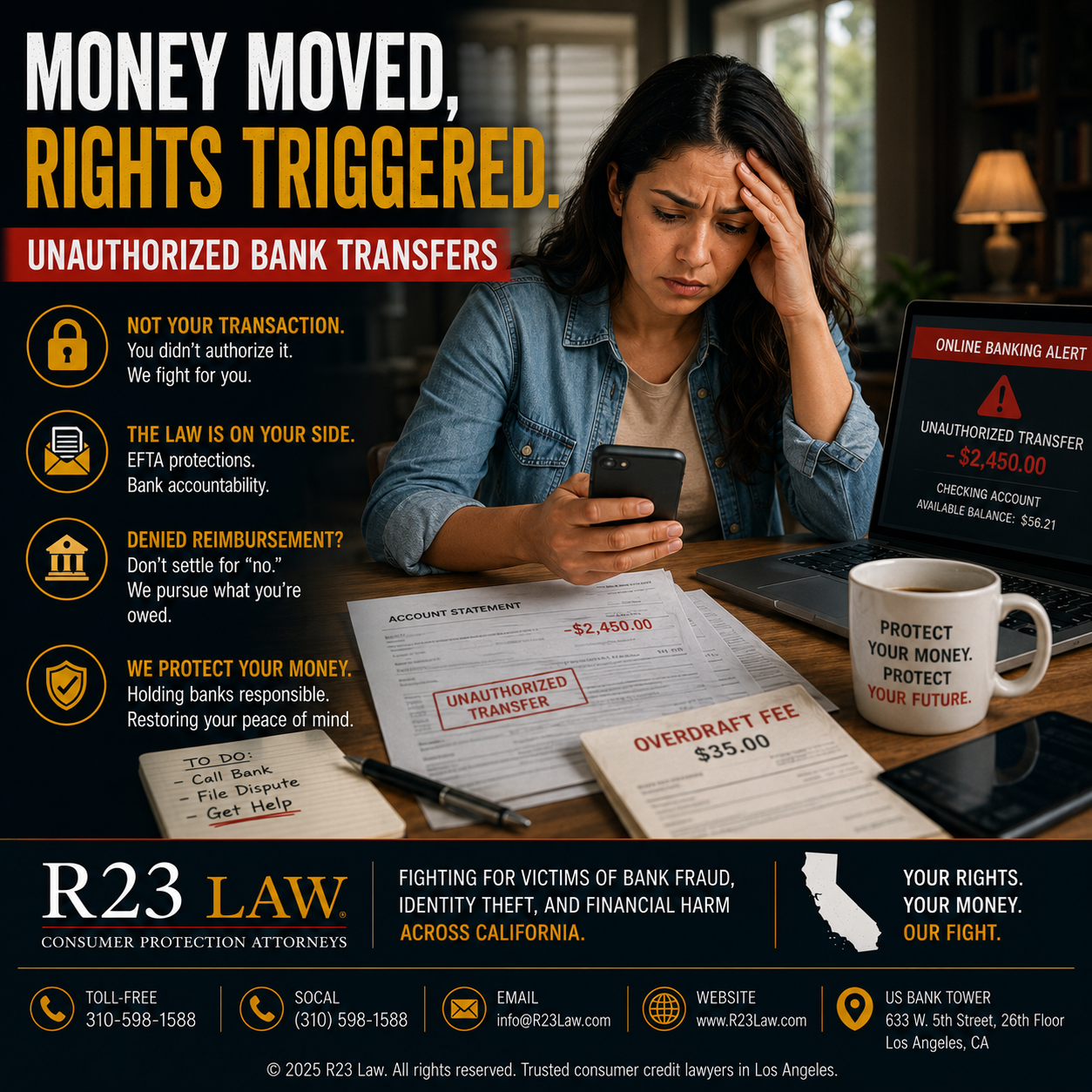
Unauthorized bank transfers can drain accounts and create serious financial harm
R23 Law's California Consumer Protection Attorneys represent consumers facing bank fraud, EFTA violations, identity theft, and denied reimbursement claims. Unauthorized bank transfers can create immediate financial chaos. One suspicious transaction, duplicate charge, hacked account, or fraudulent withdrawal can leave consumers short on rent, bills, groceries, payroll funds, or emergency savings.
When a bank refuses to credit the account or reimburse stolen funds, the situation becomes even more serious. Consumers may have rights under federal law, including the Electronic Fund Transfer Act, when unauthorized electronic transactions are not properly investigated or corrected.
R23 Law's California Consumer Protection Attorneys represent consumers throughout California in matters involving unauthorized bank transfers, debit card fraud, identity theft, account takeover, denied reimbursement claims, and financial injury. Learn more through About R23 Law, meet the attorneys on Our Team, or begin a confidential case review through Contact R23 Law.
Unauthorized Bank Transfers — When Funds Disappear Without Consent
An unauthorized bank transfer may occur when money is moved from a consumer’s account without permission. These cases may involve online banking fraud, hacked accounts, payment app transfers, duplicated charges, debit card misuse, phishing scams, malware, stolen credentials, or bank processing errors.
Common unauthorized bank transaction issues include:
Fraudulent online transfers
Duplicate charges for the same purchase
Account takeover activity
Unauthorized debit card transactions
Transfers through payment apps
Hacked online banking access
Fraudulent bill payments
Withdrawals tied to identity theft
Bank errors treated as authorized activity
Consumers should act quickly once suspicious activity appears. Fast reporting can preserve rights, limit further losses, and create a clear dispute record.
The First Move — Notify The Bank Immediately
The moment an unauthorized transfer is discovered, consumers should contact the bank and report the transaction. The report should be documented in writing, even if the first notice is made by phone.
Consumers should ask for a claim number, write down the date and time of the call, save all emails or letters, and keep screenshots of the suspicious transaction. If the account appears vulnerable to additional fraud, freezing or restricting the account may be appropriate while the issue is investigated.
Documentation matters because banks often base reimbursement decisions on timing, account access records, transaction history, and what the consumer reported.
Electronic Fund Transfer Act — Consumer Rights After Bank Fraud
The Electronic Fund Transfer Act protects consumers in many electronic banking transactions. It can apply to ATM transactions, debit card purchases, online transfers, and other electronic fund transfers.
When a consumer properly reports unauthorized activity, a financial institution may be required to investigate, correct errors, and reimburse covered losses. If the bank refuses to provide the compensation required by law, consumers may be able to pursue actual damages, statutory damages, and attorney’s fees where the facts support an EFTA violation.
R23 Law's California Consumer Protection Attorneys evaluate whether banks followed required procedures after consumers reported unauthorized transfers or other fraudulent account activity.
Bank Reimbursement Denials Deserve Careful Review
A bank denial is not always the final word. Some denials are based on incomplete investigations, unsupported assumptions, automated fraud reviews, or improper blame placed on the consumer.
Red flags may include:
The bank denies the claim without explaining the evidence
The bank says the transaction was authorized but provides no meaningful proof
The bank ignores written dispute details
The bank fails to credit the account during the investigation when required
The bank delays beyond applicable timelines
The bank relies only on login credentials to blame the consumer
The bank refuses to consider account takeover or identity theft evidence
When a bank mishandles a fraud claim, the consumer may suffer more than the original loss. Overdraft fees, missed payments, late fees, account closures, credit damage, and emotional distress can follow.
R23 Law's Expert Legal Services For Financial Injury Victims Throughout California
R23 Law represents financial injury victims throughout California whose accounts, credit, and consumer rights have been harmed by unauthorized transfers and bank fraud.
R23 Law's California Consumer Protection Attorneys may review bank statements, fraud claim records, transaction histories, account notices, dispute letters, reimbursement denials, credit reports, and communications with financial institutions.
The firm’s consumer protection work includes matters involving:
Unauthorized bank transfers
Debit card fraud
Account takeover
Identity theft
Payment app fraud
Denied bank reimbursement claims
Unauthorized electronic fund transfers
Duplicate charges
Bank investigation failures
Credit reporting damage after fraud
R23 Law works to identify legal violations, preserve consumer claims, and pursue accountability when financial institutions fail to follow consumer protection laws.
Records To Preserve After An Unauthorized Bank Transfer
Consumers should keep a complete file of all documents connected to the disputed transaction.
Important records may include:
Bank statements
Transaction screenshots
Fraud claim numbers
Letters and emails from the bank
Call logs with dates and representative names
Written dispute letters
Certified mail receipts
Police reports
FTC identity theft reports
Account freeze confirmations
Overdraft or returned payment notices
Proof of financial harm caused by the missing funds
Credit reports, if missed payments or credit damage occurred
A strong record can make the difference between an unsupported complaint and a legally actionable claim.
R23 Law's California Consumer Protection Attorneys Protect Bank Fraud Victims
Unauthorized bank transfers can make consumers feel powerless, especially when a financial institution refuses to credit the account or denies responsibility. But banks must follow the law when consumers report unauthorized electronic transactions.
R23 Law brings focused consumer protection experience to EFTA claims, identity theft matters, bank fraud disputes, credit reporting injuries, and financial harm cases throughout California.
Visit Our Team, learn more at About R23 Law, or connect through Contact R23 Law.
Contact R23 Law Today
If an unauthorized bank transfer, hacked account, duplicate charge, or denied reimbursement claim caused financial harm, R23 Law's California Consumer Protection Attorneys can review your rights and discuss potential legal claims.
Toll-Free: 310-598-1588 SoCal: (310) 598-1588 Email: info@R23Law.com Website: www.R23Law.com Office: US Bank Tower, 633 W. 5th Street, 26th Floor, Los Angeles, CA
© 2025 R23 Law. All rights reserved. Trusted consumer credit lawyers in Los Angeles.
