
MONEY TRAIL MAYHEM – Financial Identity Theft, False Accounts, And Credit Report Damage In California
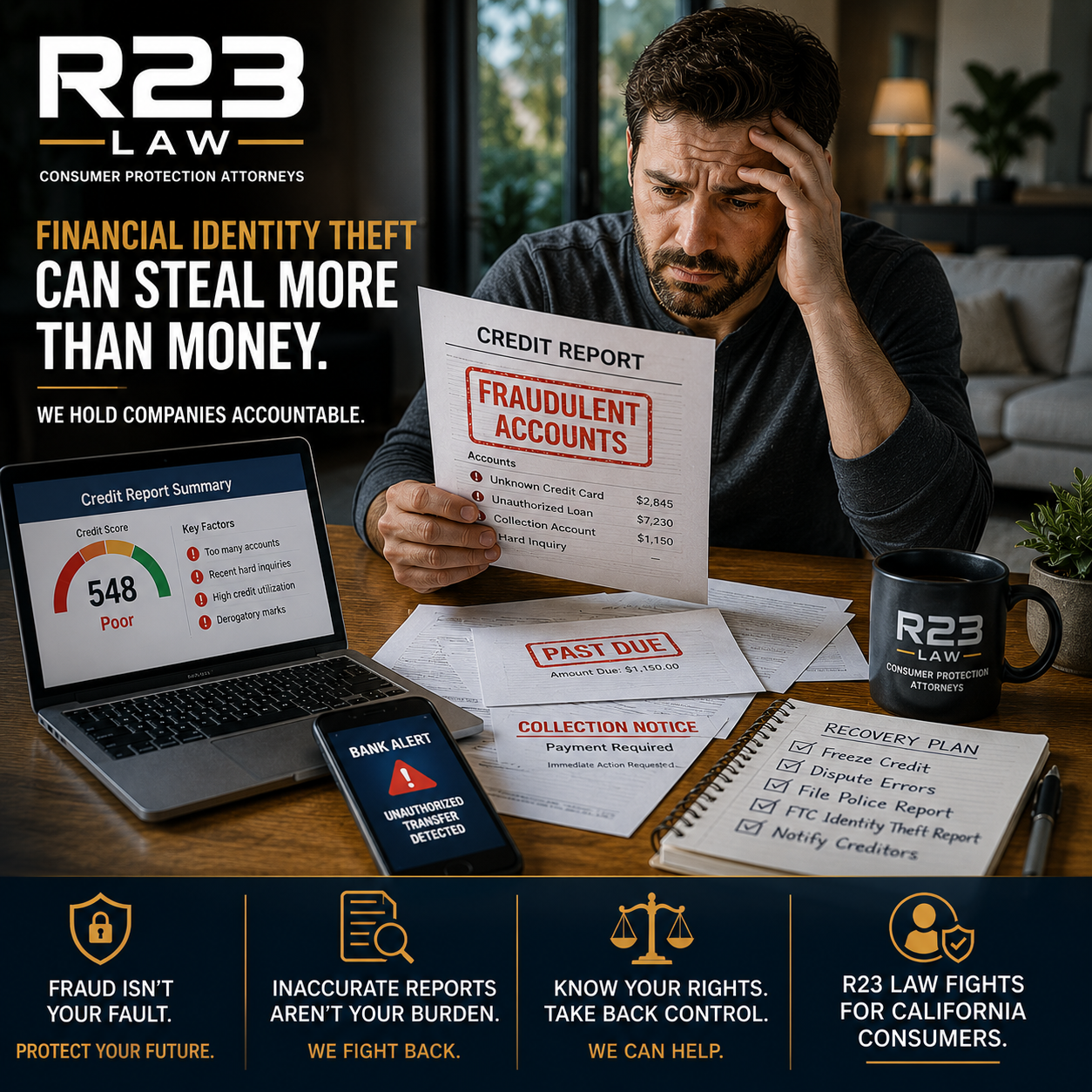
Financial identity theft can create fraudulent accounts, unauthorized charges, false debts, and credit report damage
R23 Law's California Consumer Protection Attorneys represent California consumers facing identity theft, credit reporting errors, and unlawful collection activity.
Money Trail Mayhem
Financial identity theft happens when someone uses another person’s financial or personal information without permission to obtain money, credit, goods, services, or financial access. That can include stolen Social Security numbers, bank account information, credit card details, login credentials, loan applications, or other sensitive records.
The damage can move fast. A fraudulent credit card may become a false balance. A fake loan may become a collection account. A stolen bank login may become an unauthorized electronic transfer. A single compromised data point can become months of credit disputes, collection pressure, denied applications, and financial stress.
R23 Law's California Consumer Protection Attorneys represent consumers throughout California when financial identity theft causes credit reporting damage, fraudulent debts, unlawful collection activity, and ignored disputes. Learn more about the firm at AboutUs, meet Our Team, or start a confidential review through ContactUs.
Financial Identity Theft Targets More Than Credit Cards
Financial identity theft is broader than a stolen card number. It can involve new credit accounts, bank withdrawals, personal loans, auto financing, payment apps, online banking access, tax refund fraud, and debt opened under a victim’s name.
USA.gov explains that identity theft can involve personal or financial information such as names, addresses, credit card numbers, Social Security numbers, bank account numbers, and medical insurance account numbers. It also notes that victims may not discover the theft immediately.
False Accounts Create Real Financial Injuries
Fraudulent accounts can damage a consumer’s financial life even when the consumer never opened, used, or benefited from them. A false account may lower a credit score, increase reported debt, trigger late payments, cause denial of credit, and lead to collection calls.
R23 Law's California Consumer Protection Attorneys focus on the second wave of harm that often follows identity theft — companies refusing to correct the record. When banks, lenders, credit bureaus, or debt collectors receive identity theft documentation and still report or collect the false debt, legal claims may be available.
R23 Law's Expert Legal Services for Financial Injury Victims Throughout California
Financial identity theft can affect loans, housing, employment screening, insurance, and everyday banking access. R23 Law represents consumers facing these financial injuries under federal and California consumer protection laws.
These cases may involve:
Fraudulent credit cards
Unauthorized loans
False bank accounts
Auto financing opened by imposters
Unauthorized electronic fund transfers
False debt collection
Identity theft tradelines
Credit report errors
Ignored disputes
Refusal to block fraudulent information
R23 Law's California Consumer Protection Attorneys review dispute letters, credit reports, police reports, FTC identity theft reports, account records, denial letters, collection notices, and creditor responses to identify potential violations.
Credit Reporting Rights After Financial Identity Theft
Under the Fair Credit Reporting Act, a consumer reporting agency generally must block information identified as resulting from identity theft within four business days after receiving proper proof of identity, an identity theft report, identification of the fraudulent information, and a statement that the information does not relate to a transaction by the consumer.
That protection matters when fraudulent accounts remain on a credit report after a victim submits documentation. Credit bureaus and furnishers cannot treat identity theft disputes like ordinary paperwork. They must follow the law, conduct reasonable investigations where required, and correct inaccurate reporting.
California Identity Theft Protections for Fraudulent Debts
California law gives identity theft victims powerful rights when a claimant pursues a debt tied to identity theft. California Civil Code section 1798.93 allows a person to bring an action to establish that they are a victim of identity theft in connection with a claimant’s demand. Remedies may include a declaration that the consumer is not obligated on the claim, collection restrictions, damages, attorney’s fees, costs, equitable relief, and in certain circumstances a civil penalty.
R23 Law's California Consumer Protection Attorneys apply these protections when companies continue treating a fraudulent debt as valid after receiving evidence of identity theft.
Unauthorized Transfers and Bank Account Theft
Financial identity theft may also involve bank account access, debit transactions, payment apps, or electronic transfers. Under Regulation E, an unauthorized electronic fund transfer generally means a transfer from a consumer account initiated by someone other than the consumer without actual authority, where the consumer receives no benefit.
The CFPB’s Regulation E rules also address consumer liability for unauthorized transfers and the conditions under which a financial institution may hold a consumer responsible.
When banks or financial platforms deny valid fraud claims, delay investigations, or refuse reimbursement without proper review, R23 Law may evaluate whether federal or state consumer protection laws were violated.
Warning Signs of Financial Identity Theft
Financial identity theft often leaves a trail. Consumers should watch for unfamiliar accounts, unexplained credit inquiries, sudden credit score drops, collection calls, unexpected bills, missing mail, bank alerts, locked accounts, unauthorized withdrawals, and denials for credit or housing.
The FTC states that IdentityTheft.gov creates a personalized recovery plan for identity theft victims and covers issues beyond credit, including debt collectors, government identification, utilities, student loans, and medical identity theft.
Records That Strengthen a Financial Identity Theft Claim
Documentation is critical. Consumers should preserve credit reports, account statements, fraud alerts, police reports, FTC identity theft reports, dispute letters, certified mail receipts, emails, screenshots, denial letters, collection notices, and call logs.
A strong record shows who received notice, what evidence was provided, what remained inaccurate, and whether the company continued reporting or collecting after the fraud was documented.
R23 Law's California Consumer Protection Attorneys for Credit and Collection Damage
Financial identity theft can become a legal battle when companies ignore the evidence. A bank may continue reporting a fake account. A creditor may keep demanding payment. A debt collector may pursue a balance that belongs to an imposter. A credit bureau may fail to block information that should not remain on a report.
R23 Law's California Consumer Protection Attorneys pursue accountability under laws that may include the Fair Credit Reporting Act, California Consumer Credit Reporting Agencies Act, California Identity Theft Act, Fair Debt Collection Practices Act, Rosenthal Fair Debt Collection Practices Act, Electronic Fund Transfer Act, and California unfair competition laws.
Fraud Leaves a Ledger — R23 Law Follows It
Financial identity theft is not just a stolen number. It is a chain reaction. Unauthorized accounts, false reporting, collection letters, denied credit, and bank investigation failures can all become part of the evidence.
R23 Law represents California consumers whose financial identities were misused and whose disputes were ignored, mishandled, or rejected without lawful investigation.
Contact R23 Law Today
When financial identity theft creates false accounts, credit report damage, unauthorized transfers, or wrongful collection activity, R23 Law's California Consumer Protection Attorneys can evaluate the records and pursue accountability under consumer protection law.
Toll-Free — 310-598-1588
