
ONE PASSWORD TO RULE THEM ALL — Are Password Managers Protecting You or Putting You at Risk
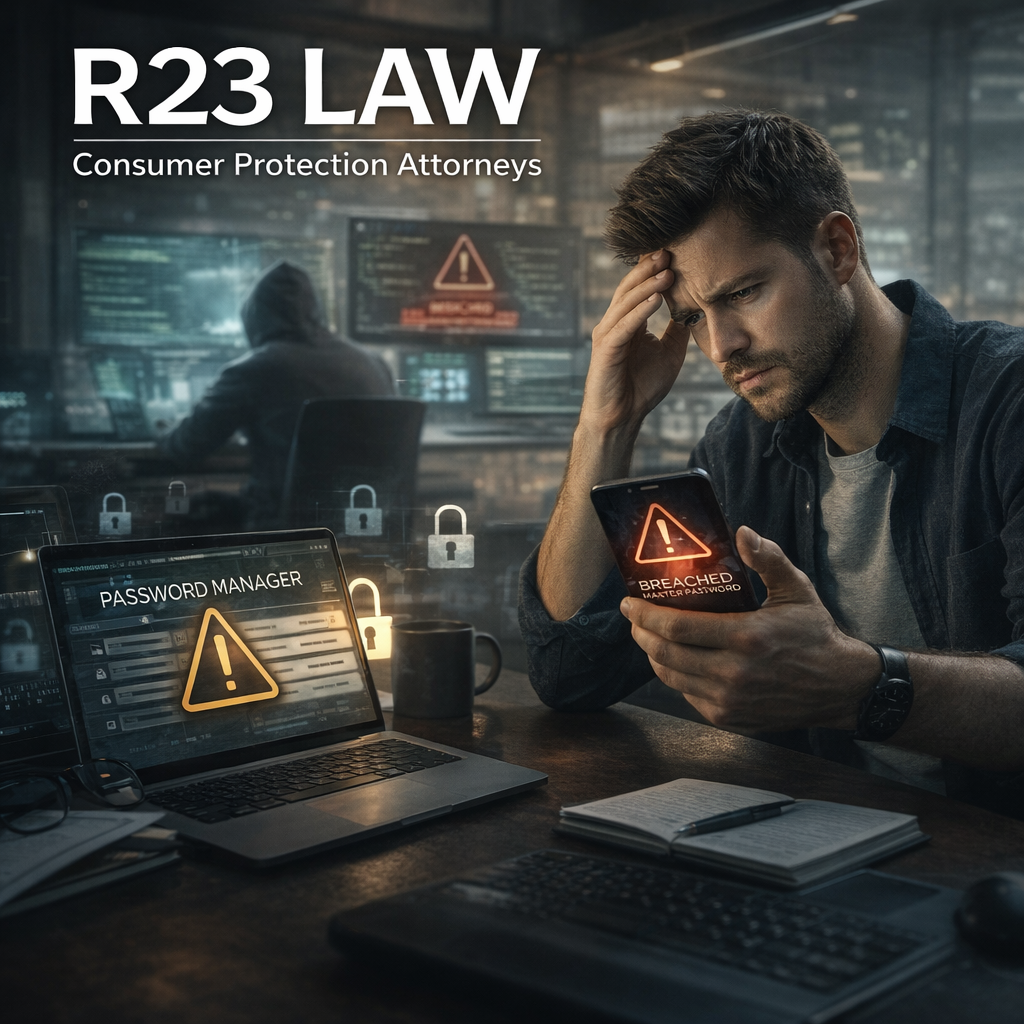
For many California consumers, online security feels like a losing game
Data breaches keep happening, login credentials remain highly valuable to bad actors, and even careful consumers can worry that one wrong click or reused password could open the door to identity theft.
That is why password managers have become such a common tool. But many people still ask the same question — do password managers actually help protect your identity, or do they create a bigger risk if something goes wrong?
In many cases, password managers can be a smart part of a broader security strategy. But like any digital tool, they are not perfect. Understanding both the benefits and the limits can help consumers make informed choices about protecting their accounts and personal information. When identity theft or compromised credentials lead to financial harm, R23 Law's California Consumer Protection Attorneys help consumers understand their rights and evaluate their legal options.
Why Login Credentials Matter So Much in Identity Theft Cases
Many consumers assume that Social Security numbers or dates of birth are the most valuable pieces of information on the dark web. Those details matter, but login credentials are often just as attractive to cybercriminals.
Usernames and passwords can provide direct access to email accounts, banking platforms, shopping sites, and payment services. Once one account is compromised, the fallout can spread quickly. A bad actor may reset passwords, gain access to financial information, or use one breached account to get into several others.
That is one reason password security matters so much in consumer protection and identity theft cases. Weak or reused passwords can give thieves an easy opening, especially when consumers have dozens of accounts to manage.
Are Password Managers Safe for California Consumers To Use
Password managers are designed to store your passwords in a secure vault that is protected by a master password. For some consumers, that setup creates an immediate concern — what happens if someone figures out the master password?
That concern is understandable. If a bad actor gains access to the master password, the risk can be serious. But that does not mean password managers are inherently unsafe. In practice, using a strong, unique master password can significantly reduce the likelihood of unauthorized access.
Many password managers also use strong security features designed to protect consumer data. In general, these tools rely on encryption so stored credentials are difficult to access in readable form. Many also use zero-knowledge architecture, meaning the provider itself may not be able to view the passwords stored in the account.
That said, no security system is perfect. Password managers can still be targeted, and no company can promise absolute protection from cyberattacks. Consumers should view these tools as part of a broader protection strategy, not as a guarantee that identity theft can never happen.
How Password Managers Can Actually Reduce Identity Theft Risk
For many people, the biggest value of a password manager is not just storage. It is better password behavior.
Password managers can help users create strong, unique passwords for every account. That matters because one of the most common online security mistakes is reusing the same weak password across multiple platforms. When one reused password is exposed in a breach, thieves may try it across email, retail, banking, and social media accounts.
A password manager helps break that cycle. If each account has its own strong password, a compromise on one platform is less likely to spread to the rest of your digital life.
That can make password managers a practical tool for reducing the risk of credential-based identity theft, account takeovers, and unauthorized access to sensitive consumer information.
Why Multi-Factor Authentication Still Matters
Even a strong password strategy should not stand alone.
One of the best additional protections consumers can use is multi-factor authentication. This adds another verification step before someone can access an account, such as a one-time code, biometric verification, or approval through a trusted device.
That extra layer can make a major difference. Even if someone obtains the correct username and password, multi-factor authentication may stop them from getting any further.
It can also serve as an early warning sign. If you receive a verification code you did not request, that may indicate someone is trying to access your account. In that way, multi-factor authentication does not just help block unauthorized access — it can also help you detect a problem early.
When Compromised Credentials Become a Consumer Protection Problem
Password safety is not just a tech issue. It can become a consumer protection issue when stolen credentials lead to fraudulent purchases, drained accounts, unauthorized applications, or long-term identity theft.
In some situations, the problem may go beyond the individual thief. A company that failed to protect consumer information, used weak security practices, or mishandled sensitive account data may also face scrutiny. When that happens, consumers may have legal rights worth exploring.
That is where R23 Law's California Consumer Protection Attorneys may be able to help. Identity theft and credential compromise cases are not always limited to the immediate fraud. They can also raise larger questions about data security, business accountability, and the harm caused by preventable failures to safeguard personal information.
What California Consumers Should Do If They Think Their Information Was Compromised
If you believe someone has gained access to your login credentials or personal information, acting quickly can help reduce the damage. That may include changing your passwords, enabling multi-factor authentication, reviewing recent account activity, and watching for signs of fraud or unauthorized transactions.
Just as important, consumers should pay attention to the bigger picture. If compromised credentials appear tied to a data breach, weak security practices, or broader misuse of personal information, legal guidance may help clarify whether additional remedies are available.
You can learn more about [Our Team](/Our Team) and About R23 Law to see how the firm approaches identity theft, data privacy, and consumer protection matters across California.
Why Consumers Turn to R23 Law's California Consumer Protection Attorneys
Online account security may seem like a personal responsibility, but consumers should not be left carrying all the consequences when identity theft causes serious harm.
R23 Law's California Consumer Protection Attorneys help consumers evaluate identity theft issues, credential misuse, and related consumer harm with a focus on accountability and practical next steps. When personal information has been compromised, experienced legal counsel can help determine whether the issue is isolated fraud or part of a larger consumer protection violation.
Contact R23 Law Today
If your passwords, login credentials, or personal information were compromised and you are dealing with the fallout, contact R23 Law's California Consumer Protection Attorneys to discuss your options.
Toll-Free — 310-598-1588
