
PASSWORDS ARE NOT PERMISSION — Inside the “Authorized Transfer” Myth
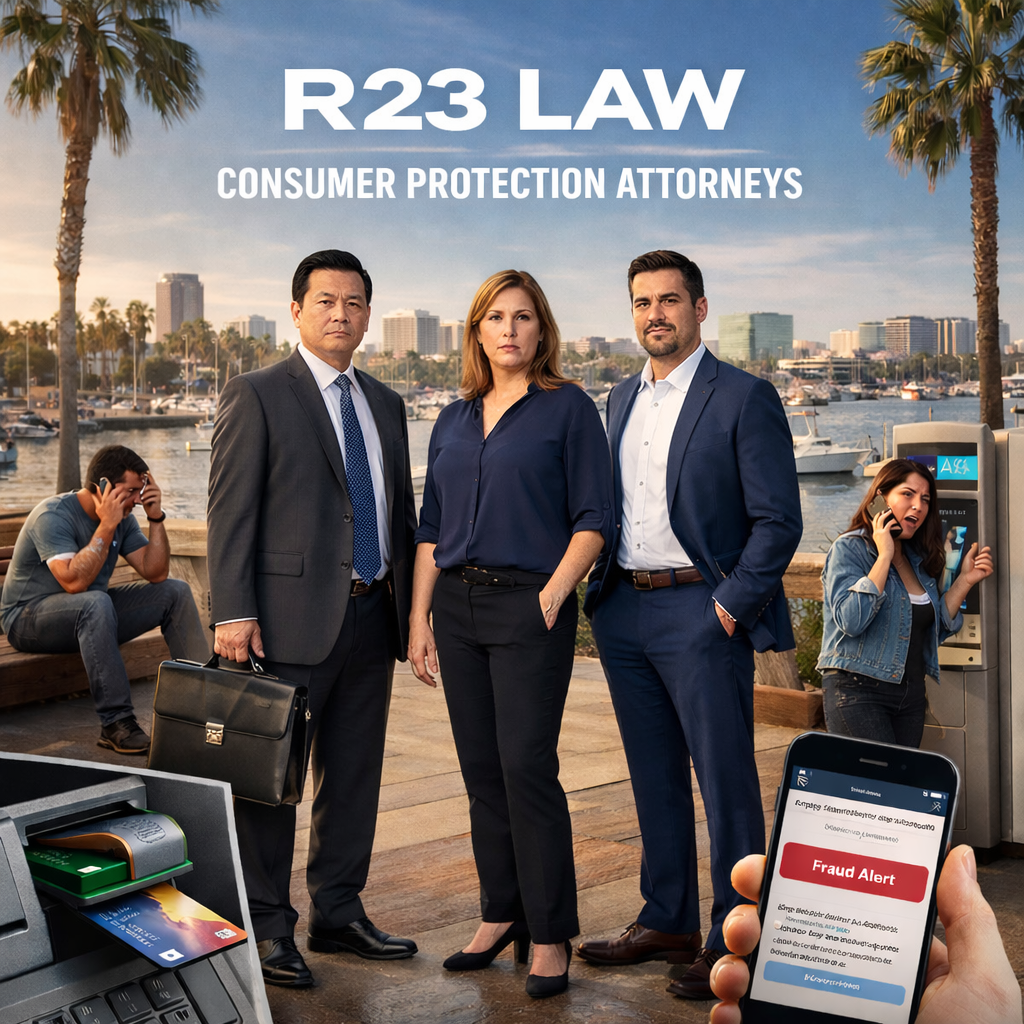
Unauthorized bank transfers often get mislabeled as “authorized”
Learn the fraud pathways banks miss, plus EFTA/Regulation E dispute rules from R23 Law’s California Consumer Protection Attorneys.
When money disappears from a bank account, the response is often painfully predictable: “Our system shows the transaction was authorized.” The problem is that fraud doesn’t need your permission to look “legit” inside a bank’s logs.
The attached guide frames this issue the right way: focus on the mechanics—step-by-step, plain English—because understanding how unauthorized transfers happen changes what evidence matters, what deadlines apply, and how disputes should be evaluated (see “One Final Note” and the series overview).
Why “the system shows it was authorized” is a trap
In real-world bank fraud and account takeover cases, credential use gets confused with true authorization. Criminals don’t need to “break in” like a movie. They can:
obtain access credentials (or a one-time passcode),
hijack a session,
route transfers through channels that look normal on the back end, and
leave the consumer holding the bag.
This is exactly why R23 Law’s California Consumer Protection Attorneys focus on the difference between “authentication” and “intent.” The logs may show a successful login; that does not automatically prove you intended to move your money.
Banks authenticate systems, not intent
Here’s the core point (and it’s worth repeating):
Banks authenticate systems. They do not authenticate intent.
A bank’s fraud tools can confirm that someone entered the right password or code. That’s not the same as proving the account holder authorized the transfer. When disputes are framed incorrectly, the investigation can become overly simplistic—ignoring objective red flags and blaming the victim for actions they never took.
The common pathways to unauthorized bank transfers
The attached piece lays out a “cutaway diagram” approach: remove the panels and look inside the machine. Below are four high-frequency pathways that often lead to unauthorized electronic fund transfers—without turning this into a playbook for bad actors.
ATM skimming and “hardware-store” compromises
Modern skimming can capture card data and PINs in ways that aren’t obvious at the ATM itself—meaning the theft may show up later, somewhere else.
Card trapping (“Lebanese loop”)
Sometimes an ATM doesn’t “malfunction.” It’s been sabotaged to retain cards so criminals can retrieve them later and drain accounts.
Fake or compromised mobile banking apps
Fraud may start on a phone, not at a bank. A compromised app can steal credentials, hijack sessions, and enable transfers that look ordinary to the bank’s systems.
Phishing, smishing, and vishing
Email, text, and phone impersonation scams are built to harvest credentials and verification codes—then trigger transfers that banks may mistakenly label “authorized.”
Regulation E / EFTA rules that shape bank-fraud disputes
When the loss involves an electronic fund transfer, federal law may provide powerful dispute rights through the Electronic Fund Transfer Act (EFTA) and Regulation E.
Key rules that frequently matter:
Timing is everything. Regulation E includes a 60-day statement window that can affect liability for unauthorized transfers shown on a periodic statement.
Error resolution procedures can require provisional credit. In many cases, a financial institution must follow defined investigation steps, and Regulation E includes provisions on provisional credit within 10 business days in certain circumstances (with specific conditions and exceptions).
Consumer liability is limited under defined conditions. Regulation E’s liability framework depends on notice timing and other factors.
This is where R23 Law’s California Consumer Protection Attorneys get highly practical: the “authorized vs. unauthorized” label often turns on evidence quality, timelines, and whether the bank followed Regulation E procedures—not on whether a login occurred.
What changes the story in an unauthorized transfer claim
The attached guide emphasizes looking for objective evidence—not assumptions. In practice, that often means focusing on:
Where you did not act (e.g., you didn’t download a new app, you didn’t change credentials, you didn’t initiate a payee)
Where the real activity happened (often on a different device, channel, or session than the consumer used)
What the bank overlooked (device fingerprints, anomalous access patterns, inconsistent authentication signals, or shallow investigations)
Building a stronger record without guessing
A bank dispute is not the time for theories. It’s the time for clean documentation and consistent reporting—because your paper trail becomes the backbone of any EFTA/Reg E evaluation.
R23 Law’s California Consumer Protection Attorneys routinely review cases for the same structural issues raised in the attached guide: oversimplified bank explanations, misframed “authorization,” and investigations that skip over key evidence.
Case review with R23 Law’s California Consumer Protection Attorneys
If an unauthorized bank transfer—or a chain of suspicious transfers—has put your account in the red, consider a case review focused on EFTA/Regulation E compliance, evidence, and dispute posture. R23 Law’s California Consumer Protection Attorneys represent consumers in bank-fraud and unauthorized transfer disputes where institutions and platforms refuse to treat “credential use” and “authorization” as separate questions.
Disclaimer
This article is for informational purposes only and does not constitute legal advice. Outcomes depend on specific facts, deadlines, and applicable law.
