
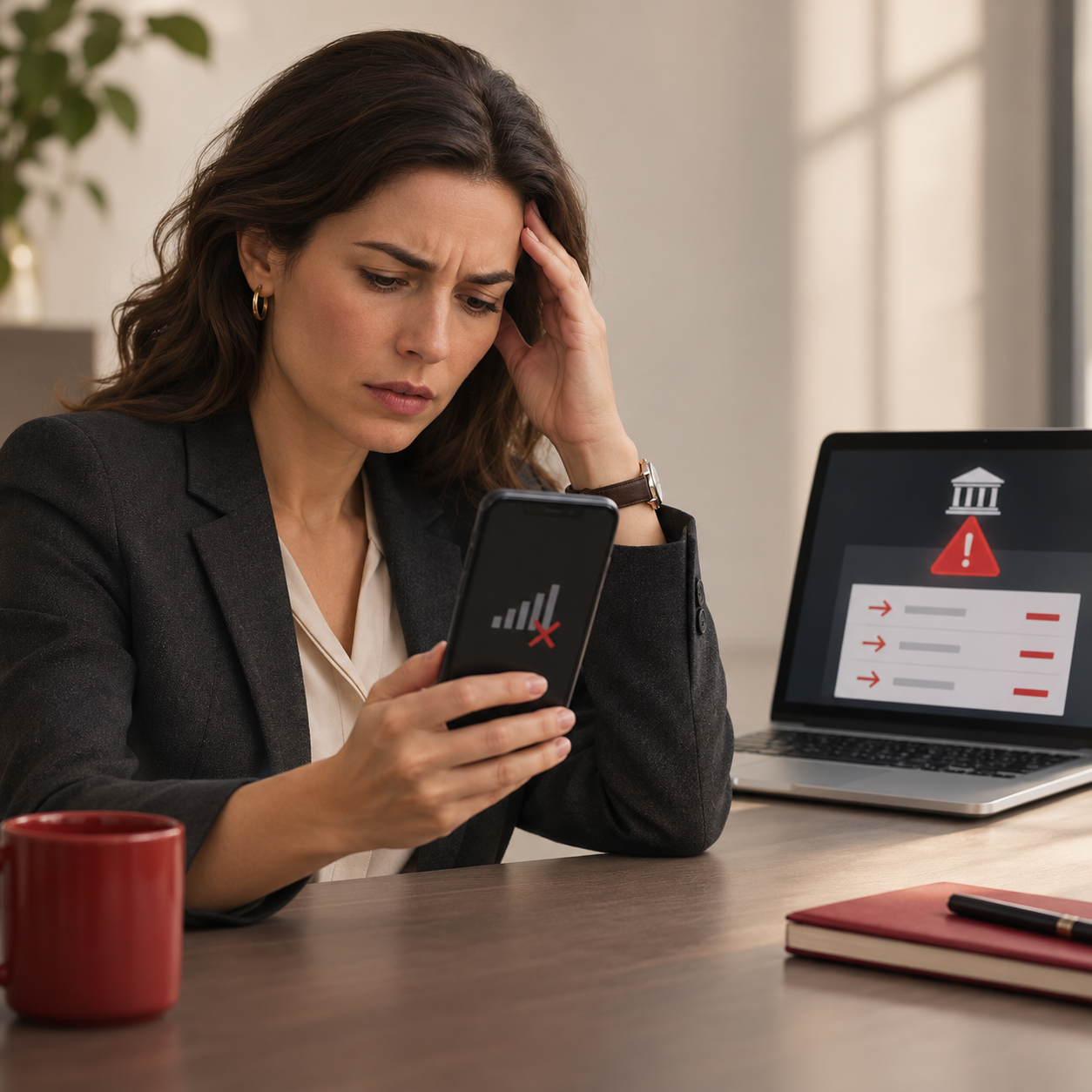
California SIM swap fraud occurs when criminals take control of a consumer's mobile phone number and use it to access financial accounts. Under the Electronic Fund Transfer Act (EFTA) and Regulation E, transfers initiated without the consumer's authorization may qualify for legal protection. Successful login verification does not automatically establish that the consumer authorized the transaction.
Key Takeaways
SIM swapping allows criminals to hijack phone numbers and intercept text messages or banking verification codes.
Fraudsters may exploit mobile carrier security weaknesses, stolen information, compromised accounts, or insider assistance.
A successful bank login or verification code does not necessarily prove that a consumer authorized a transfer.
Regulation E generally requires covered financial institutions to investigate qualifying error reports within 10 business days, subject to statutory exceptions.
Mobile carrier records, service interruptions, banking activity, and security notifications can help document suspected SIM swap fraud.
What Is California SIM Swap Fraud?
California SIM swap fraud involves the unauthorized transfer of a consumer's mobile phone number to a SIM card or device controlled by another person. Criminals may then intercept security codes and access financial accounts.
A SIM card identifies a mobile subscription and helps connect a device to a cellular network.
During a SIM swap, the criminal does not necessarily need physical access to the victim's phone.
Instead, the fraudster may trick the mobile carrier into transferring the telephone number to another device.
The legitimate consumer may suddenly lose service while the criminal begins receiving calls and text messages.
This creates a serious problem when financial institutions use text messages to verify account access.
R23 Law is a consumer protection law firm in Los Angeles that represents California consumers in SIM swap fraud and unauthorized electronic fund transfer matters.
R23 Law's California Consumer Protection Attorneys evaluate potential violations involving unauthorized bank transfers, identity theft, and disputed financial transactions.
How Do Criminals Hijack a Phone Number?
Criminals may use deception, stolen information, compromised telecommunications accounts, or unauthorized assistance to gain control of a mobile phone number.
Social Engineering
Social engineering involves manipulating people into providing information or taking actions they otherwise would not authorize.
A fraudster may impersonate the legitimate subscriber and persuade a mobile carrier representative to activate service on another device.
Stolen Personal Information
Criminals may obtain names, addresses, birth dates, or other identifying information.
They can use those details to answer account security questions or impersonate the subscriber.
Compromised Mobile Carrier Accounts
Someone who obtains unauthorized access to a carrier's online account may attempt to change the SIM card or associated device.
Insider Assistance
In certain circumstances, an individual with access to mobile carrier systems may improperly assist with an unauthorized transfer.
Once the transfer succeeds, the original phone may stop receiving normal cellular service.
Meanwhile, the criminal-controlled device may receive one-time verification codes intended for the subscriber.
How Can SIM Swap Fraud Lead to Unauthorized Bank Transfers?
SIM swapping can allow criminals to access bank accounts by intercepting text messages used for login verification and password recovery.
Step 1. The Phone Number Is Transferred
The criminal causes the carrier to move the victim's number to another device.
The legitimate subscriber may suddenly lose service.
Step 2. Password Resets Are Requested
The criminal attempts to access email, banking, or payment accounts.
If an account relies on text-message verification, the code may reach the criminal's device.
Step 3. Financial Accounts Are Compromised
The criminal may reset passwords, change contact details, disable security notifications, or add payment recipients.
Access to an email account may also enable further password resets.
Step 4. Funds Are Transferred
The criminal initiates electronic transfers to outside accounts.
The bank's records may show that valid credentials and security codes were entered.
However, these records do not necessarily establish that the legitimate consumer initiated or authorized the transactions.
Why Doesn't a Verification Code Prove Authorization?
A verification code demonstrates that a security procedure was completed. It does not necessarily establish who controlled the receiving device or whether the account holder consented.
Multi-factor authentication (MFA) requires an additional verification method beyond a password.
SMS-based authentication sends a temporary code to a registered telephone number.
During a SIM swap, that number may be controlled by a criminal.
The bank may therefore record successful authentication even though the legitimate consumer never received the code.
For example, a fraudster may intercept a banking code and use it to initiate a transfer without the customer's knowledge.
The distinction between authentication and authorization is important when evaluating potential legal violations.
Does Regulation E Protect California SIM Swap Fraud Victims?
Regulation E may protect consumers when a criminal independently initiates a covered electronic fund transfer without actual authority.
The Electronic Fund Transfer Act (EFTA), 15 U.S.C. § 1693 et seq., and Regulation E, 12 C.F.R. Part 1005, provide protections concerning qualifying electronic financial transactions.
Under 12 C.F.R. § 1005.2(m), an unauthorized electronic fund transfer generally involves a transfer initiated by someone other than the consumer without actual authority and from which the consumer receives no benefit.
An electronic fund transfer is a qualifying transaction initiated electronically to debit or credit a consumer account.
If a criminal hijacks a telephone number, intercepts account credentials, and independently transfers money, Regulation E protections may apply.
The CFPB's Electronic Fund Transfers FAQs explain how fraudulently obtained account credentials may result in unauthorized transfers.
However, coverage depends on the account, transaction, authorization, and applicable regulatory requirements.
What Evidence Can Help Establish a SIM Swap Fraud Claim?
Mobile carrier records, service interruption details, bank access information, and transfer records can help reconstruct the circumstances surrounding an unauthorized transaction.
Important evidence may include:
Carrier records: The date and time the telephone number was transferred to another SIM card or device.
Service interruption records: Evidence showing when the legitimate phone lost cellular service.
Bank login histories: Timestamps and device information associated with suspicious access.
Security notifications: Password reset notices, device changes, or altered account settings.
Transfer records: Amounts, transaction dates, and newly added payment recipients.
Fraud reports: Communications and complaints submitted to banks and mobile carriers.
Together, these records may help establish a timeline connecting the phone number hijacking to unauthorized banking activity.
A successful login should be considered alongside other relevant facts rather than treated as conclusive evidence of consent.
What Should I Do After Discovering SIM Swap Fraud?
Contact your mobile carrier and financial institution promptly, secure affected accounts, and preserve evidence of the unauthorized activity.
Contact your mobile carrier. Report the unauthorized SIM transfer and request restoration of your phone number.
Notify your bank. Identify suspected unauthorized transactions and request an investigation.
Secure your accounts. Change compromised passwords and review account recovery settings.
Preserve documents. Save carrier communications, bank statements, security notifications, and transaction records.
Request investigation information. Keep copies of banking dispute responses and any explanations provided.
Consider legal review. If the dispute remains unresolved, evaluate whether the financial institution complied with Regulation E.
The FTC's SIM swap guidance also recommends contacting the mobile carrier promptly and checking financial accounts for unauthorized activity.
How Long Does a Bank Have to Investigate a SIM Swap Fraud Dispute?
Under Regulation E, a covered financial institution generally must investigate a qualifying error report within 10 business days.
Under 12 C.F.R. § 1005.11, an institution may generally take up to 45 days if it satisfies applicable provisional credit and notice requirements.
Provisional credit means temporarily making disputed funds available during the investigation.
Certain transactions qualify for different investigation periods, including circumstances allowing up to 90 days.
Consumers generally must provide notice within 60 days after the bank sends the statement first reflecting the alleged error to invoke the ordinary Regulation E error-resolution process.
Separate requirements govern liability for unauthorized transfers, and prompt reporting remains important.
Can a Bank Deny SIM Swap Fraud Because Authentication Succeeded?
A bank may consider authentication records during its investigation, but successful authentication does not automatically establish that the consumer authorized the transfer.
A SIM swap may allow a criminal to receive legitimate security codes and use them without the account holder's permission.
The key questions include who initiated the transfer and whether actual authority existed.
EvidenceWhat it may establishCorrect verification codeAuthentication procedure was completedUnauthorized SIM transferAnother device gained control of the phone numberOriginal phone lost serviceThe subscriber may not have received security messagesUnfamiliar banking deviceAccount access may have occurred from another deviceUnrecognized transfer recipientFunds may have been sent to an unauthorized destination
The financial institution must evaluate the reported error in accordance with applicable legal requirements.
When a bank concludes that no error occurred, Regulation E generally requires a written explanation and notice of the consumer's right to request documents relied upon in the investigation.
Can I Sue a Bank After SIM Swap Fraud?
A consumer may have legal remedies when a covered financial institution violates applicable EFTA or Regulation E requirements.
Potential issues include failure to investigate qualifying errors, improper findings concerning unauthorized transfers, or failure to comply with required error-resolution procedures.
Available remedies depend on the facts and statutory requirements.
The EFTA authorizes certain civil remedies under 15 U.S.C. § 1693m, including actual damages, statutory damages where authorized, and reasonable attorney's fees and costs.
However, financial loss alone does not establish that a bank violated federal law.
R23 Law evaluates potential EFTA claims involving compromised authentication, disputed electronic transfers, and alleged investigation failures.
How Can a California SIM Swap Fraud Attorney Help?
An attorney can evaluate banking records, mobile carrier evidence, account authorization, and whether financial institutions complied with applicable electronic fund transfer protections.
R23 Law reviews potential unauthorized transfer claims, EFTA and Regulation E violations, account takeover disputes, and related financial fraud issues.
A stolen phone number should not automatically be treated as proof that the account holder authorized a transfer.
Frequently Asked Questions
Can a SIM swap happen without someone stealing my physical phone?
Yes. A criminal may persuade a mobile carrier to transfer your telephone number to another SIM card or device without physically possessing your phone. The original device may suddenly lose cellular service. Fraudsters can then receive calls and messages intended for you, including security codes used to access financial accounts.
Does losing cellular service automatically mean someone swapped my SIM?
No. Cellular service interruptions may occur for several reasons, including network outages, device problems, or account changes. However, unexpected service loss accompanied by suspicious banking activity or account notifications may indicate SIM swap fraud. Contact your mobile carrier through an independently verified channel to investigate whether an unauthorized transfer occurred.
Can a bank hold me responsible because the correct verification code was entered?
Not automatically. Regulation E focuses on whether the electronic transfer was authorized, not solely whether a verification procedure succeeded. If a criminal used a hijacked phone number to obtain a code and independently initiate a covered transfer, unauthorized transfer protections may apply. The circumstances and applicable regulatory requirements determine the outcome.
Can I request the records my bank used to deny my SIM swap fraud claim?
Yes. Under Regulation E, when a financial institution determines that no qualifying error occurred, it generally must provide a written explanation and notify the consumer of the right to request documents relied upon in its decision. Consumers should preserve the denial and request the relevant investigation documents.
Can changing my authentication method reduce SIM swap risks?
Yes. Using an authenticator application or security key instead of SMS verification may reduce dependence on text messages delivered to a telephone number. Consumers can also ask mobile carriers about account PINs or other protections against unauthorized SIM changes. These measures can reduce certain risks but do not prevent every form of identity theft.
Talk to R23 Law's California Consumer Protection Attorneys
California SIM swap fraud can cause substantial financial harm when criminals hijack phone numbers and initiate unauthorized bank transfers. R23 Law's California Consumer Protection Attorneys evaluate potential EFTA and Regulation E violations involving disputed transactions and bank investigations. If your bank denied a SIM swap fraud claim, contact R23 Law to request a free case review.
Contact R23 Law Today
Phone: (888) 533-2948
Email: info@R23Law.com
Website: www.R23Law.com
Free case review: www.R23Law.com/contact
R23 Law, 633 W 5th St, Los Angeles, CA 90071
© 2026 R23 Law. All rights reserved.
Reviewed by Peng Shao, State Bar of California No. 319624. Last updated November 19, 2026.
Attorney Advertising. This article is general information, not legal advice, and reading it does not create an attorney-client relationship. Laws change and every case depends on its facts. Prior results do not guarantee a similar outcome.
