
STOLEN DATA, FRAUD FALLOUT – Identity Fraud, Credit Damage, And California Consumer Protection Claims
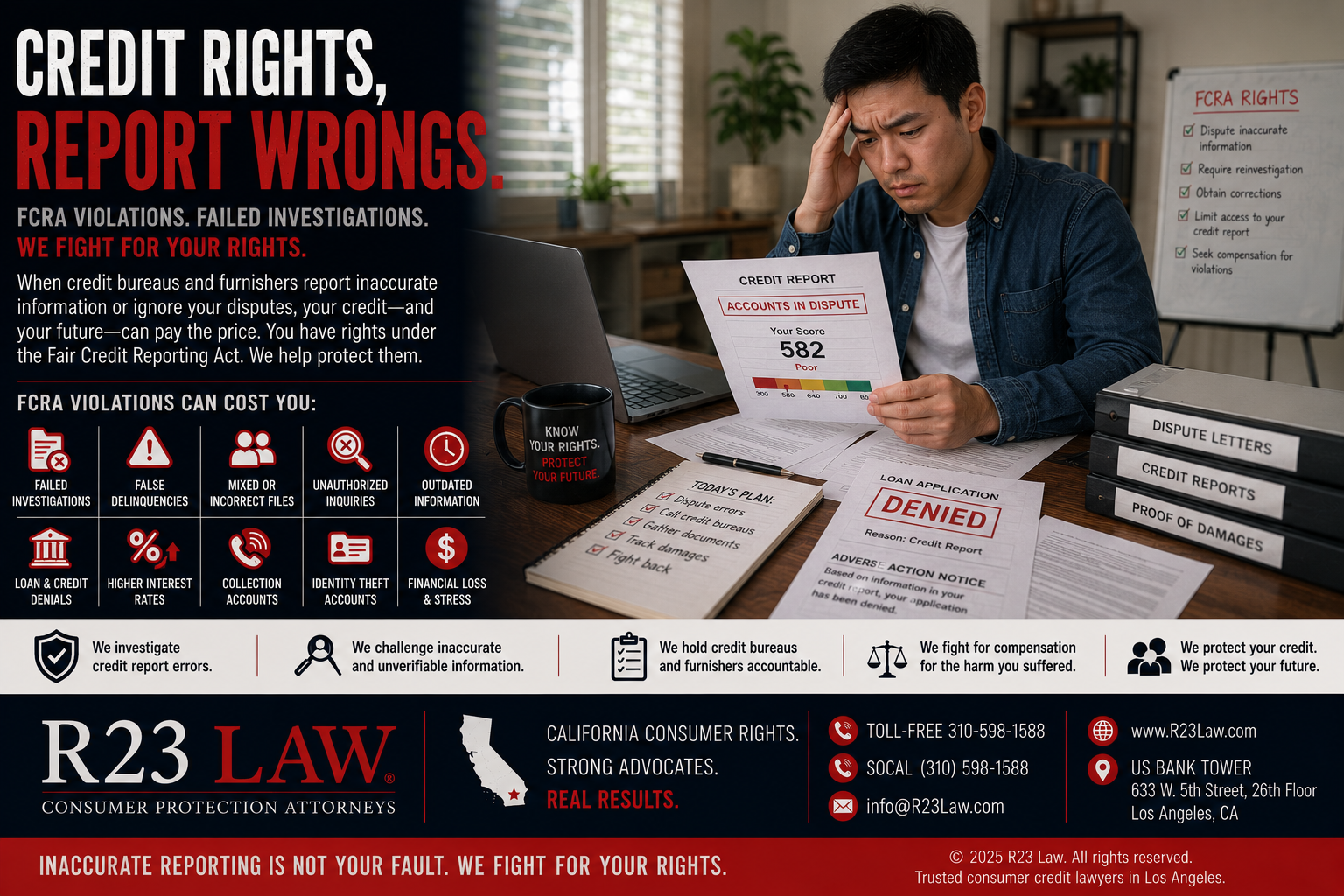
Identity fraud can lead to fraudulent credit accounts, tax fraud, credit report errors, and financial loss
R23 Law's California Consumer Protection Attorneys represent identity theft and identity fraud victims throughout California. Identity fraud can begin with one stolen password, one breached account, one exposed Social Security number, or one compromised credit card. Once personal information is in the wrong hands, criminals may use it to open credit lines, file fraudulent tax returns, make unauthorized purchases, drain accounts, or damage a consumer’s credit profile.
Identity theft and identity fraud are often connected, but they are not always the same. Theft involves the unauthorized taking or access of personal information. Fraud occurs when that information is used to obtain money, credit, goods, services, or other benefits in the victim’s name.
R23 Law's California Consumer Protection Attorneys represent consumers throughout California in identity fraud, identity theft, credit reporting, data breach, unauthorized transaction, and financial injury matters.
Identity Theft And Identity Fraud — Connected But Different
Identity theft generally occurs when someone gains unauthorized access to another person’s sensitive information. That information may include a Social Security number, credit card number, bank login, date of birth, mailing address, or account credential.
Identity fraud occurs when stolen information is used for an unlawful purpose. The attached source gives the example of stolen information being used to make purchases, open credit lines, or file fraudulent tax returns.
Common identity fraud scenarios include:
Fraudulent credit card accounts
Unauthorized purchases
Fake tax filings
New loans opened without consent
Bank account takeover
Unauthorized payment app transfers
Medical identity fraud
Employment identity fraud
Collection accounts tied to fraudulent debt
Credit report errors from accounts the consumer never opened
Once fraud begins, the damage can spread across credit reports, bank records, tax systems, debt collection files, and consumer accounts.
Data Breaches Can Fuel Identity Fraud
Identity fraud often begins after personal information is exposed through a data breach, phishing attack, hacked retailer account, stolen mail, malware, or compromised login.
A criminal may steal information directly, then use it immediately. In other situations, stolen information may be sold online, where another person uses it later to commit fraud.
That delay can make identity fraud especially frustrating. A consumer may receive a breach notice months before any fraudulent account appears. The first sign may be a credit alert, collection letter, denied application, tax notice, or unfamiliar charge.
Early Detection Can Reduce Financial Damage
Catching identity fraud quickly can limit the damage and create a stronger record for disputes or legal claims.
Warning signs may include:
Unfamiliar charges on credit card or bank statements
Credit alerts for new accounts
Hard inquiries from companies never contacted
Collection calls for unknown debts
Bills for accounts never opened
Tax notices involving duplicate filings
Password reset notices
Missing mail
Denied applications based on unfamiliar information
Credit report entries that do not belong to the consumer
Consumers should take these signs seriously and preserve every notice, screenshot, email, letter, and account statement connected to the fraud.
Fraud Alerts, Credit Freezes, And Account Security
When personal information may be compromised, consumers can take protective steps to reduce future fraud risk.
The attached source recommends placing a fraud alert on credit accounts and enabling multi-factor authentication to secure online accounts.
Important protective actions include:
Place a fraud alert with the major credit bureaus
Freeze credit reports when appropriate
Change passwords on financial and email accounts
Enable multi-factor authentication
Review credit reports from Equifax, Experian, and TransUnion
Monitor bank and credit card activity
Report suspicious accounts immediately
Preserve proof of fraud reports and disputes
These steps can reduce the risk of new fraudulent accounts and create documentation if companies later fail to investigate properly.
Compensation After Identity Fraud
Identity fraud can create serious financial and personal harm. Depending on the facts, victims may pursue compensation from the fraudster, a company that failed to protect data, a financial institution that mishandled unauthorized transactions, a credit bureau that failed to investigate, a furnisher that kept reporting fraudulent information, or a debt collector that pursued invalid debt.
Potential damages may include:
Out-of-pocket losses
Stolen funds
Credit restoration costs
Lost financial opportunities
Higher interest rates
Denied housing or credit applications
Emotional distress
Time spent addressing fraud
Damage from collection activity
Costs tied to correcting false records
If a company failed to safeguard consumer information or ignored fraud evidence, R23 Law's California Consumer Protection Attorneys can evaluate whether legal claims may exist under federal or California law.
Credit Reporting After Identity Fraud
Identity fraud frequently leads to inaccurate credit reporting. Fraudulent accounts may appear as open accounts, delinquencies, charge-offs, collection accounts, hard inquiries, or unpaid balances.
The Fair Credit Reporting Act gives consumers the right to dispute inaccurate or fraudulent information. After a proper dispute, credit reporting agencies and furnishers generally must conduct reasonable investigations and correct information that cannot be verified as accurate.
R23 Law's California Consumer Protection Attorneys review credit reports, dispute letters, reinvestigation results, creditor records, and fraud documentation to determine whether companies failed to comply with consumer reporting laws.
R23 Law's Expert Legal Services For Identity Fraud Victims Throughout California
R23 Law represents consumers throughout California whose financial lives have been disrupted by identity fraud, identity theft, data breaches, unauthorized transactions, and inaccurate credit reporting.
R23 Law's California Consumer Protection Attorneys may review credit reports, fraud alerts, dispute letters, identity theft reports, tax notices, bank statements, credit card records, collection letters, adverse action notices, and communications from businesses connected to the fraud.
The firm’s consumer protection work includes matters involving:
Identity fraud
Identity theft
Data breach injuries
Fraudulent credit accounts
Unauthorized bank transfers
Unauthorized credit card charges
Credit report errors
Debt collection tied to fraud
Tax identity fraud
Failure to investigate disputes
R23 Law pursues correction, accountability, and compensation where the law allows.
Strong Records Build Stronger Identity Fraud Claims
Consumers should preserve every document connected to the fraud and any resulting financial harm.
Important records may include:
Credit reports
Fraud alerts or credit freeze confirmations
Bank statements
Credit card statements
Identity theft reports
Police reports
FTC identity theft materials
Dispute letters
Certified mail receipts
Collection notices
Tax notices
Adverse action letters
Emails from lenders, banks, credit bureaus, or collectors
Proof of denied applications, higher costs, or lost opportunities
A strong paper trail can show when the fraud started, what companies were notified, and whether those companies failed to respond properly.
R23 Law's California Consumer Protection Attorneys Protect Fraud Victims
Identity fraud can leave consumers fighting accounts they never opened and debts they never owed. Companies must take fraud reports seriously, investigate disputes fairly, and correct inaccurate information.
R23 Law brings focused consumer protection experience to identity fraud, credit reporting, data breach, debt collection, and financial injury claims throughout California.
Contact R23 Law Today
If identity fraud caused fraudulent accounts, credit damage, unauthorized transactions, tax problems, or collection activity, R23 Law's California Consumer Protection Attorneys can review your rights and discuss potential legal claims.
Toll-Free — 310-598-1588 SoCal — (310) 598-1588 Email — info@R23Law.com Website — www.R23Law.com Office — US Bank Tower, 633 W. 5th Street, 26th Floor, Los Angeles, CA
© 2025 R23 Law. All rights reserved. Trusted consumer credit lawyers in Los Angeles.
