
STOLEN NAME, STUBBORN CREDIT – California Consumer Rights After Identity Theft And Credit Report Errors
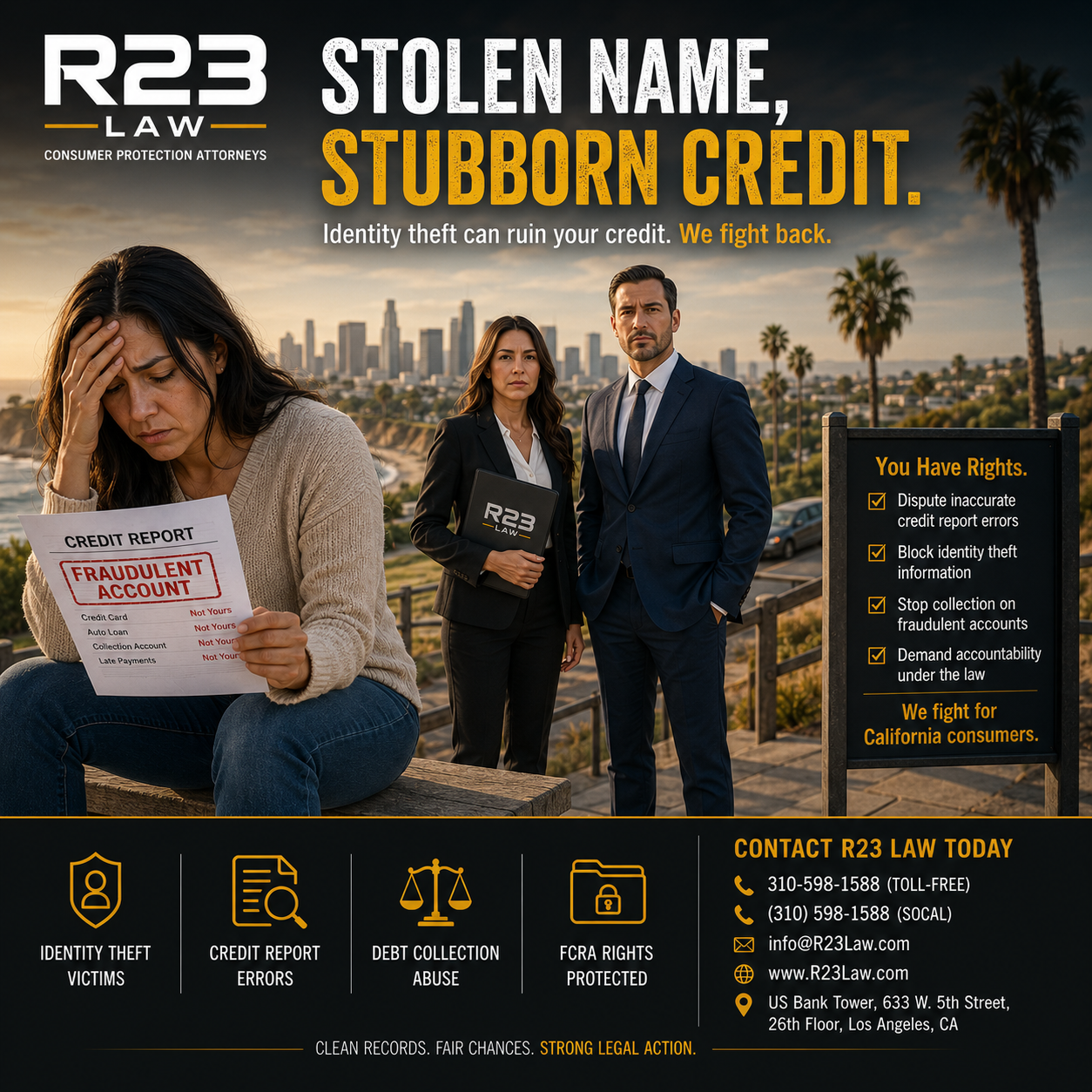
Identity theft can damage credit, trigger debt collection, and create false accounts in your name
R23 Law's California Consumer Protection Attorneys represent consumers facing identity theft credit report errors, fraudulent accounts, and FCRA violations.
Identity Theft Can Turn Your Credit Into Someone Else’s Crime Scene
Identity theft happens when someone uses your name, address, Social Security number, bank account number, credit card information, or other identifying details without permission to open accounts, make purchases, obtain loans, or commit fraud. The attached source explains that identity thieves may use both low-tech and high-tech methods to access personal information, and those stolen details can later appear on credit reports, debt collection files, and financial records.
For consumers, the damage can feel sudden and overwhelming. A fraudulent credit card, auto loan, wireless account, bank account, or collection debt can lower your credit score, block financing, trigger debt collector calls, and create a paper trail that is difficult to clean up.
R23 Law's California Consumer Protection Attorneys represent identity theft victims facing credit report errors, fraudulent accounts, debt collection abuse, and consumer reporting violations.
How Identity Thieves Get Personal Information
Identity theft can begin in many ways. Some thieves steal wallets, mail, bank statements, credit card offers, checks, or personal documents. Others use skimming devices, phishing messages, fake business calls, or unauthorized access to credit reports. The source also notes tactics such as change-of-address schemes, dumpster diving, and scams where thieves pose as legitimate businesses or government officials.
Common identity theft methods include:
Stolen wallets, purses, credit cards, and debit cards
Stolen mail containing bank statements, checks, tax documents, or credit offers
Skimming devices used during card transactions
Fraudulent change-of-address requests
Phishing emails, fake calls, and impersonation scams
Misuse of credit report access
Theft of personal documents from homes, businesses, or trash
The image on page 1 of the attached source reinforces the core risk — sensitive identifiers like Social Security information can become powerful tools for fraud when they fall into the wrong hands.
Fraudulent Accounts Can Damage Credit Fast
Once an identity thief has your information, they may open credit cards, take out auto loans, establish phone or wireless service, drain bank accounts, counterfeit checks, or even give your name to law enforcement during an arrest. The source explains that unpaid fraudulent accounts may later appear as delinquent accounts on a consumer’s credit report.
Warning signs of identity theft may include:
Credit cards you never requested
Debt collection calls or letters about accounts you do not recognize
Denied credit for no clear reason
Missing bills or unexpected address changes
Charges or withdrawals you did not authorize
Businesses contacting you about merchandise or services you never purchased
These signs should not be ignored. What looks like a simple credit report mistake may be the first visible sign of a larger identity theft problem.
R23 Law's Expert Legal Services For California Identity Theft Victims
R23 Law's California Consumer Protection Attorneys represent consumers whose credit, finances, and reputations have been damaged by identity theft. Our firm evaluates claims involving credit bureaus, creditors, banks, lenders, debt collectors, furnishers, and consumer reporting agencies that fail to correct identity theft-related errors.
Our attorneys may pursue claims involving inaccurate credit reporting, failure to investigate disputes, continued reporting of fraudulent accounts, unlawful debt collection, refusal to block identity theft information, and related violations under federal and California consumer protection laws.
Learn more about the firm through About R23 Law, meet the attorneys through Our Team, or begin through Contact Us.
FCRA Rights For Identity Theft Victims
The Fair Credit Reporting Act gives identity theft victims important rights. According to the attached source, consumers may request fraud alerts, obtain free file disclosures, request documents tied to fraudulent accounts or transactions, obtain debt information from collectors, ask credit reporting agencies to block identity theft information, and prevent businesses from reporting information that resulted from identity theft.
These protections matter because identity theft can spread across multiple systems. One fraudulent account can become a credit report error, a collection account, a loan denial, and a reputational injury.
Fraud Alerts, File Disclosures, And Credit Blocks
Identity theft victims may request fraud alerts with nationwide consumer reporting agencies. The source explains that contacting one major credit bureau can trigger notice to the others, and that an initial fraud alert lasts at least 90 days while an extended alert can last seven years.
Consumers may also request free copies of credit file information. These disclosures can reveal fraudulent accounts, suspicious address changes, unauthorized inquiries, or unfamiliar debts.
If information in a credit file resulted from identity theft, a consumer may ask the credit reporting agency to block that information. The consumer must identify the information, provide proof of identity, and supply proper supporting documentation. Once a debt caused by identity theft is blocked, a business with notice of the block may be restricted from selling, transferring, or placing that debt for collection.
Debt Collectors And Identity Theft Accounts
Debt collectors often appear after identity theft has already damaged a consumer’s credit. A fraudulent account may be sold, transferred, or assigned for collection even though the consumer never opened it.
The attached source explains that identity theft victims may request information from debt collectors, including the name of the creditor and the amount of the debt. If a debt collector continues collection activity after receiving identity theft documentation, or if a credit bureau keeps reporting fraudulent information after a proper dispute, legal claims may be available.
R23 Law's California Consumer Protection Attorneys investigate whether collectors, creditors, and reporting agencies followed the law after receiving identity theft notices and disputes.
Steps To Protect Your Credit After Identity Theft
Consumers should move quickly and keep complete records. Important steps may include:
Review credit reports from all major credit bureaus
Identify every fraudulent account, inquiry, address, and collection entry
Place a fraud alert or credit freeze
File an identity theft report with law enforcement or the FTC
Send written disputes to credit reporting agencies and furnishers
Request documents related to fraudulent accounts
Keep certified mail receipts, screenshots, letters, reports, and dispute results
Speak with R23 Law's California Consumer Protection Attorneys about legal options
Identity theft recovery requires documentation, persistence, and a legal strategy when companies refuse to correct the record.
R23 Law's California Consumer Protection Attorneys Pursue Credit Accountability
Identity theft victims should not be forced to carry the financial weight of someone else’s fraud. Credit bureaus, creditors, furnishers, banks, lenders, and debt collectors must take identity theft claims seriously when consumers provide proper notice and documentation.
R23 Law's California Consumer Protection Attorneys pursue accountability when companies ignore disputes, fail to investigate, continue reporting fraudulent accounts, or attempt to collect debts caused by identity theft.
Reclaim Your Name, Restore Your Credit
Identity theft can affect more than a credit score. It can disrupt housing, employment, financing, bank access, and peace of mind. With strong consumer protection laws and experienced legal representation, victims can challenge false information, demand corrections, and pursue compensation where the law allows.
R23 Law stands with California consumers facing fraudulent accounts, credit report errors, debt collection pressure, and identity theft-related reporting violations.
Contact R23 Law Today
Identity theft can spread quickly across credit reports, debt collection files, and financial accounts. If fraudulent accounts or identity theft-related errors are damaging your credit, R23 Law's California Consumer Protection Attorneys can review your rights and legal options.
SoCal — (310) 598-1588
