
STOLEN TRUST, STOLEN NAME – Domestic Identity Theft, Financial Abuse, And California Consumer Protection Claims
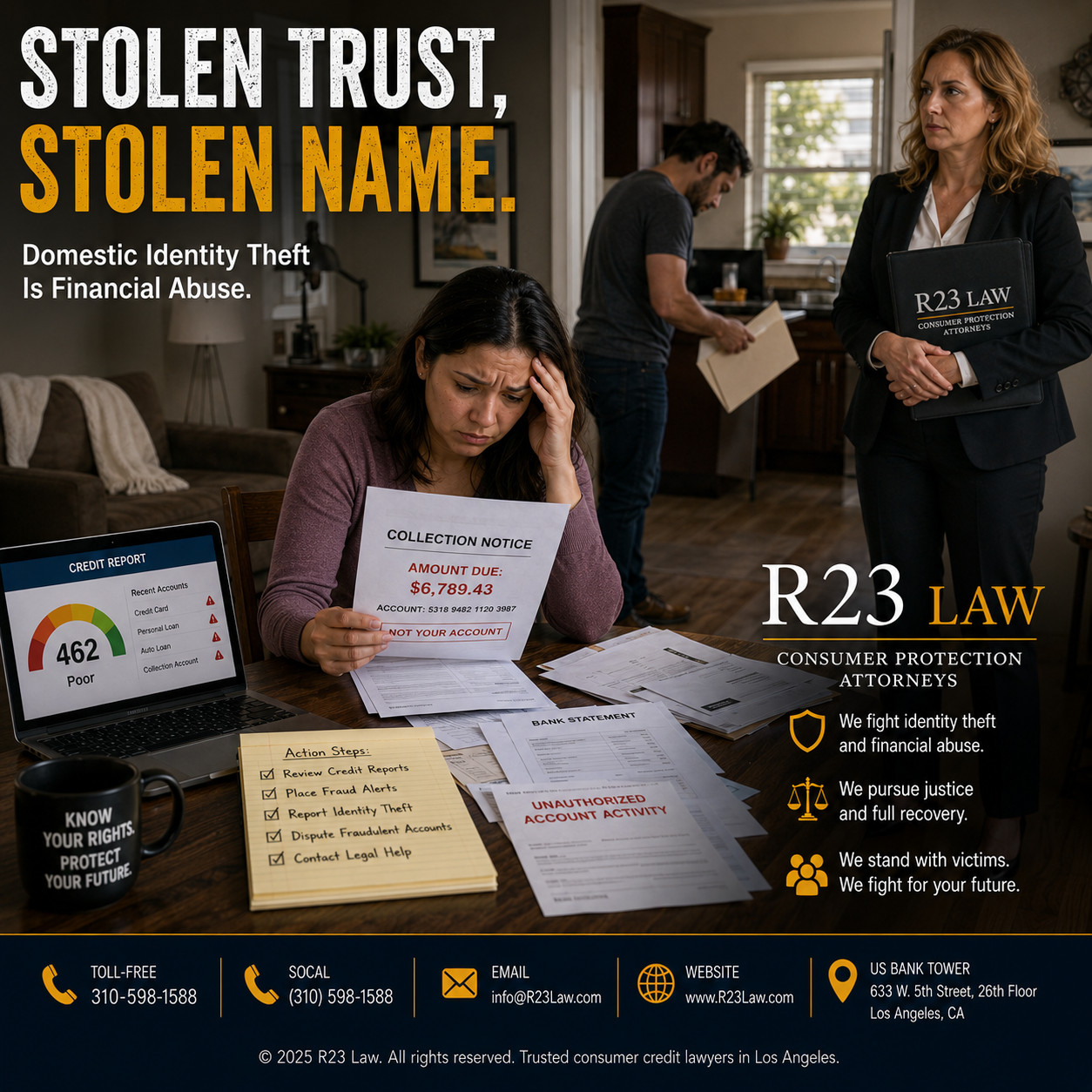
Domestic identity theft can damage credit, drain accounts, create false debts, and trap victims in financial abuse
R23 Law's California Consumer Protection Attorneys represent Californians facing identity theft by spouses, relatives, partners, caregivers, or household members.
Domestic Identity Theft Is A Betrayal With Financial Consequences
Domestic identity theft happens when someone close to you uses your personal or financial information without permission. The person may be a spouse, former partner, family member, roommate, caregiver, child, parent, sibling, or someone else with access to your private records.
Because the perpetrator often knows personal details, passwords, routines, account information, or Social Security information, domestic identity theft can be especially damaging. It may create fraudulent debts, unauthorized withdrawals, ruined credit, tax problems, medical billing issues, or collection activity tied to accounts you never approved.
R23 Law's California Consumer Protection Attorneys represent consumers facing domestic identity theft, financial abuse, credit report errors, fraudulent accounts, and unlawful debt collection.
Domestic Identity Theft Can Be Economic Abuse
The attached source explains that domestic identity theft can be a form of economic abuse and domestic violence, leaving victims feeling betrayed, violated, and powerless. It can also affect the ability to get a job, rent an apartment, buy a car, or qualify for health insurance.
Common examples include:
Unauthorized use of a spouse’s or family member’s credit card
Opening loans or credit cards in another person’s name
Stealing mail or documents containing personal information
Using a child’s Social Security number for utilities or benefits
Impersonating a parent, child, or partner to access bank accounts
Forging signatures on checks, loans, or legal documents
Using a relative’s identity for medical services or prescriptions
Applying for rental property or a mortgage using another person’s identity
Taking funds from a joint account without authorization
Filing fraudulent tax returns using a spouse’s or child’s information
Taking over online accounts through password theft or phishing
These acts are not just family disputes. They can create serious legal and financial harm.
R23 Law's Expert Legal Services For Domestic Identity Theft Victims Throughout California
R23 Law's California Consumer Protection Attorneys evaluate domestic identity theft claims involving credit bureaus, banks, lenders, debt collectors, furnishers, credit card companies, and other businesses that continue reporting or collecting after receiving notice of fraud.
Our legal services may include reviewing credit reports, identifying fraudulent accounts, disputing false debts, challenging unauthorized charges, addressing collection activity, and pursuing legal claims when companies refuse to correct identity theft-related damage.
Learn more about the firm through About R23 Law, meet the attorneys through Our Team, or begin through Contact Us.
Warning Signs Of Domestic Identity Theft
Domestic identity theft may remain hidden for months or years because the person responsible often has close access to the victim’s information. Warning signs may include:
Credit cards or loans you did not open
Bank withdrawals you did not authorize
Missing mail, tax documents, or financial statements
Debt collection calls about unfamiliar accounts
Credit report inquiries from companies you do not recognize
Utility accounts opened in your name
Medical bills for services you did not receive
Tax notices about returns you did not file
Password resets or account lockouts
Sudden drops in your credit score
A victim may first discover the fraud during a divorce, separation, move, credit application, apartment application, or loan denial.
Immediate Steps After Domestic Identity Theft
The attached source recommends acting quickly, contacting banks and credit card companies, freezing accounts, changing passwords, filing a police report, notifying the major credit bureaus, placing fraud alerts, documenting fraudulent activity, disputing unauthorized charges and accounts, and seeking legal representation.
Important records to preserve include:
Police reports
FTC identity theft reports
Credit reports
Bank and credit card statements
Loan documents
Debt collection letters
Emails, texts, and account notices
Tax notices
Medical bills
Dispute letters
Certified mail receipts
Written responses from creditors, banks, or credit bureaus
A clear record can be critical when companies refuse to remove fraudulent accounts or continue collecting identity theft-related debts.
Credit Reports And False Debts
Domestic identity theft often appears on credit reports as fraudulent accounts, late payments, charge-offs, collections, or hard inquiries. Even when the identity thief is a spouse or relative, consumers should not be forced to carry false credit damage.
R23 Law's California Consumer Protection Attorneys review whether credit bureaus, furnishers, and debt collectors properly investigated after receiving notice of identity theft. If companies continue reporting false debts or collecting on fraudulent accounts, legal claims may be available.
Domestic Identity Theft During Divorce Or Separation
Identity theft can become especially complicated when it happens during a breakup, divorce, or custody dispute. One partner may use shared access to bank accounts, passwords, credit cards, mail, or documents to create debt, drain accounts, or block the other person’s financial independence.
These cases require careful documentation. Fraudulent debt should be separated from legitimate joint obligations, and victims should act quickly to protect credit, accounts, and personal records.
R23 Law's California Consumer Protection Attorneys Pursue Accountability
Domestic identity theft can affect credit, housing, employment, banking, insurance, healthcare, and emotional stability. Companies that receive identity theft disputes must take the issue seriously and follow the law.
R23 Law's California Consumer Protection Attorneys pursue accountability when banks, creditors, debt collectors, credit bureaus, or furnishers refuse to correct identity theft-related damage.
Reclaim Your Name, Credit, And Financial Safety
Domestic identity theft is personal, but the financial fallout often involves major institutions. Victims may need credit correction, account cleanup, debt collection defense, and legal action against companies that keep treating fraudulent accounts as valid.
R23 Law stands with California consumers facing domestic identity theft, financial abuse, credit report errors, and fraudulent debt collection.
Contact R23 Law Today
Domestic identity theft can turn trust into debt, damaged credit, and financial instability. If a spouse, partner, relative, caregiver, or household member used your identity without permission, R23 Law's California Consumer Protection Attorneys can review your rights and legal options.
Contact R23 Law Today
Toll-Free — 310-598-1588
SoCal — (310) 598-1588
Email — info@R23Law.com
Website:www.R23Law.com
US Bank Tower, 633 W. 5th Street, 26th Floor, Los Angeles, CA
© 2025 R23 Law. All rights reserved. Trusted consumer credit lawyers in Los Angeles.
