
STOLEN YEARS — Senior Identity Theft in California
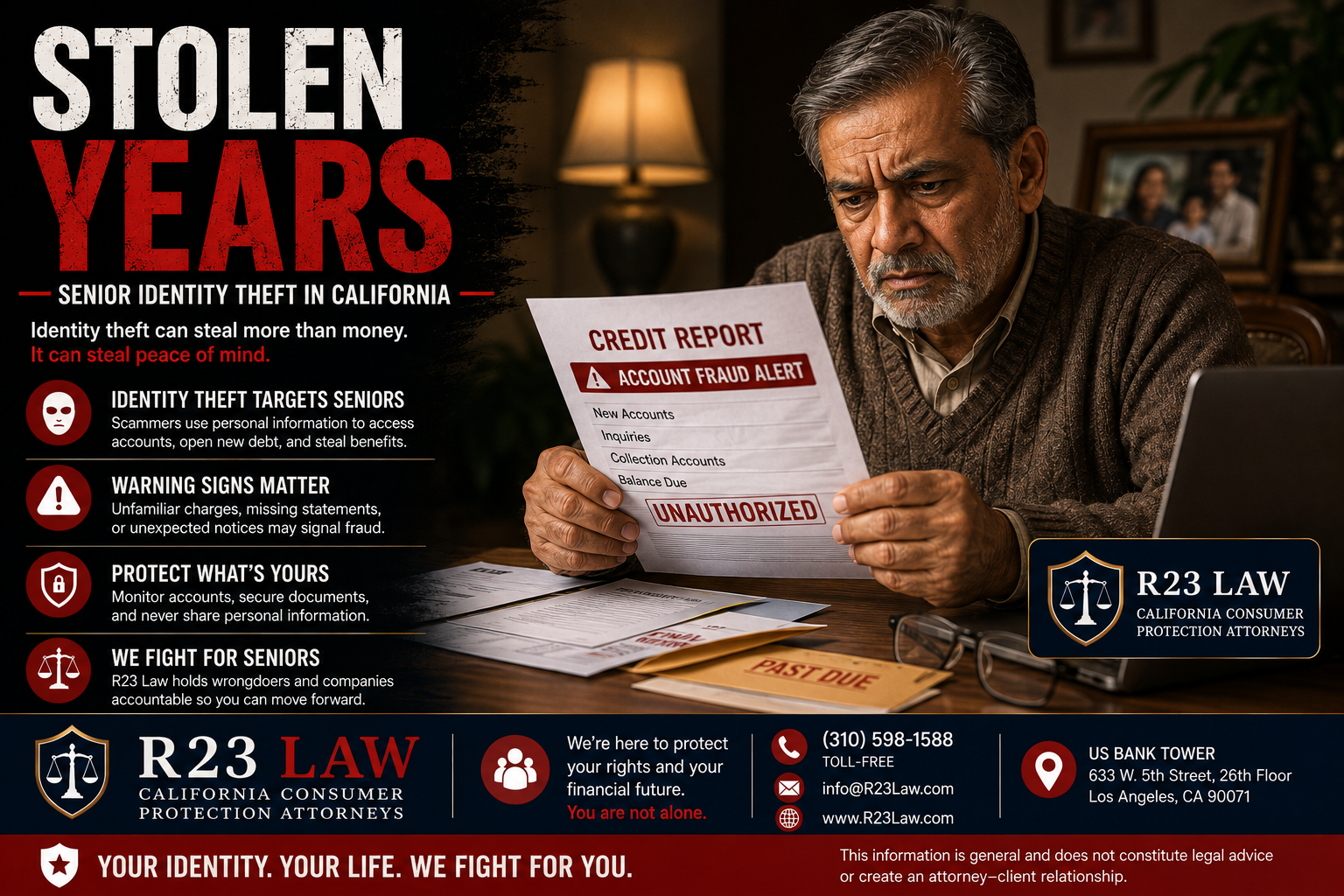
Identity theft can cause severe financial damage, especially when the victim is an older adult who depends on others for financial management, transportation, healthcare, or daily support
Seniors may be targeted because they live alone, rely on caregivers, have accumulated savings, or are less familiar with digital financial systems. In some cases, identity theft continues for months or years before the victim or family discovers the unauthorized activity.
R23 Law's California Consumer Protection Attorneys represent consumers throughout California whose personal information, financial accounts, or credit histories have been compromised by identity theft and related financial misconduct.
Identity Theft Can Lead to Elder Financial Abuse
Identity theft occurs when someone obtains and uses another person’s personal information without authorization.
The stolen information may be used to:
Access bank accounts
Open credit cards or loans
Make unauthorized purchases
Redirect financial statements
Change account contact information
Obtain government or financial benefits
Create fraudulent online accounts
Impersonate the victim during financial transactions
For seniors, identity theft may also be part of a broader pattern of elder financial abuse. A caregiver, relative, acquaintance, or outside scammer may exploit the senior’s trust, dependence, isolation, or access to financial information.
The attached source reports that older adults account for more than 20 percent of reported identity theft victims. It also explains that perpetrators may target seniors whom they believe are less likely to notice or report suspicious activity.
Senior Identity Theft May Remain Hidden
Identity theft is not always discovered immediately. A perpetrator may attempt to conceal fraudulent activity by intercepting mail, changing passwords, redirecting account statements, or discouraging the senior from speaking with relatives.
Warning signs may include:
Unfamiliar withdrawals or transfers
Missing bank or credit card statements
Unexpected collection notices
New accounts appearing on a credit report
Changes to account passwords or contact information
Unexplained reductions in available funds
Checks written to unfamiliar people
Unusual purchases or ATM activity
Repeated requests for personal information
Sudden secrecy involving a caregiver or financial contact
Family members should take these warning signs seriously, particularly when the older adult has difficulty reviewing financial records independently.
Digital Accounts Can Increase Identity Theft Risks
Online banking, electronic statements, digital payment platforms, and mobile applications have made financial management more convenient. They have also created additional opportunities for identity thieves.
Personal information shared online may not remain private. Scammers may use deceptive emails, fraudulent websites, fake account alerts, or impersonation tactics to obtain sensitive information.
Seniors should avoid sending or posting information such as:
Social Security numbers
Bank account numbers
Credit card numbers
Government identification numbers
Online banking credentials
Personal identification numbers
Account security answers
Passwords or verification codes
Banks and legitimate financial institutions generally do not require consumers to disclose complete passwords or verification codes through unsolicited emails, text messages, or telephone calls.
Financial Monitoring Can Expose Suspicious Activity
Regular financial monitoring is one of the most important measures for detecting senior identity theft.
Older adults and trusted family members should review:
Bank statements
Credit card statements
Credit reports
Loan documents
Benefit deposits
Checks and electronic transfers
Automatic payments
Online account activity
Changes to mailing or email addresses
A senior who has difficulty monitoring accounts may consider arranging assistance through a trusted person or speaking directly with the financial institution about available account alerts and security measures.
Financial institutions may also offer notifications for large withdrawals, unusual purchases, password changes, or transactions occurring outside the consumer’s normal activity.
Personal Information Should Remain Secure
Identity theft is sometimes committed by people who already have access to the victim’s home, mail, devices, or financial records.
Sensitive documents should be stored in a secure location. Consumers should avoid leaving bank statements, tax records, credit cards, identification documents, or passwords where visitors, caregivers, or other individuals can access them without permission.
Protective practices may include:
Locking financial documents in a secure location
Using strong and unique account passwords
Enabling account alerts
Avoiding shared passwords
Reviewing who has access to financial accounts
Shredding financial documents before disposal
Securing mobile phones and computers
Monitoring incoming mail
Avoiding disclosure of financial information to unverified callers
Reviewing account access after changing caregivers
Access should be limited to people who have a legitimate and authorized reason to view the information.
Caregiver Access Requires Careful Oversight
Caregivers may need access to certain information to perform legitimate duties. That access should still be limited, documented, and monitored.
Families should remain alert when a caregiver:
Pressures the senior to disclose account credentials
Uses the senior’s credit card for personal expenses
Prevents relatives from reviewing financial records
Encourages changes to account ownership
Requests access to online banking
Intercepts bills or statements
Makes unexplained withdrawals
Isolates the senior from family members
Claims that unusual transactions were authorized without documentation
A person’s status as a caregiver, relative, spouse, or trusted acquaintance does not authorize the misuse of a senior’s identity or financial information.
Immediate Steps After Discovering Identity Theft
Consumers who suspect identity theft should act promptly to prevent additional damage.
Contact the Credit Reporting Agencies
The victim may contact one of the nationwide credit reporting agencies — Equifax, Experian, or TransUnion — to request a fraud alert.
A fraud alert informs potential creditors that additional steps may be necessary to verify the consumer’s identity before opening new credit.
Consumers should also obtain and review their credit reports for:
Unfamiliar accounts
Unauthorized inquiries
Incorrect addresses
Fraudulent balances
Collection accounts they do not recognize
Loans opened without permission
Notify Financial Institutions
Banks, credit card issuers, lenders, and other affected financial institutions should be informed of the suspected identity theft.
The consumer should identify suspicious transactions, request account protections, and retain written confirmation of every report.
Change Passwords and Security Credentials
Passwords, personal identification numbers, and security questions should be changed immediately.
New credentials should not be shared with anyone who does not require authorized access.
Close Compromised Accounts
Accounts that appear to have been tampered with may need to be restricted or closed. Replacement accounts should use new account numbers, passwords, and access credentials.
Consumers should monitor both the old and replacement accounts for additional suspicious activity.
Preserve Evidence
Identity theft victims should retain:
Bank and credit card statements
Credit reports
Fraud alerts
Account notices
Collection letters
Emails and text messages
Telephone records
Screenshots of suspicious activity
Documents showing unauthorized transactions
Written communications with financial institutions
A detailed timeline can establish when the identity theft began, when it was discovered, and how each company responded.
Identity Theft Can Damage Credit and Financial Security
Senior identity theft can affect far more than a single account.
Potential consequences include:
Loss of retirement or savings funds
Unauthorized credit card balances
Damaged credit
Denied loans or housing
Collection activity
Overdraft fees
Closed financial accounts
Loss of access to benefit payments
Emotional distress
Reduced financial independence
The effects may be especially serious for older adults who live on fixed incomes and have limited time or resources to rebuild their financial security.
R23 Law’s Expert Legal Services for Identity Theft Victims Throughout California
R23 Law's California Consumer Protection Attorneys represent identity theft and financial injury victims throughout California.
Our legal services may include:
Reviewing fraudulent accounts and transactions
Examining credit reports for identity theft entries
Evaluating disputes submitted to credit reporting agencies
Reviewing responses from banks and creditors
Preserving evidence of unauthorized activity
Identifying responsible companies and individuals
Documenting financial and emotional injuries
Pursuing corrections to inaccurate credit information
Seeking available compensation under applicable law
Learn more about the firm through About R23 Law and meet the attorneys on Our Team.
Early Action Can Limit Further Financial Damage
Identity theft may continue until the victim changes account access, notifies financial institutions, and addresses fraudulent credit information.
Consumers and families should not ignore unfamiliar transactions, missing statements, unexpected credit denials, or sudden account changes. Prompt action may prevent additional accounts from being opened and preserve evidence for a potential legal claim.
Legal deadlines may also apply. A timely review can identify available options and determine whether a financial institution, credit reporting agency, creditor, or other company failed to respond appropriately.
Contact R23 Law Today
Senior identity theft can threaten a victim’s savings, credit, independence, and peace of mind. When a company fails to address fraudulent accounts or inaccurate credit reporting, R23 Law's California Consumer Protection Attorneys pursue accountability and available remedies.
Visit Contact R23 Law to request a consultation regarding identity theft, fraudulent financial accounts, inaccurate credit reporting, or related elder financial abuse.
Toll-Free — 310-598-1588SoCal — (310) 598-1588Email — info@R23Law.comWebsite —www.R23Law.comOffice — US Bank Tower, 633 W. 5th Street, 26th Floor, Los Angeles, CA
© 2025 R23 Law. All rights reserved. Trusted consumer credit lawyers in Los Angeles.
Disclaimer — This article is provided for general informational purposes and does not constitute legal advice. Reading this article or contacting R23 Law does not, by itself, create an attorney-client relationship.
