
THE 200-POINT CREDIT SCORE FACEPLANT — Identity Theft’s Signature Move
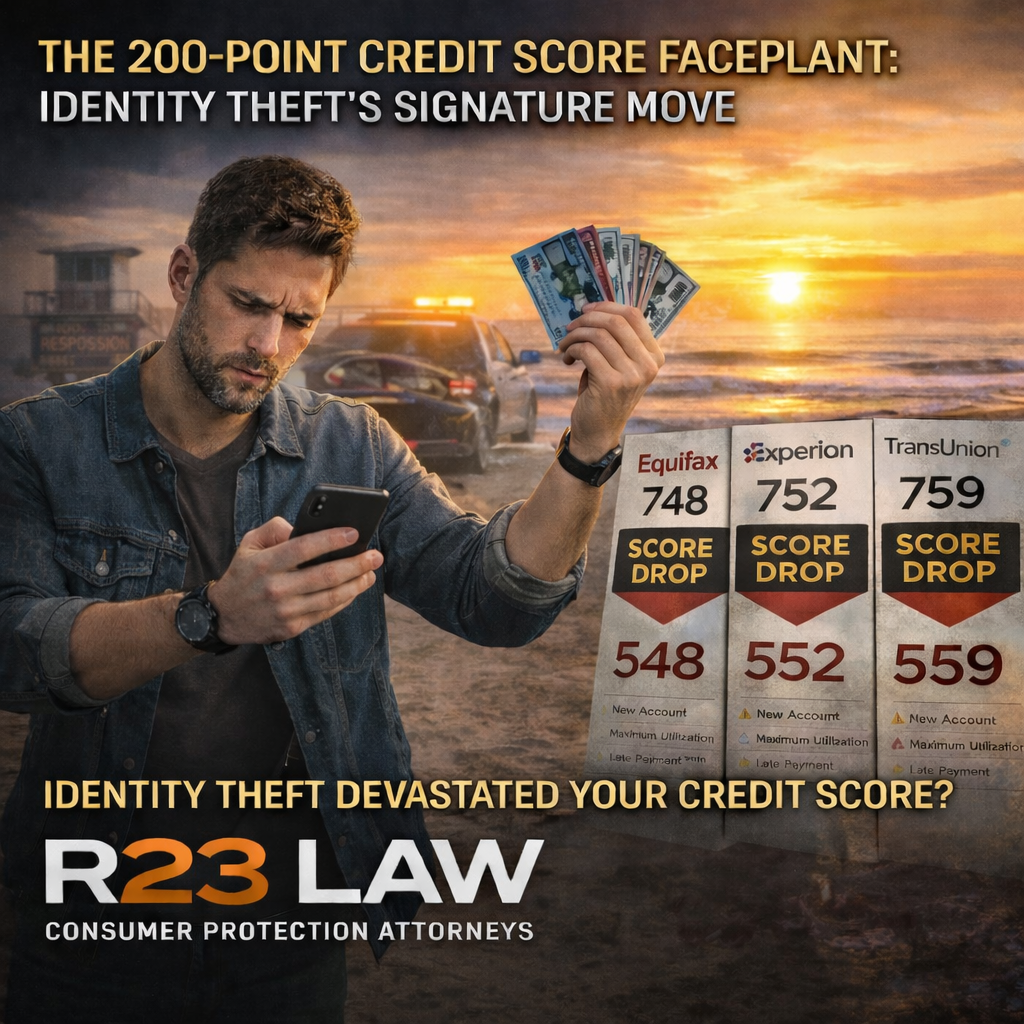
Identity theft can trigger a sudden credit score plunge through fake accounts, hard inquiries, maxed-out balances, and late payments. Learn the priority steps, FCRA protections, and California remedies
A credit score doesn’t crater for “no reason.” When identity theft hits, the drop can be fast and dramatic—because the fraud doesn’t just add one bad mark. It can pile on new accounts, hard inquiries, maxed-out balances, and missed payments all at once.
If you’re seeing a sudden plunge, think of it as a crime scene: there’s a sequence, a pattern, and a short list of next moves that matter most.
Why Identity Theft Wrecks Credit So Quickly
Identity thieves rarely stop at one account. A common playbook looks like this:
Open new credit accounts in your name
Trigger hard inquiries as lenders “check” your credit
Run up balances until utilization spikes
Miss payments (or default) on accounts you never knew existed
That combination is a perfect storm for scoring models. Hard inquiries can drag the score down, high utilization can drag it down further, and late payments can deliver the knockout blow.
The First-Day Priorities: Freeze, Reports, and Fraud Contacts
When the score drop is tied to identity theft, speed matters. These are the high-impact moves to put friction in the system immediately:
Lock down new credit
Place a credit freeze (strongest barrier to new accounts) or a fraud alert (adds verification steps).
Pull your credit reports so you can see exactly what changed (and where).
Contact the companies where fraud occurred
If a fake card or loan was opened, call the lender’s fraud department and start the closure process. IdentityTheft.gov lists this as an immediate step because it can stop additional charges and account activity.
Report the identity theft
File a report through IdentityTheft.gov to generate a recovery plan and documentation you’ll use in disputes.
(Depending on the situation, a police report can also be appropriate—especially if collectors start chasing the debt.)
The FCRA “Identity Theft Block”: A Fast Lane Many Consumers Miss
Here’s the part most people don’t learn until late in the process: the Fair Credit Reporting Act (FCRA) has a specific procedure for blocking identity-theft information.
If you provide:
proof of identity,
a copy of an identity theft report,
identification of the fraudulent items, and
a statement that the information is not tied to your transactions,
a credit reporting agency generally must block the identity-theft information within four business days of receiving the required package.
That “block” can be a big deal when time matters—especially when your credit score drop is preventing housing, refinancing, or approvals.
Disputes That Create Leverage: Build a Record That Holds Up
Online dispute portals can be convenient, but identity theft disputes often require detail and documentation. The goal is simple: create a dispute record that clearly shows what was sent and when.
Under the FCRA dispute process, credit bureaus generally have 30 days to investigate, with a possible 15-day extension if they receive additional relevant information during the investigation window.
What to include in a strong dispute packet
A copy of your credit report with fraudulent items clearly marked
Your IdentityTheft.gov report (and police report if available)
Proof of identity (ID + proof of address)
A short, itemized list: “This account/inquiry/collection is fraudulent; request deletion/block”
Copies (not originals) of supporting records
Also: keep a timeline. Dates matter when the investigation looks thin or the wrong information keeps coming back.
When a Credit Bureau “Verifies” Fraud Anyway
Identity theft victims often run into a frustrating reality: you file disputes, the bureaus respond, and the credit score still doesn’t rebound—at least not quickly.
This is where the issue can shift from “credit cleanup” to consumer protection enforcement.
Two common escalation points:
The bureau’s “investigation” appears automated or superficial
Fraudulent tradelines are repeatedly “verified” despite documentation
When that happens, R23 Law's California Consumer Protection Attorneys evaluate whether the dispute handling and reinvestigation process met FCRA requirements—and whether the inaccurate reporting caused compensable damages.
##hen Collectors Chase Debts That Aren’t Yours
In California, identity theft victims may also have remedies under state law when companies pursue claims tied to identity theft.
California Civil Code provisions (often discussed under the California Identity Theft Act) include the ability to bring an action against a claimant to establish that the person is a victim of identity theft in connection with that claim.
If the situation escalates into collection pressure, lawsuits, liens, or repeated credit damage, this is exactly where R23 Law's California Consumer Protection Attorneys focus—aligning federal credit reporting rights with California remedies to shut down wrongful claims.
Damages After an Identity Theft Credit Score Drop
A massive credit drop isn’t just an inconvenience. It can drive real financial harm: higher interest rates, denials, lost opportunities, and ongoing costs.
When companies fail to comply with FCRA duties, the statute includes civil liability frameworks for willful and negligent noncompliance.
(What applies depends on the facts, documentation, and the pattern of conduct.)
The Takeaway
Identity theft doesn’t just “ding” your credit—it can orchestrate a full score collapse through a chain reaction: new accounts, hard inquiries, maxed-out utilization, and late payments.
If your disputes are going nowhere, the same fraudulent items keep reappearing, or collectors are pursuing debts tied to identity theft, R23 Law's California Consumer Protection Attorneys can assess the dispute record, the investigation conduct, and the legal options available under the FCRA and California law.
Disclaimer: This article is for informational purposes only and does not constitute legal advice. Reading this article does not create an attorney-client relationship.
